Police Turn to Drones to Track Illegal E-Bike and E-Moto Riders
Last Updated on June 2, 2026 by Kristina
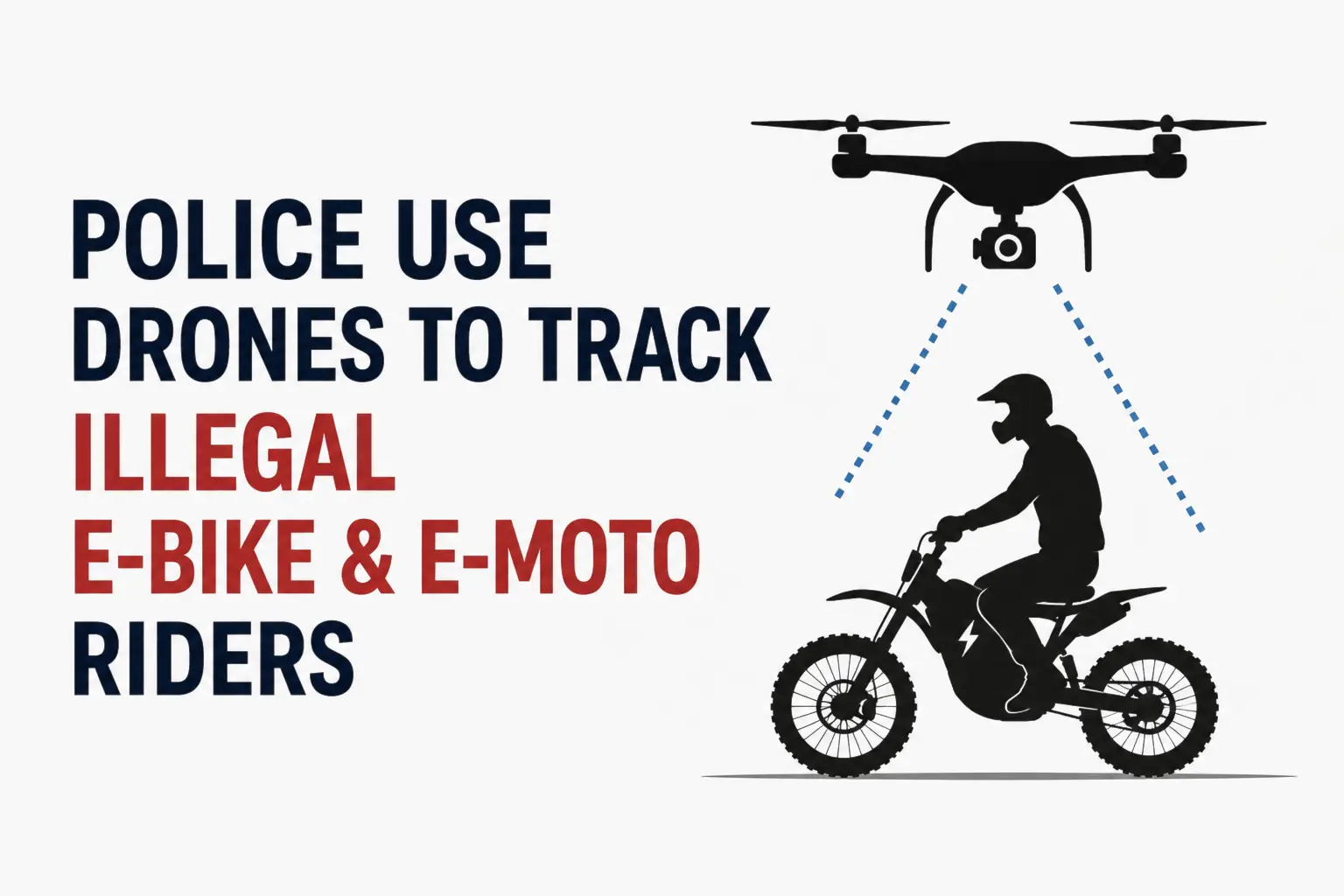
Police departments are increasingly turning to drones as a new tool to identify and catch riders operating illegal electric bikes, electric motorcycles, and off-road machines on public roads and trails.
The latest example comes from the United Kingdom, where Humberside Police recently used drones during an enforcement operation targeting illegal riding activity involving e-scooters, off-road electric motorcycles, and other non-compliant vehicles.
According to reports, officers used drones to locate riders, monitor problem areas, and direct officers on the ground. Rather than engaging in dangerous pursuits, officers can track activity from above and coordinate with units on the ground.
Important: This Isn’t About Most Legal E-Bikes
Most enforcement actions discussed in this article are targeting high-powered electric motorcycles, modified e-bikes, or other vehicles operating outside local laws. Riders using legal Class 1, Class 2, and Class 3 e-bikes are generally not the focus of these operations.
If you’re new to e-bikes, be sure to read our E-Bike Classes Explained guide to understand the differences between Class 1, Class 2, Class 3 e-bikes, and electric motorcycles.
Why Police Are Turning to Drones
Traditional enforcement can be difficult when riders are operating high-speed electric motorcycles, unregistered vehicles, or off-road machines in parks, neighborhoods, and public spaces.
Many riders:
- Wear face coverings
- Remove identifying markings
- Travel through trails and greenways
- Leave the area before officers arrive
Drones allow officers to monitor activity from a safe distance and direct ground units when necessary. This can reduce risks associated with high-speed pursuits while helping officers gather evidence and identify repeat offenders.
Police agencies argue that this approach improves safety for:
- Pedestrians
- Cyclists
- Drivers
- Officers
- Riders themselves
What Types of Vehicles Are Being Targeted?
This is where many headlines can become misleading.
Most enforcement efforts are not focused on ordinary electric bicycles used for commuting or recreation.
Instead, agencies are increasingly targeting:
- Sur-Ron style electric motorcycles
- Talaria electric motorcycles
- Modified e-bikes exceeding legal speed limits
- Unregistered electric dirt bikes
- Off-road machines being ridden on public roads
- Riders operating prohibited vehicles on trails and shared-use paths
These vehicles are often referred to as “e-bikes” by the public, even though many legally fall much closer to electric motorcycles than traditional bicycles.
That distinction is becoming increasingly important as cities and police departments respond to complaints about reckless riding behavior.
Drones Are Becoming a Growing Enforcement Trend
The UK operation is not an isolated example.
Police departments around the world have increasingly experimented with:
- Drone surveillance
- Public reporting systems
- Traffic cameras
- Remote monitoring technology
The primary goal is often to identify dangerous riding behavior without initiating high-speed chases.
Several agencies have reported success using drones to track riders involved in reckless riding, illegal vehicle operation, and violations involving electric motorcycles and off-road vehicles.
Should Legal E-Bike Riders Be Concerned?
For most riders, probably not.
If you are riding a legal electric bicycle and following local regulations, drones are unlikely to affect your riding experience.
The biggest enforcement risks remain for riders who:
- Operate vehicles exceeding local e-bike classifications
- Ride where motorized vehicles are prohibited
- Disable speed limiters
- Ride recklessly around pedestrians
- Use electric motorcycles on public roads without meeting legal requirements
Many enforcement efforts are responding to complaints involving dangerous behavior rather than targeting ordinary commuters and recreational riders.
How This Relates to U.S. E-Bike Laws
In the United States, e-bike laws vary by state and sometimes by city.
Across the country, lawmakers and local officials have increasingly focused on issues involving:
- Sidewalk riding
- Trail access
- Class 3 restrictions
- Modified e-bikes
- High-speed electric motorcycles
- Rider safety concerns
If you’re unsure about the laws where you ride, these resources can help:
➡️ State-by-State E-Bike Laws Guide
➡️ Are E-Bikes Allowed on Sidewalks?
Understanding your state’s classification system is one of the best ways to avoid confusion and ensure you’re riding legally.
My Take
Personally, I think this trend was inevitable.
As someone who regularly covers e-bike laws, regulations, and industry news, I’ve noticed that many of the stories generating public concern aren’t actually about traditional electric bicycles. They’re often about high-powered electric motorcycles being ridden on sidewalks, bike paths, parks, and public roads without meeting motorcycle requirements.
Unfortunately, when the public sees reckless behavior from a Sur-Ron-style electric motorcycle, many people simply call it an “e-bike.”
That creates a challenge for responsible riders.
When lawmakers, city officials, and residents hear repeated complaints about dangerous riding, the pressure often builds for broader restrictions. Sometimes those restrictions end up affecting riders who are following the rules.
If drones help police focus enforcement on reckless riding and illegal vehicle use while allowing responsible riders to continue enjoying legal e-bikes, that may be a better approach than broad restrictions that affect everyone.
At the same time, enforcement agencies need to be careful not to treat every electric bike as a problem.
Millions of people use e-bikes for transportation, recreation, and commuting, and the vast majority ride responsibly. E-bikes help people replace car trips, stay active, and access affordable transportation.
The real challenge moving forward is making a clear distinction between:
- Legal e-bikes
- Modified e-bikes
- Electric motorcycles
The better lawmakers, enforcement agencies, and the public understand those differences, the better chance we have of preserving access for responsible riders while addressing genuinely dangerous behavior.
For more news on electric bikes click here
External Sources

Kristina is not just an enthusiast but a true authority on electric bikes. Nestled in the coastal beauty of Virginia, Kristina has found the perfect backdrop for her passion for electric biking. As a dedicated wife and homeschooling mom, her life revolves around family, faith, and the thrill of adventure.
Originally hailing from Ohio, Kristina's journey with electric bikes began as a curiosity and quickly evolved into a deep expertise. Her blog is a testament to her love for electric biking, combining her fascination for eco-friendly transportation with her coastal lifestyle.
When she's not cruising the beach on her electric bike, you'll find Kristina indulging in her other loves: long walks along the shore, getting lost in a good book, and cherishing moments with her loved ones. With a heart as big as her love for animals, especially cats, Kristina brings a unique perspective to the electric bike world, grounded in her strong faith in God and her dedication to a sustainable lifestyle.
Through her blog, Kristina shares her extensive knowledge of electric bikes, offering valuable insights, tips, and recommendations to fellow enthusiasts. Whether you're a seasoned rider or a newcomer to the electric bike scene, Kristina's blog is your go-to source for all things electric biking, fueled by her passion, expertise, and the scenic beauty of coastal Virginia.