CPSC Proposes Mandatory Federal E-Bike Battery Safety Standard
Last Updated on July 29, 2026 by Kristina
WASHINGTON, D.C. – July 27, 2026: The U.S. Consumer Product Safety Commission has proposed a mandatory federal safety standard for lithium-ion batteries and electrical systems used in e-bikes and other micromobility products. The proposal would cover complete e-bikes as well as replacement battery packs, aftermarket chargers, battery management systems, and electrical components supplied with e-bike conversion kits.
The proposal is not yet a final rule and does not currently prohibit riders from using an existing e-bike. Written public comments remain open through August 24, 2026. Riders can learn more about UL-certified e-bikes, review the guide to e-bike battery capacity and watt-hours, and follow the Electric Bike News archive for additional regulatory and safety updates.
Current Status of the Federal E-Bike Battery Proposal
Current status as of July 27, 2026: CPSC has issued a notice of proposed rulemaking. The requirements have not been finalized and are not currently in effect.
- CPSC approval for publication: June 22, 2026
- Federal Register publication: June 24, 2026
- Written comment deadline: August 24, 2026
- Oral presentation request deadline: July 24, 2026, which has passed
- Final rule: Not issued
- Current effective date: None
If CPSC adopts a final rule, the agency is proposing an effective date 180 days after the final rule is published in the Federal Register. The requirements would apply to covered products manufactured after that effective date.
Federal battery regulation is moving closer, but this proposal has not yet created a mandatory national standard for products currently on the market.
📰 How This Story Was Verified
This report is based on available official documents, agency statements, meeting records, court filings, or other primary sources, with reliable reporting used for additional context. I clearly distinguish proposals from rules that have been finally approved or taken effect.
Why CPSC Is Proposing a Mandatory Battery Standard
CPSC says voluntary safety standards and individual recalls have not adequately addressed the risks associated with lithium-ion batteries used in e-bikes, e-scooters, hoverboards, electric skateboards, electric unicycles, and similar products.
The agency identified 227 unique micromobility battery incidents from January 1, 2019, through December 31, 2023. Of those, 90 incidents were associated with 39 fatalities and 181 injuries. Some incidents involved multiple victims.
According to the proposal, 195 of the 227 incidents involved fires. Those fire incidents accounted for all 39 reported fatalities and 174 of the 181 reported injuries in the agency’s dataset.
The hazards identified by CPSC include:
- Thermal runaway
- Fires and explosions
- Expulsion of hot gas or flames
- Overheating
- Burns
- Smoke inhalation
- Electrical shock from certain higher-voltage systems or chargers
CPSC also noted that it had announced 29 consumer-level recalls involving micromobility products. The agency concluded that recalls respond to individual products after consumers may have already been exposed to a hazard, rather than consistently preventing unsafe products from entering the market.
Which Products Would Be Covered?
The proposal would apply to lithium-ion batteries and electrical systems used in several types of micromobility products within CPSC’s jurisdiction.
- E-bikes
- E-scooters
- Self-balancing scooters, including hoverboards
- Electric skateboards
- Electric unicycles
- Hybrid products combining these designs
The proposal would not apply to vehicles legally regulated as motor vehicles under the jurisdiction of the National Highway Traffic Safety Administration. The exact classification of a higher-powered electric vehicle can therefore affect which federal agency has authority over it.
Rental and shared-mobility products used by consumers can still fall within CPSC’s jurisdiction when they meet the proposal’s product definitions.
For e-bike owners and businesses, one of the most important details is that the proposal extends beyond the electrical system installed on a complete bike.
It would also cover:
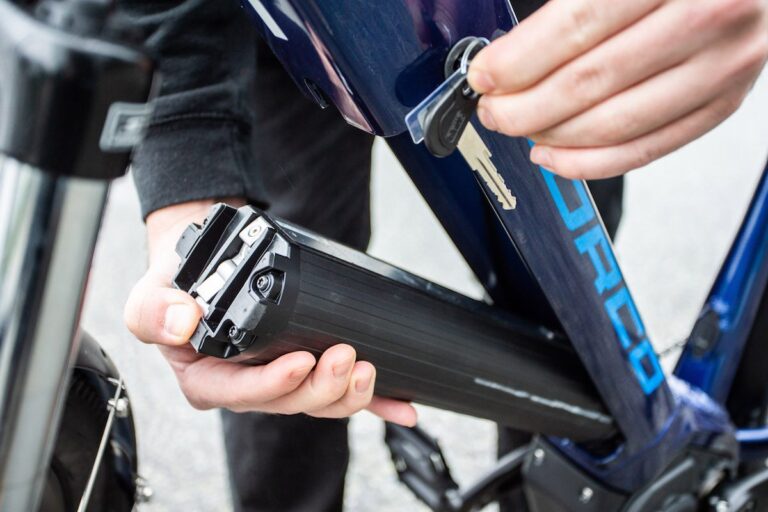
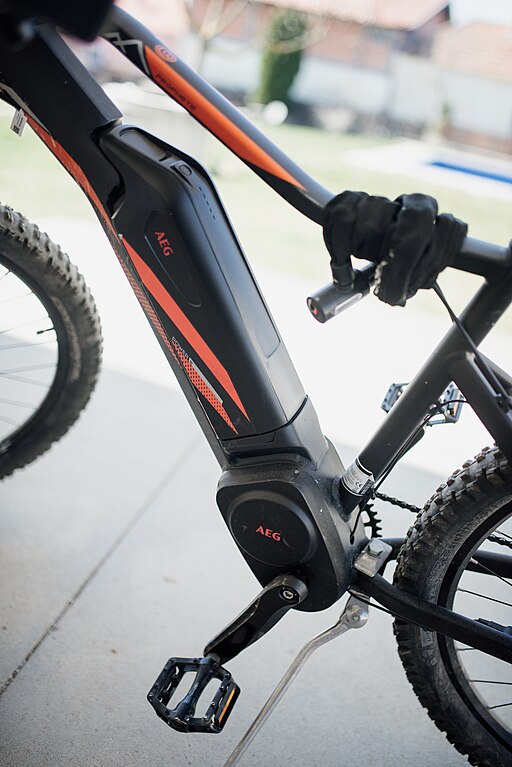
- User-replaceable lithium-ion battery packs sold separately
- Aftermarket battery chargers
- Battery management systems
- Electrical components included with e-bike conversion kits
- Battery packs and chargers supplied with conversion kits
- Covered rental and shared-mobility products
This wider scope matters because incompatible chargers, poorly constructed replacement batteries, and unsafe modifications can create risks even when the original e-bike was designed properly.
Which UL Standards Would Become Part of the Rule?
CPSC proposes to incorporate three existing voluntary standards into the federal requirements, with additional modifications.
UL 2849 for E-Bike Electrical Systems
UL 2849:2020 addresses electrical systems used in e-bikes, including the battery, charger, battery management system, motor controller, wiring, and other connected components.
UL 2271 for Replaceable Battery Packs
UL 2271:2023 applies to batteries used in light electric vehicle applications. Under the proposal, it would be used for user-replaceable battery packs sold separately from the original micromobility product.
UL 2272 for Other Micromobility Products
UL 2272:2024 applies to the electrical systems of personal e-mobility devices such as e-scooters, hoverboards, electric skateboards, and electric unicycles.
The proposed federal standard would not simply adopt these documents without changes. CPSC is proposing additional performance, enclosure, charging, compatibility, labeling, and instruction requirements intended to address hazards the agency believes are not fully covered by the voluntary standards.
What New Safety Requirements Are Proposed?
Tamper-Resistant Battery Enclosures
The proposal would require battery enclosures that discourage consumers from opening a pack and accessing individual cells or hazardous internal components.
For e-bike conversion-kit batteries, the proposed language says the outer battery enclosure should not be capable of being opened with common household tools such as a flat-blade or Phillips-head screwdriver. Acceptable securing methods could include ultrasonic welding, qualifying adhesives, or single-use or tamper-resistant screws.
CPSC says opening, rebuilding, or modifying a battery can expose consumers to shock, short-circuit, and fire hazards. The agency cited incidents involving consumers building, repairing, or charging homemade battery packs.
Protection Against Charging an Overheated Battery
The proposal would add a post-discharge charging test. This is intended to verify that the battery management system prevents charging when the cell surface temperature remains above its specified safe limit after the product has been used.
An effective battery management system should monitor cell temperature and prevent charging when conditions are outside the battery’s safe operating range.
Protection From Incompatible Chargers
CPSC is proposing reverse-polarity testing intended to prevent damage when an incompatible charger has electrical polarity opposite to the charger intended for the product.
The rule would also address charger connectors supplied with conversion kits. Those connectors would need to prevent misalignment, reverse polarity, or an electrical mismatch.
A charger is not necessarily safe simply because its plug fits. Voltage, current, polarity, connector design, communication requirements, and battery-management compatibility can all matter.
Warnings About Homemade Batteries and Repairs
The proposal would require stronger warnings against using homemade batteries and attempting to open, disassemble, or repair battery enclosures.
CPSC identified four incidents involving homemade micromobility batteries in its dataset. Those incidents resulted in three fatalities and two injuries.
The proposal would also require instructions covering safer battery handling, compatible replacement components, charging practices, and actions to take after water immersion or submersion.
Clearer Replacement-Battery Compatibility Information
Separately sold removable battery packs would need markings identifying, at a minimum, the manufacturer and model number of each micromobility product for which the battery is intended to be used.
This could help riders distinguish between an appropriate replacement battery and a generic pack that happens to fit physically but has not been designed or evaluated for the bike’s electrical system.
Would Every E-Bike Need a UL Certification Logo?
Not necessarily. The proposal would turn UL-based performance requirements, with CPSC’s modifications, into a mandatory federal standard. Manufacturers and importers would have to test and certify that covered products comply with the federal requirements.
For covered products not classified as children’s products, manufacturers and importers would have to test them through a reasonable testing program and issue the required certificate of compliance.
Covered products designed or intended primarily for children age 12 or younger would require testing by a CPSC-accepted third-party laboratory and the applicable children’s-product certification.
A commercial UL certification mark can be useful evidence, but the central legal obligation under the proposed federal system would be documented compliance with the CPSC rule. Riders should avoid assuming that the presence or absence of a logo alone tells the complete compliance story.
What Does CPSC Say About the Costs and Benefits?
CPSC’s central economic estimate finds that the proposed rule’s quantified costs would exceed its quantified benefits. Using a 3% discount rate, the agency estimates annualized benefits of $61.17 million and annualized costs of $146.52 million.
That produces estimated annualized net benefits of negative $85.35 million and a benefit-cost ratio of 0.42 under the agency’s central estimate.
CPSC also presents an upper-bound annualized benefits estimate of $472.97 million. The agency says available incident records may substantially undercount micromobility battery fires, particularly incidents involving e-bikes, because existing databases do not always identify lithium-ion batteries or micromobility products consistently.
These estimates are part of the proposed rule and may be challenged, refined, or revised as CPSC reviews public comments and considers whether to issue a final rule.
What Would the Rule Mean for Existing E-Bike Owners?
The proposal is not a recall or stop-use warning. It does not state that every e-bike currently owned by a consumer is unsafe, and it would not automatically make an existing bike illegal to ride.
If finalized as proposed, the requirements would apply to covered products manufactured after the future effective date. CPSC would still be able to issue separate recalls or product-specific warnings when evidence identifies a hazard involving a particular battery, charger, e-bike, or other product.
While the rulemaking continues, riders should:
- Use the original charger or an aftermarket charger specifically identified as compatible with the exact battery and e-bike system
- Remember that a plug that fits does not establish electrical compatibility
- Avoid third-party batteries without verified compatibility and safety documentation
- Never open, rebuild, or modify a lithium-ion battery pack
- Allow a hot battery to cool before charging
- Stop using or charging a battery that is swollen, damaged, unusually hot, leaking, sparking, smoking, or producing a strong chemical odor
- Check for current CPSC recalls and safety warnings
- Confirm certification claims through the testing or certification organization rather than relying only on a seller’s product listing
Battery capacity can affect range, but amp-hours and watt-hours alone do not establish whether a battery is safe or compatible with a particular e-bike.
What Could Change for E-Bike Buyers and Businesses?
If the rule is finalized, manufacturers and importers may need to redesign battery enclosures, update battery-management programming, conduct additional testing, revise warning labels, and improve documentation.
Products already designed around the incorporated UL standards may still require further testing or modifications because the federal proposal adds requirements that are not contained in those standards in the same form.
Aftermarket battery, charger, and conversion-kit sellers could face some of the largest changes. These businesses would need to show that their products meet the applicable requirements and are compatible with the products identified on their markings and instructions.
Additional testing and design work could raise costs for some manufacturers and sellers. A consistent federal baseline could also make it easier for riders and retailers to identify products that have undergone documented safety evaluation.
Could the Federal Rule Affect State and Local Laws?
The proposal raises possible federal preemption issues. Under the Consumer Product Safety Act, a final federal product-safety standard can restrict states and local governments from enforcing different product design, performance, construction, packaging, or labeling requirements addressing the same products and hazards.
That does not mean every state or city e-bike law would disappear. Rules governing where e-bikes can be ridden, speed, classifications, helmets, registration, parking, storage, or charging locations may involve different legal issues.
The preemption question would primarily concern overlapping product-safety requirements addressing the same lithium-ion battery and electrical hazards covered by the federal standard. States and local governments may also have limited options to seek exemptions under federal law.
How to Comment on the Proposed Rule
CPSC is accepting written comments through August 24, 2026. The proposal is identified as Docket No. CPSC-2025-0012.
Comments can be submitted through the official federal rulemaking comment page. Comments submitted to the docket are generally public, so consumers should avoid including private or sensitive information they do not want posted online.
Riders, repair shops, manufacturers, battery suppliers, retailers, rental operators, fire-safety professionals, and conversion-kit users may have useful experience concerning charger compatibility, replacement-battery availability, repair access, labeling, testing costs, and realistic implementation timelines.
My Take
A consistent federal battery standard could make it harder for poorly constructed batteries, incompatible chargers, and unsafe electrical components to reach riders. That would be an important improvement over a system that often depends on voluntary compliance and product-specific action after a problem has already appeared.
The details will matter. The final rule should protect riders without making legitimate replacement batteries unnecessarily difficult to obtain or encouraging owners to keep aging packs in service because safe replacements are unavailable. Compatibility labels, meaningful testing, strong battery-management protections, and clear documentation could be especially valuable.
CPSC’s own central economic estimate also deserves attention because it places the proposal’s quantified costs above its quantified benefits. The agency’s much higher upper-bound benefit estimate shows how heavily the analysis depends on whether existing records undercount battery fires and injuries.
For now, riders should remember that this remains a proposal. The public-comment period must finish, CPSC must review the record, and the agency would have to issue a final rule before any mandatory federal requirements take effect.
Sources
- Federal Register – Proposed safety standard for lithium-ion batteries used in micromobility products
- CPSC – Statement on the proposed lithium-ion battery safety standard
- CPSC Micromobility Information Center
- Regulations.gov – Submit a comment on Docket No. CPSC-2025-0012
- Electrek – Industry context for the proposed federal e-bike battery rule

Kristina is not just an enthusiast but a true authority on electric bikes. Nestled in the coastal beauty of Virginia, Kristina has found the perfect backdrop for her passion for electric biking. As a dedicated wife and homeschooling mom, her life revolves around family, faith, and the thrill of adventure.
Originally hailing from Ohio, Kristina's journey with electric bikes began as a curiosity and quickly evolved into a deep expertise. Her blog is a testament to her love for electric biking, combining her fascination for eco-friendly transportation with her coastal lifestyle.
When she's not cruising the beach on her electric bike, you'll find Kristina indulging in her other loves: long walks along the shore, getting lost in a good book, and cherishing moments with her loved ones. With a heart as big as her love for animals, especially cats, Kristina brings a unique perspective to the electric bike world, grounded in her strong faith in God and her dedication to a sustainable lifestyle.
Through her blog, Kristina shares her extensive knowledge of electric bikes, offering valuable insights, tips, and recommendations to fellow enthusiasts. Whether you're a seasoned rider or a newcomer to the electric bike scene, Kristina's blog is your go-to source for all things electric biking, fueled by her passion, expertise, and the scenic beauty of coastal Virginia.