Orange County Schools Adopt E-Bike and E-Scooter Restrictions for 2026-27
Last Updated on August 10, 2026 by Kristina
ORANGE COUNTY, Florida – Updated August 10, 2026: Orange County Public Schools has adopted new restrictions on student e-bikes, e-scooters, and other motorized micromobility devices for the 2026-27 school year after the School Board unanimously approved the revised policy on July 28.
Elementary and middle school students may not bring covered e-bikes or e-scooters onto district property. Qualifying high school students may bring approved devices only if they have a valid driver’s license or learner’s permit and follow district registration, parking, and campus-safety rules. Families can review the Florida e-bike laws guide, compare broader requirements through the State-by-State E-Bike Laws Guide, and follow the Electric Bike News archive for additional updates.
Update – August 10, 2026: This article has been revised to reflect the July 28 School Board vote and the rules being communicated as students return for the 2026-27 school year. The earlier version of this story described the restrictions as a proposal awaiting a vote.
Current Status of the Orange County E-Bike Rules
- School district: Orange County Public Schools
- Location: Orange County, Florida
- School Board vote: July 28, 2026
- Vote outcome: Unanimously approved
- School year: 2026-27
- Elementary and middle school students: May not bring covered e-bikes or e-scooters onto district property
- High school students: May bring a qualifying approved device only with a valid driver’s license or learner’s permit and required registration
- Campus operation: Approved devices must be walked on district property and parked in an approved location
The district’s decision changes this story from a proposed-policy report to an implementation story. Families should follow current instructions from their individual school because registration procedures, parking locations, and day-to-day enforcement details can be communicated at the campus level.
📰 How This Story Was Verified
This report is based on available official school guidance and meeting materials, along with post-vote reporting from Central Florida news organizations. I distinguish the rules that have been approved from details that remain dependent on school-level implementation or that I could not verify directly from the final BoardDocs policy text.
What Did the Orange County School Board Approve?
The School Board voted unanimously July 28 to approve revised student micromobility restrictions after several weeks of discussion about e-bike and e-scooter safety.
The final amendment reported after the vote allows qualifying high school students to bring approved devices when they have either a valid driver’s license or a learner’s permit. That is an important change from earlier versions of the proposal, which were described in some reports as requiring a full driver’s license.
Elementary and middle school students are not permitted to bring covered e-bikes or e-scooters onto school property under the revised rules.
Rules for High School Students Who Qualify
A high school student who meets the license or learner’s-permit requirement still does not have unrestricted permission to ride or park an e-bike or e-scooter on campus.
Current reporting and school guidance indicate that eligible students must:
- Have a valid driver’s license or learner’s permit
- Register the device through the school or district process
- Display the required registration sticker or decal
- Dismount and walk the device once on district property
- Park it in a designated bicycle rack or another location approved by school administrators
- Follow applicable traffic, helmet, and safety rules while traveling to and from school
Families should confirm the current registration process with the student’s school before relying on an e-bike or e-scooter for transportation.
Class 3 and Modified E-Bikes Remain an Important Restriction
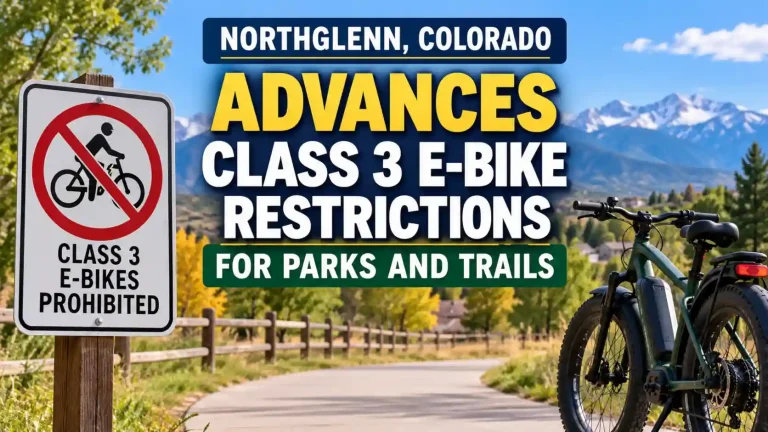
Post-vote reporting says OCPS also prohibits Class 3 and modified e-bikes on district property. Earlier policy drafts specifically identified Class 3 and modified e-bikes as prohibited devices.
I was not able to retrieve the final adopted BoardDocs policy text directly, so I am attributing this detail to post-vote reporting rather than presenting it as a quotation from the final policy.
That distinction matters for families shopping for or evaluating a student’s bike. A device that is legal for an adult or older rider to operate in some public-road settings may still be prohibited on school property.
Charging E-Bikes and E-Scooters at School
Post-vote reporting also says charging e-bikes, e-scooters, or their batteries on district property is prohibited.
Students should arrive with enough battery capacity for their transportation needs and should not assume a classroom, office, outdoor outlet, or other school power source can be used for charging.
Florida Does Not Generally Require an E-Bike Driver’s License
The OCPS rule should not be confused with a statewide requirement that every e-bike rider have a driver’s license.
Florida law generally exempts qualifying electric bicycles and their operators from motor-vehicle driver’s-license, registration, title, and financial-responsibility requirements. OCPS is instead using a driver’s license or learner’s permit as a condition for a high school student to bring a covered micromobility device onto school property.
In other words, a student could be legally allowed to operate a qualifying e-bike under Florida road law but still be prohibited from bringing that bike onto an OCPS campus. Riders can review the current Florida e-bike rules for the broader statewide requirements.
Why Orange County Changed Its School Rules
The policy discussion followed growing concern about young riders using e-bikes and e-scooters around busy school arrival and dismissal areas, sidewalks, and public roads.
During the debate, board members and local officials raised concerns about speed, multiple passengers, unsafe maneuvering, crowded sidewalks, high-powered or modified devices, and uncertainty about how micromobility devices should be handled once students reach campus.
The discussion also followed the May death of 13-year-old Colton Remsburg, who was struck by a pickup truck while riding an electric scooter near Lake Nona. His death became part of the broader local conversation about young-rider safety.
Safety Education Is Still Part of the Discussion
Orange County officials have also discussed micromobility safety education rather than relying only on restrictions.
MetroPlan Orlando developed an online safety course covering rules of the road, bicycle facilities, helmet use, visibility, pedestrian awareness, device features, and safer riding behavior. Education may remain an important part of the district’s long-term approach even though the School Board adopted access restrictions.
What Parents and Students Should Check Now
- Confirm the student’s grade level. Elementary and middle school students may not bring covered e-bikes or e-scooters onto district property.
- For high school students, confirm license or permit status. A valid driver’s license or learner’s permit is required for an eligible student to bring an approved device.
- Check the exact device. Confirm the e-bike class, motor rating, assisted-speed limit, throttle setup, and whether the bike has been modified.
- Ask the school about registration. Eligible devices need the required school or district sticker or decal.
- Confirm where the device can be parked. Students should use the designated rack or another administrator-approved location.
- Plan to walk the device on campus. Permission to commute with it does not mean permission to ride it through school property.
- Do not plan on charging at school. Post-vote reporting says district property cannot be used to charge e-bikes, e-scooters, or their batteries.
- Review helmet and road rules. School-property rules do not replace Florida traffic and bicycle-safety requirements.
- Watch current school communications. Schools may provide registration deadlines, parking instructions, and enforcement information directly to families.
How Will OCPS Enforce the New Rules?
Current reporting indicates that OCPS plans to begin with education, warnings, and parent contact before escalating consequences. Repeated violations can lead to a student losing the privilege to bring a qualifying device to school.
Some district and school communications refer to a grace period, but I have not verified one district-wide official date for when that grace period ends. For that reason, this article does not state a specific enforcement-start date. Families should follow the most recent instructions from their individual OCPS school.
Central Florida Schools Are Taking Different Approaches
Orange County’s policy is part of a broader back-to-school discussion about e-bikes and e-scooters across Central Florida, but districts are not necessarily using identical rules.
That makes it especially important for families to check the policy of the specific school district and campus involved rather than assuming Orange County’s requirements apply throughout the region.
My Take
The biggest improvement in the final Orange County policy is clarity about who can bring a device to school. Parents now have a much more direct answer than they did while the proposal was changing in July: elementary and middle school students cannot bring covered e-bikes or e-scooters, while qualifying high school students need a driver’s license or learner’s permit plus school approval and registration.
The policy still has an unusual feature because Florida does not generally require an e-bike rider to hold a driver’s license. OCPS is using license or permit status as a school-access standard, not redefining Florida e-bike law. Families should understand that distinction so they do not mistake a campus rule for a statewide riding requirement.
I also think schools should keep emphasizing the difference between legal lower-speed e-bikes, Class 3 bikes, modified devices, and electric motorcycles. Those categories can look similar to parents and students but may be treated very differently under state law and school policy.
Sources
- Central Florida Public Media – July 28 School Board vote and final amendment
- ClickOrlando – August 10 Central Florida back-to-school e-bike and e-scooter rules
- ClickOrlando – Orange County post-vote policy report
- Orange Observer – Post-vote details on OCPS student micromobility restrictions
- Orange County Public Schools – Timber Creek High School micromobility registration guidance
- Florida Statutes Section 316.003 – Electric bicycle definitions and classes
- Florida Statutes Section 316.20655 – Electric bicycle regulations

Kristina is not just an enthusiast but a true authority on electric bikes. Nestled in the coastal beauty of Virginia, Kristina has found the perfect backdrop for her passion for electric biking. As a dedicated wife and homeschooling mom, her life revolves around family, faith, and the thrill of adventure.
Originally hailing from Ohio, Kristina's journey with electric bikes began as a curiosity and quickly evolved into a deep expertise. Her blog is a testament to her love for electric biking, combining her fascination for eco-friendly transportation with her coastal lifestyle.
When she's not cruising the beach on her electric bike, you'll find Kristina indulging in her other loves: long walks along the shore, getting lost in a good book, and cherishing moments with her loved ones. With a heart as big as her love for animals, especially cats, Kristina brings a unique perspective to the electric bike world, grounded in her strong faith in God and her dedication to a sustainable lifestyle.
Through her blog, Kristina shares her extensive knowledge of electric bikes, offering valuable insights, tips, and recommendations to fellow enthusiasts. Whether you're a seasoned rider or a newcomer to the electric bike scene, Kristina's blog is your go-to source for all things electric biking, fueled by her passion, expertise, and the scenic beauty of coastal Virginia.