Houston-Area Constables Ask Schools to Ban High-Powered E-Motorcycles
Last Updated on July 29, 2026 by Kristina
HOUSTON, Texas – July 27, 2026: Constables in Harris and Fort Bend counties are asking Houston-area school districts to restrict high-powered, unregistered electric motorcycles and similar motorized devices on school property before the 2026-2027 school year.
The requests do not target lawful Class 1, Class 2, or Class 3 electric bicycles that meet Texas requirements. The focus is on faster electric motorcycles, electric mini-bikes, pocket bikes, dirt-bike-style vehicles, and similar devices that may lack fully operable pedals or exceed the state’s e-bike power and speed limits. Families can review the Texas e-bike law guide, compare rules through the State-by-State E-Bike Laws Guide, and follow the Electric Bike News archive for related school and enforcement updates.
Current Status of the Houston-Area School Requests
Current status as of July 27, 2026: Constables have asked several school districts to adopt campus restrictions, but no uniform Houston-area ban has been approved.
ABC13 reported that Fort Bend County Precinct 1 Constable Chad Norvell, Harris County Precinct 5 Constable Terry Allbritton, and Harris County Precinct 4 Constable Mark Herman contacted seven school districts about high-powered electric motorcycles.
Separately, FOX26 reported that Herman sent letters to six districts:
- Aldine Independent School District
- Cypress-Fairbanks Independent School District
- Humble Independent School District
- Klein Independent School District
- Spring Independent School District
- Tomball Independent School District
Katy ISD also confirmed that its police department communicated with a constable about the issue. District responses have varied, and not every district has announced a new policy.
📰 How This Story Was Verified
This report is based on available official documents, agency statements, meeting records, court filings, or other primary sources, with reliable reporting used for additional context. I clearly distinguish proposals from rules that have been finally approved or taken effect.
What the Constables Are Requesting
FOX26 reported that Herman asked the six districts he contacted to prohibit unregistered electric motorcycles from being operated or parked on district property.
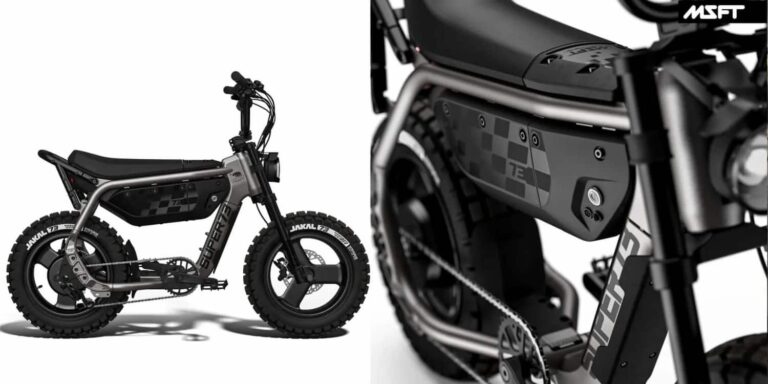
The targeted vehicles may be marketed as e-bikes, e-motos, electric dirt bikes, electric mini-bikes, pocket bikes, or electric motorcycles. However, a manufacturer or seller’s product name does not determine how a vehicle is classified under Texas law.
Law enforcement officials say some of the devices appearing around schools can reach motorcycle-like speeds, lack required roadway equipment, and are being operated by children who do not have the license that may be required for that type of vehicle.
The requested restrictions focus on school property. Texas law and applicable city ordinances continue to control whether a particular vehicle may be operated on public roads, sidewalks, bike lanes, or trails outside a campus.
How Houston-Area School Districts Have Responded
Katy ISD Says Campus Riding Is Already Prohibited
Katy ISD told ABC13 that high-speed, unregistered electric motorcycles and similar high-powered devices may not be ridden on school campuses while school is in session.
The district said its police department communicated with a constable about the concerns and continues to work with the law enforcement agencies serving its Harris, Fort Bend, and Waller county attendance area.
Katy ISD also noted that operation outside school property is governed by Texas law and applicable local ordinances, with local law enforcement responsible for enforcing those requirements.
Cy-Fair ISD Strongly Discourages Operating or Parking Them
Cypress-Fairbanks ISD sent a message to families on June 25 strongly discouraging students from operating or parking unregistered motorized devices on district property.
The district described electric motorcycles, electric mini-bikes, pocket bikes, and similar high-powered devices as different from traditional legal e-bikes. CFISD said law enforcement had identified devices at some schools that required licensed operators and had contacted parents to retrieve them because students could not legally operate them on streets or sidewalks.
CFISD warned families about concerns including:
- High speeds in congested school traffic areas
- Possible licensing, registration, and insurance requirements
- Unlicensed or inexperienced juvenile operators
- Missing lights and other roadway equipment
- Riders operating without helmets or proper safety gear
The district said it plans to work with Harris County Precinct 4 and Precinct 5 constables on traffic and motorized-vehicle safety education for students and families.
CFISD’s message strongly discourages the devices. It does not announce a complete district-wide ban.
Spring and Klein ISDs Were Reviewing the Issue
Spring ISD told ABC13 that it would look into the constables’ request. Klein ISD said it would continue working with law enforcement partners to support the safety of students and staff.
As of July 27, I could not confirm that either district had adopted a new district-wide prohibition specifically in response to the letters.
Families should check their school’s current student handbook, transportation rules, parking requirements, and campus communications before allowing a student to bring any motorized device to school.
What Counts as a Legal E-Bike in Texas?
Texas law defines an electric bicycle as a bicycle equipped with fully operable pedals, an electric motor of fewer than 750 watts, and a top assisted speed of 28 mph or less.
Texas recognizes three e-bike classes:
- Class 1: The motor assists only while the rider pedals and has a top assisted speed of 20 mph.
- Class 2: The motor may propel the bicycle without pedaling and has a top assisted speed of 20 mph.
- Class 3: The motor assists only while the rider pedals and has a top assisted speed of more than 20 mph but less than 28 mph.
A person must be at least 15 years old to operate a Class 3 electric bicycle in Texas.
A vehicle that meets the Texas electric-bicycle definition is treated differently from a motorcycle, moped, or other motor vehicle. However, schools, cities, parks, trails, campuses, and property managers may impose additional access and operating rules.
When an E-Moto Is Not Legally an E-Bike
A vehicle may fall outside the Texas electric-bicycle definition when it:
- Does not have fully operable pedals
- Has a motor rated at 750 watts or more
- Provides motor assistance beyond the applicable e-bike speed limit
- Uses a throttle to propel the vehicle beyond the Class 2 limit
- Has been modified to exceed its original class limits
- Functions more like a motorcycle, mini-bike, pocket bike, or electric dirt bike
Once a vehicle falls outside the electric-bicycle definition, it does not automatically become a street-legal motorcycle.
Depending on its design and legal classification, a higher-powered device may require a Class M license, registration, insurance, a license plate, and required roadway equipment. Some pocket bikes, mini-bikes, and off-road electric motorcycles cannot qualify for street registration at all, even if a seller markets them for transportation.
Texas DPS states that a Class M license authorizes a person to operate a motorcycle. TxDMV says motorcycles and mopeds must be registered for roadway use and warns that most pocket bikes and mini-scooters cannot pass a vehicle inspection, cannot be registered, and cannot legally be driven on public roads.
This distinction is important for parents. A seller describing a product as an “e-bike” does not mean a child can legally ride it to school on a public street.
Are High-Powered Electric Motorcycles Allowed on Sidewalks?
Sidewalk access for a qualifying electric bicycle depends heavily on local rules because Texas does not provide one simple statewide answer for every city and location.
A device legally classified as a motor vehicle generally cannot be operated on a sidewalk, sidewalk area, or hike-and-bike trail. Texas law provides an exception for crossing at a permanent or authorized temporary driveway and a limited exception for vehicles used to maintain a hike-and-bike trail.
Parents should not assume that moving an unregistered electric motorcycle from the road to the sidewalk solves the legal problem. It may create a separate violation while increasing the danger to pedestrians.
What Parents Should Check Before a Student Rides to School
Before allowing a child or teenager to ride an electric device to school, check the actual vehicle rather than relying on its marketing name.
- Look for fully operable pedals. Decorative pegs or pedals that cannot meaningfully propel the bike may not satisfy the Texas definition.
- Check the motor rating. A Texas electric bicycle must have a motor rated at fewer than 750 watts.
- Verify the assisted-speed limit. Motor assistance must stay within the applicable Class 1, Class 2, or Class 3 limit.
- Check throttle operation. A Class 2 e-bike has a top motor-assisted speed of 20 mph.
- Look for the required class label. The label should identify the class, top assisted speed, and motor wattage.
- Confirm the rider’s age. A Class 3 operator must be at least 15 years old in Texas.
- Read the school’s current rules. A vehicle that complies with state e-bike law may still be restricted on school property.
- Check local sidewalk and trail rules. Access can differ by city, neighborhood, park, trail, and campus.
- Determine whether a higher-powered vehicle can be licensed and registered. Lights, a seat, or a speedometer do not automatically make a vehicle street legal.
- Confirm insurance requirements. A vehicle classified as a motorcycle or moped may be subject to motor-vehicle insurance requirements.
What Could Happen Next?
School districts could respond in several ways. They may prohibit both operation and parking, ban riding while still allowing a device to be parked, require students to dismount, add registration or identification requirements, or continue relying on existing policies.
Districts could also focus on education and enforcement without adopting a new prohibition. CFISD, for example, strongly discourages students from operating or parking the devices and plans additional safety education, but its June 25 message does not announce a ban.
This story will need to be updated if any district formally changes its student handbook, transportation policy, parking rules, or enforcement procedures.
My Take
The most important part of this story is the distinction between legal electric bicycles and high-powered electric motorcycles. A broad headline saying Houston-area schools want to ban “e-bikes” would unfairly include ordinary Class 1, Class 2, and Class 3 bicycles that comply with Texas law.
At the same time, schools should not have to wait for a serious crash before deciding how to handle motorcycle-speed devices operated by unlicensed students in crowded arrival and dismissal areas.
Clear written policies would be better than vague warnings. Families need to know which devices are prohibited, whether students may park a compliant e-bike, what happens when a noncompliant vehicle is found, and whether a parent must retrieve it. The rules should focus on legal classification and performance rather than appearance or marketing language.
Sources
- ABC13 Houston – Constables ask school districts to restrict high-powered electric motorcycles
- FOX26 Houston – Mark Herman asks six districts to prohibit unregistered electric motorcycles
- Cypress-Fairbanks ISD – June 25 message about electric motorcycles and student safety
- Texas Transportation Code Chapter 664 – Electric bicycle definitions and classes
- Texas Transportation Code Chapter 551 – Electric bicycle operation and Class 3 age requirement
- Texas Transportation Code Section 545.422 – Motor vehicles on sidewalks and hike-and-bike trails
- Texas Department of Public Safety – Driver license classes and Class M authority
- Texas Department of Motor Vehicles – Motorcycle, moped, pocket-bike, and mini-scooter registration guidance

Kristina is not just an enthusiast but a true authority on electric bikes. Nestled in the coastal beauty of Virginia, Kristina has found the perfect backdrop for her passion for electric biking. As a dedicated wife and homeschooling mom, her life revolves around family, faith, and the thrill of adventure.
Originally hailing from Ohio, Kristina's journey with electric bikes began as a curiosity and quickly evolved into a deep expertise. Her blog is a testament to her love for electric biking, combining her fascination for eco-friendly transportation with her coastal lifestyle.
When she's not cruising the beach on her electric bike, you'll find Kristina indulging in her other loves: long walks along the shore, getting lost in a good book, and cherishing moments with her loved ones. With a heart as big as her love for animals, especially cats, Kristina brings a unique perspective to the electric bike world, grounded in her strong faith in God and her dedication to a sustainable lifestyle.
Through her blog, Kristina shares her extensive knowledge of electric bikes, offering valuable insights, tips, and recommendations to fellow enthusiasts. Whether you're a seasoned rider or a newcomer to the electric bike scene, Kristina's blog is your go-to source for all things electric biking, fueled by her passion, expertise, and the scenic beauty of coastal Virginia.