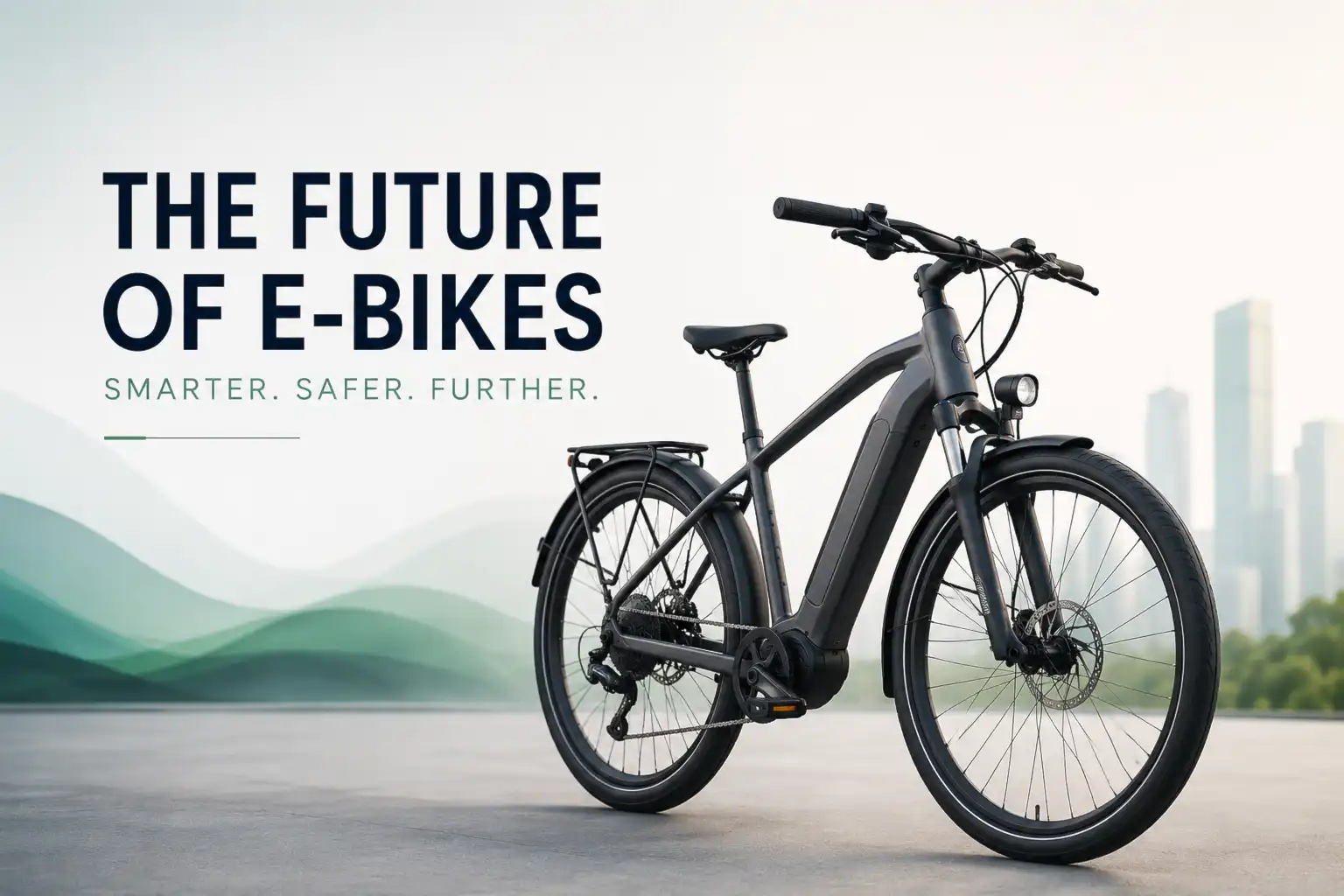
12 New E-Bike Technologies Changing How We Ride in 2026
Last Updated on October 9, 2026 by Kristina
New e-bike technologies in 2026 are changing much more than motor power and battery size. Some of the most useful advances are happening in braking, shifting, battery management, security, navigation, charging, range prediction, and the way the motor responds to the rider.
I am most interested in technology that solves a real problem rather than simply adding another screen or app. Some of the features below are already available on production e-bikes, while others are still limited to specific systems or are only beginning to reach the market.
If you are still comparing the basics, my electric bike buying guide explains motors, batteries, fit, brakes, and the features that matter most. You can also browse my free e-bike tools for practical calculators and diagnostics.
🔎 Why You Can Trust This Guide
I compared current manufacturer documentation, technical support pages, product specifications, and system updates. I separate features that are available now from technology that is still limited to specific systems or models.
12 New E-Bike Technologies at a Glance
| Technology | What it can do | Current example |
|---|---|---|
| ABS | Helps reduce wheel lock and loss of control under hard braking | Bosch eBike ABS |
| Automatic shifting | Changes gears automatically or semi-automatically | Bosch eShift |
| Motor-gearbox units | Combines the motor and multi-speed gearbox in one unit | Pinion MGU |
| Adaptive assistance | Adjusts motor support to changing riding conditions | Avinox Auto mode; Bafang M510RS/M560RS |
| Smart battery and range management | Uses battery protection, route data, and rider data to improve battery use and range estimates | Battery BMS systems; Bosch Range Control |
| Digital theft protection | Adds tracking, locking, alerts, or device-based locating | Specialized connected security |
| Connected apps and OTA updates | Adds tuning, diagnostics, ride data, and software updates | Specialized App, Bosch Flow |
| Rear radar | Warns about vehicles approaching from behind | Garmin Varia eRTL615 |
| Fast charging | Reduces charging time on compatible batteries | Selected Specialized systems |
| Digital cockpits and navigation | Brings route, ride, and system data onto integrated displays | Specialized MasterMind and other connected systems |
| Lighter drive systems | Reduces system weight and preserves a more bicycle-like feel | TQ HPR60; Bosch Hub Line and PowerTube 360 |
| Regenerative braking | Uses motor resistance for braking and can return some energy to the battery | Stromer |
1. Anti-Lock Braking Systems Are Becoming More Sophisticated
Anti-lock braking is one of the e-bike innovations I take most seriously because it addresses a basic safety problem: what happens when a rider brakes hard and a wheel begins to lock.
Bosch says its eBike ABS uses wheel-speed sensors to detect locking and automatically adjusts braking force. Bosch also offers ABS Pro modes for compatible systems.
I would not treat ABS as permission to ride faster or brake later. Tire grip, road conditions, rider technique, and brake maintenance still matter. But for commuters, older riders, heavy e-bikes, and anyone riding in mixed conditions, I think controlled braking technology has far more practical value than many flashy electronic extras.
For more basic safety guidance, see my e-bike helmet guide.
2. Automatic Shifting Is Moving From Novelty to Useful Feature
Electric shifting has been around for years, but current systems are doing more than replacing a cable with a button. They can now choose or prepare the gear for the rider based on cadence and riding conditions.
Bosch says eShift automatic shifting is available across a broad range of compatible smart-system drive units and shifting systems. Depending on the drivetrain, riders can use manual, semi-automatic, or automatic shifting.
This is one of those technologies I can see being especially useful in city riding. Coming to a stop in the wrong gear is a small annoyance on a normal bike, but on a heavier e-bike it can make starts awkward. A system that automatically selects a better starting gear can make stop-and-go riding feel much more natural.
If this feature interests you, my guide to e-bikes with automatic shifting compares current systems and bikes. If you are focused on daily transportation, my commuter e-bike guide covers the practical features I would prioritize.
3. Motor-and-Gearbox Units Are Simplifying the Drivetrain
The traditional e-bike drivetrain usually separates the motor from the bicycle’s gears. Pinion’s Motor.Gearbox.Unit takes a different approach by combining both functions in one compact package.
According to Pinion’s MGU documentation, the system combines a brushless electric motor with a gearbox offering up to 12 speeds. The goal is a more integrated drivetrain with fewer exposed shifting components.
I like the idea because it could simplify ownership on bikes that see a lot of mileage, dirt, or year-round use. It does not automatically mean lower repair costs, though. A highly integrated unit can also mean more specialized service requirements, so I would still check dealer support and parts availability before buying.
My e-bike motor guide explains the differences between common hub and mid-drive systems.
4. Adaptive Assistance Is Making Motor Support Feel More Natural
Many e-bikes already use torque sensors to respond to how hard a rider pedals. Newer systems are going further by automatically adjusting assistance as riding conditions change.
The Avinox Drive System, for example, offers multiple assistance modes and app-adjustable motor parameters. Avinox has also described an Auto mode designed to adapt assistance to changing riding conditions.
Bafang is pushing the same idea further in its M510RS and M560RS eMTB systems. The current Bafang RS product pages describe a 6-axis IMU that works with torque, cadence, and wheel-speed data to detect gradient changes and rider intent. Bafang’s August 19, 2026 release described these as production versions headed for mass production in Q4 2026, so I would treat them as an emerging production technology rather than something already common on shop floors.
I covered the timing and specifications in my Bafang M510RS and M560RS report.
I would describe these systems as adaptive assistance rather than broadly calling all of them “AI.” That distinction matters. Some e-bike systems genuinely use AI-based features, while others use sensors and control algorithms without the manufacturer making an AI claim.
5. Smart Battery Management and AI-Based Range Prediction Are Getting Better
This is one area where the term AI is supported by the manufacturer. Bosch describes Range Control as an AI-based feature.
The system considers information including route elevation, system weight, and recent riding behavior to estimate how much battery should remain at the destination. Bosch says the estimates can become more precise after riding data has been recorded.
Battery management is part of this broader trend too. A battery management system, or BMS, is not itself a new 2026 invention, but it remains one of the most important electronic systems inside an e-bike battery because it can monitor and protect the pack within the limits of its design. My e-bike battery management system guide explains what a BMS does and what riders should not assume it can prevent.
I think smarter battery and range information is more useful than simply displaying a large claimed range number. Real-world e-bike range changes with hills, wind, rider weight, tire pressure, temperature, speed, and assist level. A prediction that responds to actual conditions can be more useful than a fixed mileage estimate.
You can also use my e-bike range calculator to estimate how those factors may affect a specific ride.
If battery capacity is confusing, my guide to e-bike battery capacity and watt-hours explains what the numbers mean.
6. GPS Tracking and Digital Theft Protection Are Getting Better
E-bikes are expensive, portable, and attractive theft targets, so connected security is one of the developments I would look at closely on a higher-priced bike.
The Specialized App supports Turbo System Lock on compatible bikes and Apple Find My integration on supported models. Those features show how security can now be built into the bike’s connected system rather than added only as an accessory.
These systems are not substitutes for a strong physical lock. They may help deter theft, locate a compatible bike, or make unauthorized use more difficult, but features vary by model, subscription, phone platform, and connectivity.
If built-in tracking and connected security are priorities, my guide to the best e-bikes with GPS tracking compares bikes designed with those features. For a broader ownership strategy, see my guide to e-bike theft and homeowners insurance.
7. Connected Apps and Over-the-Air Updates Can Improve a Bike After Purchase
I would not buy an e-bike simply because it has an app. An app is useful only when it does something meaningful.
Specialized says its current app can tune compatible bikes, customize displays, track rides, manage security features, and deliver over-the-air updates. Bosch also continues to add functions through its connected smart system and eBike Flow app.
The upside is obvious: manufacturers can refine software or add compatible features without requiring a new bike. The tradeoff is that connected features create another dependency. I would check whether important riding functions still work without a phone, whether a subscription is required, and how long the manufacturer supports the system.
8. Rear Radar Can Warn Riders About Approaching Vehicles
Rear radar is one of the most interesting safety technologies crossing over from performance cycling into e-bike use.
Garmin’s Varia eRTL615 is designed specifically for compatible e-bikes and draws power from the bike rather than using its own rechargeable battery. Garmin says it can warn of approaching vehicles from up to 150 yards away.
A more integrated example appeared at IFA Berlin from September 4-8, 2026. The Volkswagen-licensed Smart eBike built by n+ combines a rear-facing camera, radar-based warnings, and a handlebar display. Independent reporters were able to see or ride the system at IFA, but the bike is still an emerging example rather than a mature industry benchmark, so I would not treat its feature set as standard e-bike equipment yet.
Radar does not replace mirrors, shoulder checks, hearing, or good road positioning. Garmin itself warns that the device is meant to improve situational awareness, not replace rider attention. I see it as another layer of information, especially for riders spending a lot of time on roads with faster traffic.
9. Fast Charging Is Becoming a Real E-Bike Feature
Charging speed has traditionally been one of the less exciting parts of e-bike ownership. Larger batteries can take hours to refill, which makes mid-day charging inconvenient.
Current high-power systems are beginning to change that. Specialized advertises 0 to 80 percent charging in under an hour on the current Turbo Levo 4 Comp with its supported charging system.
Fast charging can be genuinely useful for commuters, touring riders, and people sharing a bike between multiple daily trips. I would still use only the charger and charging method approved for the specific battery system.
10. Digital Cockpits and Navigation Are Becoming More Integrated
Older e-bike displays often showed little more than speed, assist level, and battery percentage. Newer systems are becoming full ride interfaces.
Integrated displays are also becoming more capable. On the current Turbo Levo 4, Specialized highlights its MasterMind display and data integration, while other connected systems combine ride data, tuning, and navigation in their own ecosystems.
I like integrated navigation when it reduces the need to mount and constantly check a phone. But I would still pay attention to screen visibility, glove usability, offline behavior, subscription requirements, and how expensive the display is to replace.
11. Lighter Drive Systems Are Making Some E-Bikes Feel More Like Bicycles
Not every e-bike needs maximum torque or a huge battery. Some of the most interesting engineering work is aimed at making the motor and battery system smaller and lighter so the finished bike handles more like a conventional bicycle.
TQ lists the current HPR60 at about 1.9 kg with 60 Nm of torque. TQ’s current product page lists 1,924 g, while its technical manual lists approximately 1,950 g including cooling fins, so I prefer the rounded figure rather than pretending there is one universal exact weight.
Bosch added another 2026 example with its first Hub Line motor and PowerTube 360 battery. Bosch introduced the urban-focused system in June 2026 and describes the PowerTube 360 as its slimmest smart-system battery to date, pairing a compact 360 Wh pack with a lightweight hub-motor design.
For riders who need to carry a bike up stairs, load it onto a rack, or simply want a more natural ride feel, I think lower system weight can matter more than headline motor output.
If bike weight is one of your biggest buying concerns, my best lightweight e-bikes guide compares current models designed to be easier to carry, load, and maneuver.
12. Regenerative Braking Is Real, but Its Benefits Need Context
Regenerative braking is common in electric cars but much less common on e-bikes. One reason is that many e-bike drive systems use freewheels or mid-drive layouts that are not designed to drive the motor backward during braking.
Stromer is a real current example. Its support documentation explains regenerative braking and recuperation modes that use motor resistance while slowing the bike and can return energy to the battery.
I would keep expectations realistic. Recuperation on an e-bike is not a free-energy system, and I would not promise a specific range gain unless a manufacturer or independent test supports it for that bike and riding condition. Its usefulness depends on the motor design, terrain, speed, battery state of charge, and how often the rider is slowing down.
Which E-Bike Technologies Matter Most?
If I were choosing a bike today, I would prioritize innovations in roughly this order: safety, ride quality, security, serviceability, then convenience features.
- For safety: ABS, strong brakes, good lighting, and radar can be meaningful.
- For city riding: automatic shifting, digital theft protection, and integrated navigation can reduce everyday hassle.
- For long rides: smarter battery management, better range prediction, and faster charging can matter more than another performance mode.
- For natural ride feel: lighter drive systems and well-tuned adaptive assistance stand out.
- For low-maintenance ownership: integrated drivetrains can be appealing, but I would confirm service access first.
Technology should make an e-bike easier, safer, or more enjoyable to own. If a feature adds complexity without solving a problem you actually have, I would not pay extra just to get it.
What I Am Watching Next
A few developments are worth watching without pretending they are already standard. More manufacturers are experimenting with deeper vehicle-to-app integration, smarter route planning, better diagnostics, higher charging power, and more automated drivetrain behavior.
I am also watching how long manufacturers support connected systems. An e-bike can last many years, so software support, replacement displays, battery availability, and service access matter just as much as what an app can do on day one.
If you want to compare complete bikes rather than individual technologies, start with my best electric bikes guide or use the e-bike recommendation quiz.
Frequently Asked Questions
What is the most important new e-bike technology?
For many riders, I would put braking and safety technology near the top. ABS is a good example because it addresses a specific loss-of-control risk rather than simply adding convenience.
Are AI-powered e-bikes available now?
Some manufacturers use AI for specific functions. Bosch, for example, describes its Range Control feature as AI-based. I would avoid calling every adaptive motor mode or connected app “AI” unless the manufacturer documents it that way.
Do e-bikes have automatic transmissions?
Some do. Systems such as Bosch eShift and Pinion’s integrated drivetrain can support automatic or electronically controlled shifting depending on the bike and component combination.
Can an e-bike recharge its battery while braking?
Some can, but regenerative braking is not common across the industry. Stromer is one current example. The amount of recovered energy varies, and riders should not assume it will dramatically extend range.
Is GPS tracking built into every smart e-bike?
No. Tracking, phone integration, motor locking, and subscription requirements vary widely. Always check the exact model and market before assuming a security feature is included.
Is fast charging bad for an e-bike battery?
Use only the charging system approved by the manufacturer. Battery management systems and charging limits differ, so a charger that is safe for one battery should never be assumed safe for another.
My Take
The e-bike innovations that impress me most are not necessarily the ones that sound futuristic. I care more about a bike stopping predictably, choosing a useful gear, estimating range honestly, resisting theft, and being easy to live with than I do about having the longest feature list.
ABS, automatic shifting, smarter battery and range management, connected security, and lighter drive systems all solve recognizable rider problems. Rear radar and fast charging are more specialized, but for the right rider they can make a noticeable difference.
The bigger question is what happens five years after purchase. Before paying extra for a connected or highly integrated system, I would check warranty coverage, replacement battery availability, service access, software support, and whether the bike remains usable if an app or online service changes. My electric bike buying guide has a broader before-you-buy checklist.
Sources
- Bosch eBike Systems – How eBike ABS Works
- Bosch eBike Systems – eShift and current system updates
- Bosch eBike Systems – AI-based Range Control
- Bosch eBike Systems – Hub Line and PowerTube 360
- Pinion – Motor.Gearbox.Unit technology
- Avinox – Drive System
- Bafang – M510RS and M560RS motor systems
- Bafang – August 2026 RS production-version announcement
- Specialized – App, Turbo System Lock, Find My, and OTA updates
- Garmin – Varia eRTL615 e-bike rear radar
- TechRadar – Volkswagen-licensed Smart eBike at IFA 2026
- TQ – HPR60 drive system
- TQ – HPR60 technical manual
- Stromer – Regenerative braking and recuperation

Kristina is not just an enthusiast but a true authority on electric bikes. Nestled in the coastal beauty of Virginia, Kristina has found the perfect backdrop for her passion for electric biking. As a dedicated wife and homeschooling mom, her life revolves around family, faith, and the thrill of adventure.
Originally hailing from Ohio, Kristina's journey with electric bikes began as a curiosity and quickly evolved into a deep expertise. Her blog is a testament to her love for electric biking, combining her fascination for eco-friendly transportation with her coastal lifestyle.
When she's not cruising the beach on her electric bike, you'll find Kristina indulging in her other loves: long walks along the shore, getting lost in a good book, and cherishing moments with her loved ones. With a heart as big as her love for animals, especially cats, Kristina brings a unique perspective to the electric bike world, grounded in her strong faith in God and her dedication to a sustainable lifestyle.
Through her blog, Kristina shares her extensive knowledge of electric bikes, offering valuable insights, tips, and recommendations to fellow enthusiasts. Whether you're a seasoned rider or a newcomer to the electric bike scene, Kristina's blog is your go-to source for all things electric biking, fueled by her passion, expertise, and the scenic beauty of coastal Virginia.