Parker, Colorado Launches Reporting Tool for Unsafe Electric Motorcycles and Dirt Bikes
Last Updated on May 7, 2026 by Kristina
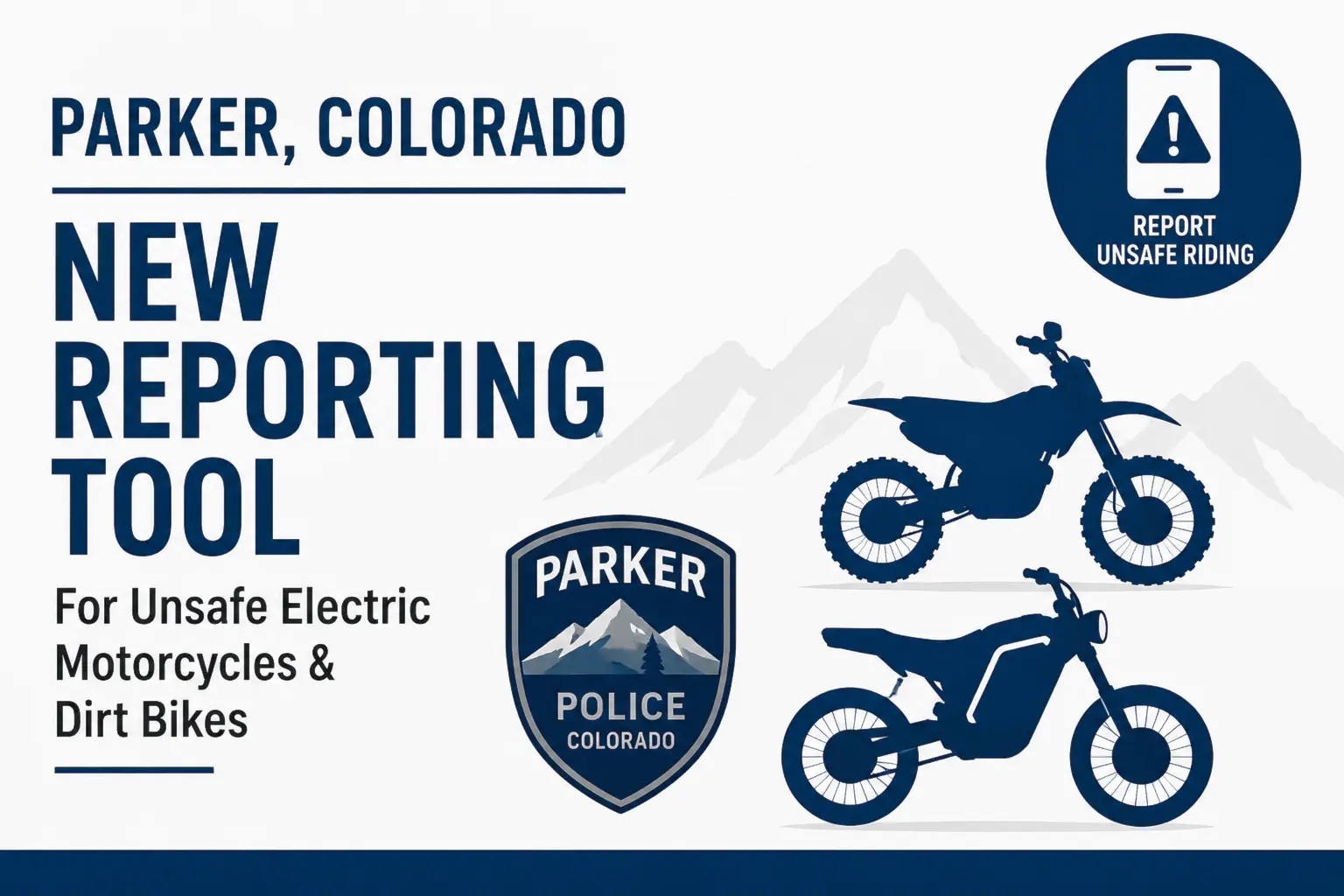
Parker, Colorado is taking a new step to address growing concerns over unsafe riding involving electric motorcycles and dirt bikes.
According to a recent report from CBS Colorado, the Parker Police Department has launched a new online reporting tool that allows residents to report unsafe or illegal activity involving electric motorcycles and dirt bikes in parks, trails, neighborhoods, and public spaces. Officials say the goal is to improve safety while helping police identify repeat problem areas and dangerous riding behavior.
Importantly, Parker Police specifically stated the tool is not aimed at normal e-bike riders or children casually riding bicycles. The focus is on unsafe or unlawful operation of high-powered electric motorcycles and dirt bikes that may fall outside traditional e-bike classifications.
👉 Related Guides:
- E-Bike Classes Explained
- State-by-State E-Bike Laws Guide
- Colorado E-Bike Laws Guide
- Sidewalk E-Bike Laws by State
- E-Bike Trail Access Checker Tool
What Is Parker Colorado’s New Reporting Tool?
The reporting tool allows residents to submit information about:
- Reckless riding
- Dangerous speeding
- Riding on sidewalks or trails illegally
- Aggressive riding around pedestrians
- Off-road riding in restricted areas
- Possible illegal electric motorcycle activity
Police say many complaints involve high-powered electric motorcycles or electric dirt bikes being operated in places not designed for motorcycle-level speeds and performance.
According to Parker Police, some of these vehicles may legally qualify as motorcycles under Colorado law depending on configuration, power, and speed capability. That can mean:
- Registration requirements
- Licensing requirements
- Insurance requirements
- Restrictions on where they can legally operate
External Source:
- CBS Colorado Report:
https://www.cbsnews.com/colorado/news/parker-colorado-tool-unsafe-e-motorcycles-dirt-bikes/
What Counts as a Legal E-Bike in Colorado?
Colorado follows the common three-class e-bike system used in many states.
Class 1 E-Bike
- Pedal assist only
- Max assisted speed of 20 mph
Class 2 E-Bike
- Includes throttle
- Max assisted speed of 20 mph
Class 3 E-Bike
- Pedal assist
- Max assisted speed of 28 mph
- Typically allowed on roads and bike lanes but restricted on some trails
These are very different from high-powered electric motorcycles or electric dirt bikes capable of motorcycle-style acceleration and speeds far beyond standard e-bike classifications.
Why Cities Are Cracking Down
This issue is becoming more common across the United States.
Cities and towns are increasingly dealing with:
- Complaints from pedestrians
- Trail safety concerns
- Near-collisions
- Property damage
- Illegal riding in parks
- Modified e-bikes exceeding legal limits
- Electric dirt bikes riding on public trails and sidewalks
Some Colorado communities have recently increased enforcement or public discussion around modified or illegal electric motorcycles and high-powered e-bikes.
One of the biggest problems is public confusion. Many people now use the term “e-bike” to describe everything from:
- A small commuter bike
to - A 50+ mph electric dirt bike
That confusion can create problems for everyday riders using legal commuter e-bikes responsibly.
Legal E-Bike vs Electric Motorcycle Comparison
| Vehicle Type | Typical Top Speed | Pedals | Registration Needed? | Common Use |
|---|---|---|---|---|
| Class 1 E-Bike | 20 mph | Yes | No | Bike paths, commuting |
| Class 2 E-Bike | 20 mph | Yes | No | Casual riding, commuting |
| Class 3 E-Bike | 28 mph | Yes | Usually no | Fast commuting |
| Electric Dirt Bike | 40–70+ mph | Often no | Often yes | Off-road riding |
| Electric Motorcycle | 50–80+ mph | No | Yes | Road use |
Vehicles Commonly Confused With E-Bikes
Some vehicles often involved in these discussions include:
- Sur Ron-style electric motorcycles
- Talaria electric dirt bikes
- High-powered off-road electric bikes
- Modified e-bikes with unlocked speed limiters
Depending on local and state law, many of these vehicles may legally fall outside standard e-bike classifications.
That distinction matters because a legal commuter e-bike is very different from a motorcycle-level vehicle being operated on sidewalks or crowded trails.
How Riders Can Avoid Problems
If you ride an e-bike responsibly, there are several ways to avoid unwanted attention or legal problems:
Follow Local Trail Rules
Not every trail allows Class 3 e-bikes or throttle bikes.
Avoid Excessive Speed
Even legal e-bikes can create safety concerns when ridden aggressively around pedestrians.
Don’t Modify Your E-Bike Beyond Legal Limits
Unlocked speed settings and oversized motors can sometimes move a bike outside legal classifications.
Wear Proper Safety Gear
Helmets and lights help both safety and public perception.
Know Your Local Laws
Rules can vary heavily between cities, trails, parks, and campuses.
Parents Should Know
Many communities reporting issues with electric dirt bikes and high-powered e-motorcycles are seeing younger riders involved.
Parents should understand:
- Some electric dirt bikes are legally motorcycles
- Insurance and registration may be required
- Many trails and sidewalks prohibit these vehicles
- High speeds dramatically increase crash risks
A bike marketed online as an “e-bike” may not legally qualify as one under state law.
Could This Spread to Other States?
Very likely.
Communities across the U.S. are increasingly discussing:
- E-bike enforcement
- Registration proposals
- Trail restrictions
- Sidewalk riding rules
- Modified e-bike crackdowns
- Electric motorcycle classification rules
As electric vehicle technology evolves faster than laws can adapt, many cities are trying to figure out how to balance:
- Public safety
- Transportation access
- Recreation
- Enforcement practicality
Why This Matters for Regular E-Bike Riders
Many responsible riders worry that illegal or reckless riding could eventually affect:
- Trail access
- Public opinion
- Local regulations
- Insurance discussions
- Future e-bike laws
A commuter riding a legal Class 2 e-bike to work is very different from someone operating a motorcycle-speed electric dirt bike through crowded pedestrian areas.
Unfortunately, when the public sees unsafe behavior, all e-bike riders can end up grouped together.
That is one reason why clear classifications and responsible riding matter more than ever.
FAQs
No. The reporting tool is focused on unsafe or unlawful operation of electric motorcycles and dirt bikes, not normal legal e-bikes.
Not always. Many high-powered electric dirt bikes may legally qualify as motorcycles depending on speed, power, and local law.
Yes. In some states, removing speed limiters or heavily modifying a bike can move it outside legal e-bike classifications.
Many communities are responding to safety complaints, reckless riding, and confusion between legal e-bikes and motorcycle-level electric vehicles.
My Take
Personally, I think cities absolutely have the right to crack down on reckless riding and illegal electric motorcycles being used where they should not be.
If someone is flying through sidewalks, crowded trails, or pedestrian areas at motorcycle speeds, that creates a real safety issue for everyone around them.
At the same time, I also think local governments and media outlets need to be very careful not to lump all e-bikes together.
There is a huge difference between:
- Someone commuting to work on a legal Class 2 e-bike
and - Someone riding a high-powered electric dirt bike at 50 mph through public parks
Unfortunately, the public often sees both simply labeled as “e-bikes,” and that confusion is becoming a serious issue nationwide.
I think we are going to continue seeing:
- More enforcement
- More trail restrictions
- More local registration discussions
- More crackdowns on modified bikes
- More pressure for clearer legal definitions
Honestly, the e-bike industry probably needs clearer national messaging too. Right now, many people cannot easily tell the difference between a legal commuter e-bike and an electric motorcycle.
That confusion could eventually affect trail access, public acceptance, and future laws for responsible riders who are simply trying to use e-bikes for transportation, commuting, or recreation.
For more news on electric bikes click here
External Sources

Kristina is not just an enthusiast but a true authority on electric bikes. Nestled in the coastal beauty of Virginia, Kristina has found the perfect backdrop for her passion for electric biking. As a dedicated wife and homeschooling mom, her life revolves around family, faith, and the thrill of adventure.
Originally hailing from Ohio, Kristina's journey with electric bikes began as a curiosity and quickly evolved into a deep expertise. Her blog is a testament to her love for electric biking, combining her fascination for eco-friendly transportation with her coastal lifestyle.
When she's not cruising the beach on her electric bike, you'll find Kristina indulging in her other loves: long walks along the shore, getting lost in a good book, and cherishing moments with her loved ones. With a heart as big as her love for animals, especially cats, Kristina brings a unique perspective to the electric bike world, grounded in her strong faith in God and her dedication to a sustainable lifestyle.
Through her blog, Kristina shares her extensive knowledge of electric bikes, offering valuable insights, tips, and recommendations to fellow enthusiasts. Whether you're a seasoned rider or a newcomer to the electric bike scene, Kristina's blog is your go-to source for all things electric biking, fueled by her passion, expertise, and the scenic beauty of coastal Virginia.