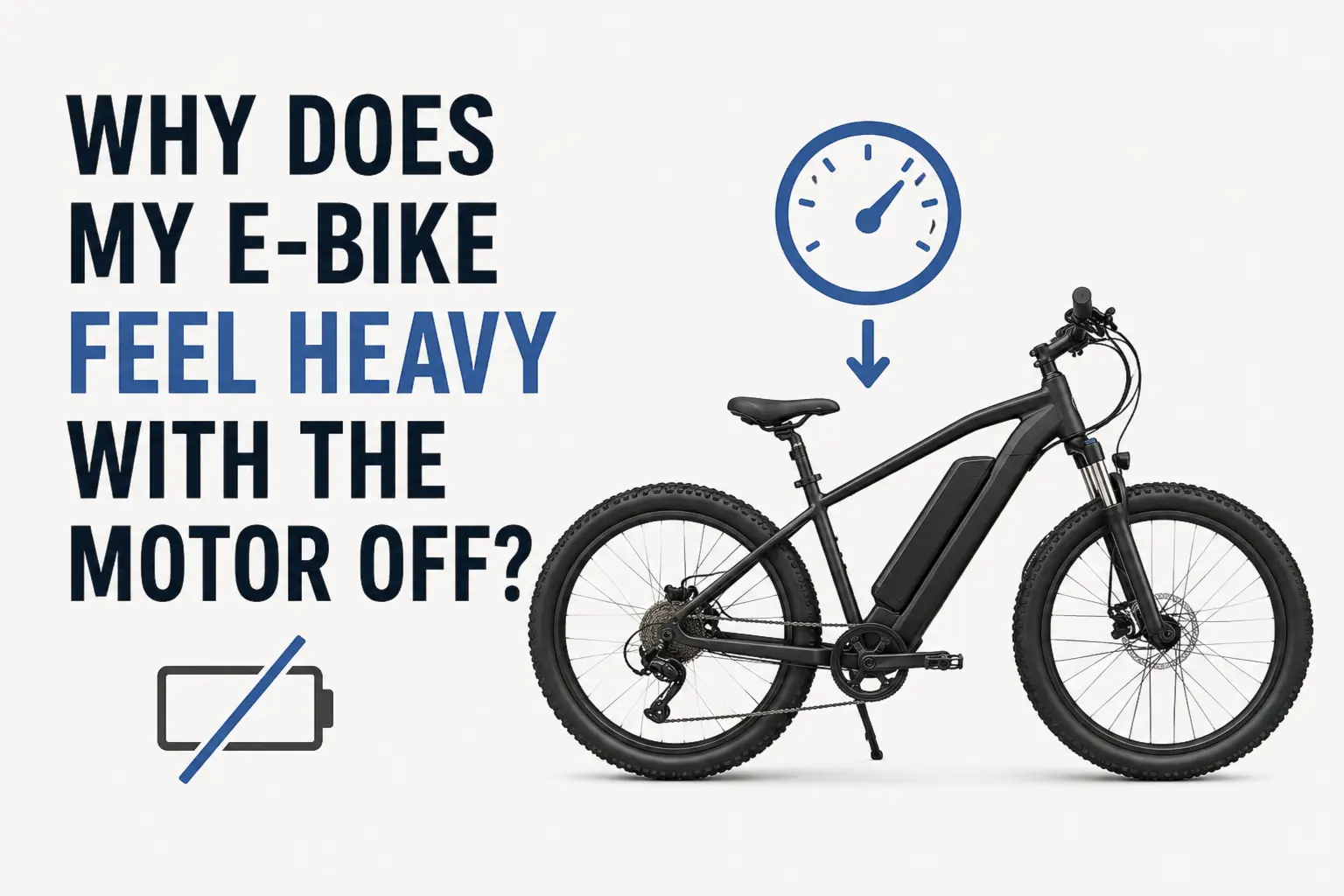
Why Does My E-Bike Feel Heavy With the Motor Off? Causes, Fixes, and What’s Normal
Last Updated on June 1, 2026 by Kristina
If your e-bike suddenly feels like you’re pedaling through mud when the motor turns off, you’re probably wondering if something broke.
In many cases, nothing is wrong at all.
E-bikes are heavier than traditional bicycles, and once motor assistance disappears you suddenly notice the full weight of the bike. But sometimes unusual resistance can point to issues like dragging brakes, low tire pressure, drivetrain problems, or wheel resistance.
If you’re still learning how different motors and assist systems work, check out our E-Bike Buying Guide to understand how motors, pedal assist systems, and bike styles change ride feel.
Who This Guide Is For (and Who It’s Not)
This guide is for:
- Riders whose battery died unexpectedly
- Riders who suddenly notice difficult pedaling
- New e-bike owners
- Riders trying to diagnose resistance issues
This guide may not be for:
- Complete motor failures
- Charging problems
- Display errors
- Pedal assist cutting in and out
How We Evaluate E-Bike Troubleshooting Advice
For this guide, we combined:
- Common rider-reported troubleshooting issues
- Manufacturer recommendations and maintenance guidance
- Known mechanical causes of resistance and drag
- Real-world ownership experiences
- Safety considerations and routine maintenance practices
We aim to provide practical guidance that helps riders identify likely causes before assuming major component failure.
For general bicycle safety and educational resources, PeopleForBikes also provides helpful information for riders.
Why Your E-Bike Feels Heavy With the Motor Off
Most e-bikes feel heavier with the motor off because:
- E-bikes weigh more than standard bicycles
- Pedal assist may have been doing more work than you realized
- Tire resistance increases effort
- Fat tires can create additional rolling resistance on pavement
- Mechanical issues may create drag
Some additional effort is completely normal.
Feeling like you’re pedaling through wet concrete usually isn’t.
📖 Read Next
DIY Troubleshooting: E-Bike Motor Not Engaging
Which E-Bike Motor Is Easier to Maintain Long-Term? Hub vs Mid-Drive Guide
Top 10 E-Bike Maintenance Mistakes That Damage Your Motor
Why Some E-Bikes Feel More Powerful (Even With the Same Watt Motor)
Motor Power Calculator – How Many Watts Does Your E-Bike Need?
Quick Diagnosis Table
| Symptom | Likely Cause | Quick Check |
|---|---|---|
| Bike suddenly feels heavy | Brake drag | Spin wheels |
| Heavy after battery dies | Normal loss of assist | Compare with previous rides |
| Steering feels sluggish | Tire pressure | Check PSI |
| Heavy climbing hills | No assist | Check assist level |
| Wheel slows quickly | Rotor rubbing | Lift wheel and spin |
| Rough pedaling | Drivetrain issue | Inspect chain |
Quick Check:
Ask yourself:
✔ Heavy only when motor turns off?
✔ One wheel harder to spin?
✔ Hearing rubbing noises?
✔ Tire pressure lower than normal?
✔ Bike suddenly changed recently?
Sudden changes are usually more important than gradual changes.
Real-World Example: “I Thought My Bike Broke”
A rider commuting home accidentally lets the battery drop to 0%.
Suddenly:
- Hills feel much steeper
- Acceleration disappears
- Pedaling becomes difficult
- The bike feels unusually heavy
Nothing actually broke.
The rider had become used to riding in Pedal Assist Level 4 or 5.
Many riders mistake losing assistance for a mechanical problem.
Cause #1: E-Bikes Are Simply Heavy
The most common explanation is also the simplest.
| Bike Type | Typical Weight |
|---|---|
| Traditional bicycle | 20–35 lbs |
| Lightweight e-bike | 40–55 lbs |
| Fat tire e-bike | 60–80+ lbs |
| Cargo e-bike | 70–100+ lbs |
Once assistance disappears:
- Battery weight remains
- Motor weight remains
- Frame weight remains
Your legs now do all the work.
Cause #2: Pedal Assist Was Helping More Than You Realized
Many riders underestimate how much work the motor was doing.
Pedal Assist Level 1:
- Mild support
- Similar to traditional cycling
Pedal Assist Level 5:
- Motor may be contributing much more of the effort
If you’ve ridden at high assist levels for weeks or months, suddenly riding without power can feel dramatic.
➡ Related: Pedal Assist vs Throttle: Choosing the Right System
Cause #3: Tire Pressure Is Lower Than You Think
Low tire pressure creates additional rolling resistance.
Symptoms include:
- Heavy steering
- Sluggish acceleration
- Lower battery range
- More effort while pedaling
Typical starting ranges:
| Tire Type | Typical PSI |
|---|---|
| Commuter | 40–65 PSI |
| Mountain | 30–50 PSI |
| Fat tires | 5–30 PSI |
Always follow the tire sidewall recommendation.
➡ Helpful tool: E-Bike Tire Pressure Calculator
Cause #4: Brake Drag
Brake rubbing is extremely common.
Signs include:
- Scraping sounds
- Wheel slowing quickly
- Rotor warmth
- Extra effort while riding
Quick test:
- Lift wheel
- Spin wheel by hand
- Compare front and rear wheels
If one wheel stops quickly, investigate brake alignment.
Cause #5: Motor Type Can Change Ride Feel
Motor design matters.
Geared hub motors
Usually create very little drag because internal freewheel mechanisms disengage when power stops.
Direct-drive hub motors
May create noticeable resistance because of magnetic drag.
Mid-drive motors
Generally do not create significant drag themselves, but drivetrain characteristics and bike weight can make the bike feel different.
➡ Related: What Is E-Bike Motor Torque?
Cause #6: Fat Tires Create More Rolling Resistance On Pavement
Fat tires are excellent for:
- Sand
- Loose dirt
- Snow
- Rough terrain
But on pavement:
- Larger contact patches increase resistance
- Lower PSI settings increase drag
- Pedaling can feel slower without assistance
Cause #7: Drivetrain Resistance
A dirty drivetrain can make a noticeable difference.
Check:
- Chain condition
- Bent derailleur
- Dirty cassette
- Stiff chain links
Symptoms:
- Rough pedaling
- Skipping gears
- Additional resistance
➡ Related: E-Bike Maintenance & Troubleshooting Guide
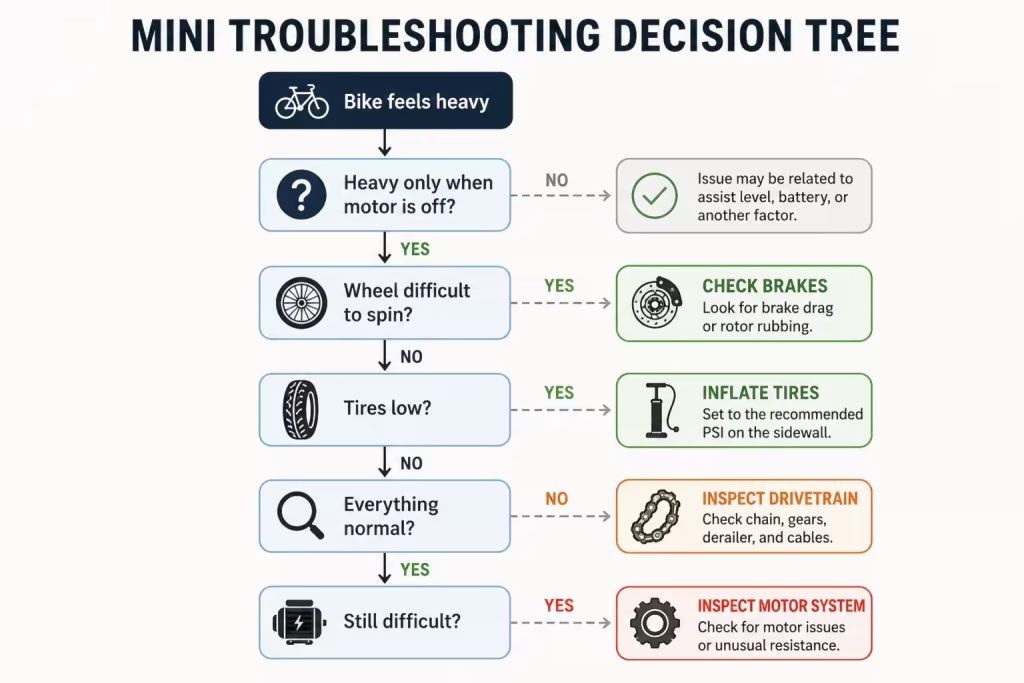
🎬 Watch: Check for Brake Drag and Wheel Resistance
If your e-bike suddenly feels harder to pedal, brake rubbing is one of the first things worth checking. This quick video shows how wheel resistance and brake drag can create a heavy-feeling ride.
Still feels heavy after checking brakes?
Move on to:
➡️ Tire pressure
➡️ Drivetrain condition
➡️ Motor type and resistance
➡️ Battery and assist settings
Small issues often add up more than riders expect.
What Is Normal vs Not Normal?
| Normal | Possible Problem |
|---|---|
| Slightly harder pedaling | Sudden major resistance |
| Bike heavier than regular bicycle | Wheel barely spins |
| Small changes in feel | Scraping noises |
| Harder climbing hills | Burning smell |
Stop Riding If You Notice
- Burning smells
- Grinding noises
- Severe wheel resistance
- Sudden jerking
- Wheel wobble
- Overheating warnings
The U.S. Consumer Product Safety Commission recommends addressing mechanical concerns before continued use.
FAQs
Sudden changes often suggest tire pressure loss, brake drag, or drivetrain resistance.
Yes. Most e-bikes function normally without power, although they will feel heavier.
You may be experiencing the difference between motor assistance and full rider effort.
Yes. Even moderate pressure drops can noticeably increase rolling resistance.
Yes. Some direct-drive hub systems create magnetic resistance that riders can feel.
Final Thoughts
If your e-bike feels heavy with the motor off, don’t immediately assume something is broken. In many cases, you’re simply noticing the full weight of the bike and how much assistance the motor was providing during normal rides.
But if the bike suddenly feels much harder to pedal than it did before, pay attention. Small issues like low tire pressure, brake drag, or drivetrain resistance can create a surprisingly large difference in ride feel and may eventually affect battery range and overall performance.
A few quick checks now can save frustration later and help keep your e-bike riding smoothly. <div style=”background:#EAF2FB;padding:20px;border-left:4px solid #3B82F6;border-radius:8px;”>
Need help troubleshooting your e-bike?
Try these helpful resources:
➡️ E-Bike Tools Hub
➡️ E-Bike Tire Pressure Calculator
➡️ How to Tell If Your E-Bike Controller Is Bad
➡️ 5 Common Pedal Assist Problems and Fixes
➡️ Maintenance and Troubleshooting Guide
Small problems are often easier to fix when you catch them early.

Kristina is not just an enthusiast but a true authority on electric bikes. Nestled in the coastal beauty of Virginia, Kristina has found the perfect backdrop for her passion for electric biking. As a dedicated wife and homeschooling mom, her life revolves around family, faith, and the thrill of adventure.
Originally hailing from Ohio, Kristina's journey with electric bikes began as a curiosity and quickly evolved into a deep expertise. Her blog is a testament to her love for electric biking, combining her fascination for eco-friendly transportation with her coastal lifestyle.
When she's not cruising the beach on her electric bike, you'll find Kristina indulging in her other loves: long walks along the shore, getting lost in a good book, and cherishing moments with her loved ones. With a heart as big as her love for animals, especially cats, Kristina brings a unique perspective to the electric bike world, grounded in her strong faith in God and her dedication to a sustainable lifestyle.
Through her blog, Kristina shares her extensive knowledge of electric bikes, offering valuable insights, tips, and recommendations to fellow enthusiasts. Whether you're a seasoned rider or a newcomer to the electric bike scene, Kristina's blog is your go-to source for all things electric biking, fueled by her passion, expertise, and the scenic beauty of coastal Virginia.