What Wears Out First on an E-Bike? Brakes, Chains & Tires
Last Updated on October 4, 2026 by Kristina
There is no single part that always wears out first on an e-bike. Brake pads, chains, and tires are among the most common early wear items, and the order depends on how and where you ride.
E-bike weight, motor assistance, hills, braking habits, weather, tire pressure, drivetrain type, and maintenance can all change how quickly parts wear. The battery is different: it usually loses usable capacity gradually rather than behaving like a mechanical wear item.
If you are trying to understand total e-bike lifespan rather than individual wear parts, see How Long Do E-Bikes Last?. For diagnosis help, use the E-Bike Troubleshooting Tool.
What Wears Out First on an E-Bike?
The most common wear areas to watch are:
- Brake pads – friction material gets thinner with use, especially with frequent braking, hills, heavier loads, and higher speeds.
- Chain and drivetrain – chain wear can accelerate wear on cogs and chainrings if it is ignored.
- Tires – wear depends heavily on pressure, load, riding surface, tire design, and riding style.
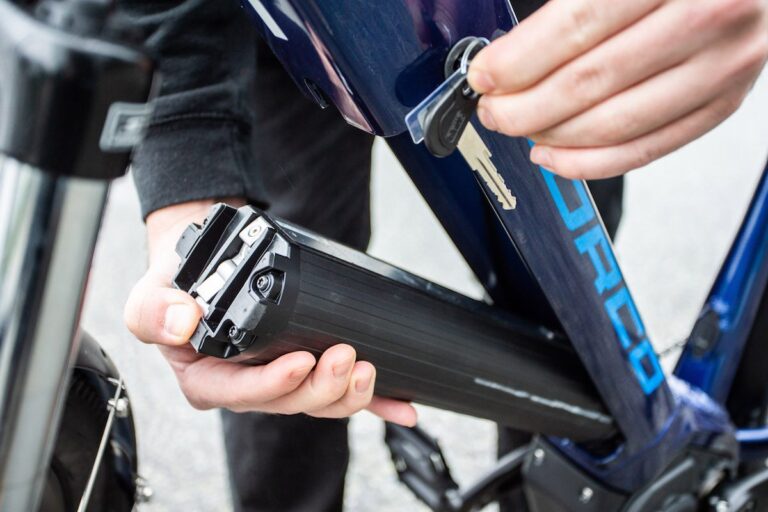
- Battery – lithium-ion batteries gradually lose capacity with age and use, but they are not usually the first mechanical component to need replacement.
There is no reliable universal mileage at which these parts will wear out. Inspection and manufacturer-specific limits are more useful than a one-size-fits-all mileage number.
📖 Read Next
Understanding Electric Bike Classes: A Comprehensive Guide
How to Size an E-Bike for Your Height
Best E-Bikes for Women – Comfortable, Easy-to-Ride Picks
Best E-Bikes for Tall Riders (6’0” and Up) – Top Picks & Fit Guide
Recommended Electric Bikes for Short People (Including Riders Down to 4′11″)
Electric Bike Battery Capacity: Amp Hours (Ah) Explained
Best Commuter E-Bikes Under 2000 Dollars
Safety First
Stop riding if braking is weak, a tire is damaged or exposing casing material, the drivetrain is skipping under load, or another component appears unsafe. If you are not confident inspecting brakes, tires, or drivetrain wear, have a qualified bicycle or e-bike technician check the bike.
Stop using or charging the e-bike if you notice smoke, swelling, unusual heat, damaged wiring, sparks, leaking, or a strong chemical odor. Do not open or attempt to rebuild a lithium-ion battery pack.
Brake Pads: Check Thickness, Not Just Mileage
Brake pads are a normal wear item, but I would not assume they will always be the first component you replace. Their life varies widely with terrain, bike and rider weight, braking technique, weather, pad compound, rotor condition, and riding speed.
The better approach is to inspect the actual friction material and follow the brake manufacturer’s limit. For example, Shimano service documentation for applicable disc brakes says to replace pads when the friction material is worn to about 0.5 mm, or sooner when contamination or other conditions require replacement.
Warning signs can include reduced braking performance, a noticeable change in lever feel, unusual noise, or visibly thin pads. Noise alone does not prove that pads are worn out because contamination, alignment, or rotor issues can also cause noise.
See the Shimano disc-brake maintenance guidance for an example of a manufacturer-specific wear limit.
Chains and Drivetrains: Measure Wear Before It Spreads
A chain does not need to be replaced at a fixed mileage. Measuring chain wear with a compatible chain checker is more useful because drivetrain design, riding conditions, lubrication, cleaning, shifting habits, and motor system can all affect wear.
Park Tool’s current general guidance uses different wear points depending on the drivetrain: around 0.75% for many 5- to 10-speed chains, 0.5% for many 11- to 13-speed chains, and 1.0% for many single-speed chains. The component manufacturer’s instructions should take priority when they specify a different limit.
Replacing a worn chain at the appropriate point matters because excessive chain wear can accelerate wear on rear cogs and other drivetrain components. That can turn a relatively simple maintenance item into a more expensive repair.
For the measurement guidance, see Park Tool’s CC-4.2 chain-wear guidance.
Hub Motor vs. Mid-Drive Wear
A mid-drive motor sends motor power through the bicycle’s chain and sprockets, so drivetrain condition deserves especially close attention. A hub motor drives the wheel separately from the chain, so the motor itself does not add its torque through the chain in the same way.
That does not mean every mid-drive bike will wear out chains quickly or every hub-drive bike will have low drivetrain wear. Rider technique, gearing, maintenance, total load, terrain, and component quality still matter.
Tires: Pressure and Riding Conditions Matter
Tire life varies too much for one mileage estimate to be dependable across e-bikes. Tire construction, rider and cargo weight, surface, pressure, braking, acceleration, punctures, and riding style can all change how quickly a tire wears.
Schwalbe notes that prolonged riding with insufficient tire pressure can cause premature wear and sidewall damage. Its guidance recommends checking tire pressure regularly and replacing a tire when the puncture-protection layer or carcass threads become visible through the tread.
Use the pressure range printed on the tire and the bike or tire manufacturer’s guidance. The right pressure also depends on tire size and load, so do not assume that one PSI recommendation fits every e-bike.
See Schwalbe’s guidance on bicycle tire pressure and tire wear limits.
Battery Wear Is Different From Mechanical Wear
An e-bike battery usually loses usable capacity gradually rather than wearing out like a brake pad or tire. Age, charging patterns, temperature, storage, usage, and the battery’s own chemistry and management system all affect its service life.
Battery-care recommendations are brand-specific. Bosch, for example, currently recommends storing its e-bike batteries at about 30-60% charge for longer periods, at room temperature in a dry location. That is Bosch guidance, not a universal storage percentage for every e-bike battery.
CPSC recommends following the manufacturer’s charging instructions, being present while charging, using only the charger supplied or recommended by the manufacturer, and using only approved replacement battery packs.
See Bosch’s long-term e-bike battery storage guidance and the CPSC micromobility battery charging guidance.
What to Inspect and When to Replace It
| Component | What to Check | Better Replacement Trigger |
|---|---|---|
| Brake pads | Friction material, braking feel, contamination, rotor contact | Manufacturer minimum thickness or service condition |
| Chain | Measured chain wear, shifting quality, corrosion, stiff links | Manufacturer wear limit measured with a compatible chain checker |
| Tires | Tread condition, cuts, cracking, sidewalls, casing, pressure | Manufacturer wear limit, visible casing/protection layer, unsafe damage |
| Battery | Usable range, charging behavior, error messages, heat, swelling, physical damage | Manufacturer or qualified-service diagnosis; stop using immediately for serious safety signs |
This condition-based approach is more useful than replacing parts simply because the bike has reached a particular mileage.
Is It Normal Wear or a Different Problem?
| Symptom | Possible Cause | First Step |
|---|---|---|
| Weak braking | Worn or contaminated pads, adjustment issue, hydraulic problem, rotor issue | Stop if braking is unsafe and inspect the brake system |
| Skipping under load | Chain/cassette wear, derailleur adjustment, damaged drivetrain component | Measure chain wear and inspect the drivetrain |
| Reduced range | Battery aging, cold weather, tire pressure, load, assist level, route conditions | Check operating conditions before assuming the battery is worn out |
| Power cutting out | Electrical connection, sensor, controller, battery, overheating, or another fault | Stop riding if unsafe and use manufacturer diagnostics or qualified service |
Not sure what is causing the problem? Use the E-Bike Troubleshooting Tool to narrow down likely causes before replacing parts.
A Simple E-Bike Wear-Check Routine
- Before rides: Check tire condition and pressure, confirm the brakes work properly, and look for anything loose or damaged.
- Regularly: Keep the drivetrain clean and lubricated according to the chain and lubricant manufacturer’s instructions.
- Check chain wear: Measure it periodically rather than waiting for shifting problems or relying only on mileage.
- Inspect brake pads: Check actual pad thickness and follow the brake manufacturer’s service limit.
- For long battery storage: Follow the battery manufacturer’s storage-charge and temperature recommendations.
Staying ahead of wear can help prevent one worn component from damaging other parts and can make changes in ride or braking performance easier to spot.
How to Reduce Premature Wear
- Keep tires at an appropriate pressure for the tire, bike, load, and riding conditions.
- Keep the chain clean and properly lubricated.
- Shift to an appropriate gear before applying heavy mid-drive motor torque.
- Inspect brake pads before they reach the manufacturer’s wear limit.
- Do not exceed the bike’s rated payload.
- Follow the battery manufacturer’s charging and storage instructions.
If you want to see how maintenance fits into total ownership expenses, read How Much Does It Really Cost to Own an E-Bike?
How Long Will Your E-Bike Last?
Wear-part replacement does not necessarily mean the e-bike itself is near the end of its life. Tires, chains, brake pads, and other service parts are designed to be inspected and replaced as needed.
For a broader estimate based on mileage, terrain, maintenance, and battery care, use the E-Bike Lifespan Calculator.
🔧 How This Guide Was Researched
This guide is based on manufacturer instructions, established safety guidance, technical references, and common rider experiences. Stop using or charging the bike if you notice smoke, swelling, unusual heat, damaged wiring, sparks, or a strong chemical odor.
I used manufacturer and technical guidance for the specific wear thresholds in this article instead of treating generic mileage estimates as universal replacement schedules.
External Sources
- Shimano – Disc brake maintenance and brake-pad replacement guidance
- Park Tool – Chain wear and general replacement thresholds
- Schwalbe – Bicycle tire pressure and premature wear
- Schwalbe – Bicycle tire wear guidance
- Bosch eBike Systems – Long-term battery storage guidance
- U.S. Consumer Product Safety Commission – Micromobility charging safety

Kristina is not just an enthusiast but a true authority on electric bikes. Nestled in the coastal beauty of Virginia, Kristina has found the perfect backdrop for her passion for electric biking. As a dedicated wife and homeschooling mom, her life revolves around family, faith, and the thrill of adventure.
Originally hailing from Ohio, Kristina's journey with electric bikes began as a curiosity and quickly evolved into a deep expertise. Her blog is a testament to her love for electric biking, combining her fascination for eco-friendly transportation with her coastal lifestyle.
When she's not cruising the beach on her electric bike, you'll find Kristina indulging in her other loves: long walks along the shore, getting lost in a good book, and cherishing moments with her loved ones. With a heart as big as her love for animals, especially cats, Kristina brings a unique perspective to the electric bike world, grounded in her strong faith in God and her dedication to a sustainable lifestyle.
Through her blog, Kristina shares her extensive knowledge of electric bikes, offering valuable insights, tips, and recommendations to fellow enthusiasts. Whether you're a seasoned rider or a newcomer to the electric bike scene, Kristina's blog is your go-to source for all things electric biking, fueled by her passion, expertise, and the scenic beauty of coastal Virginia.