Austin Clarifies E-Moto Rules; Staff Says Existing Texas Law Covers Enforcement
Last Updated on September 4, 2026 by Kristina
Update – September 4, 2026: Austin’s May 28 resolution asked city staff to review whether new local rules were needed for e-motos and similar high-powered electric vehicles. At the September 3 Mobility Committee briefing, staff reported that existing Texas law already provides the main framework for classification and enforcement, so broad City Code amendments are not being recommended in those areas at this time.
Austin is still moving forward with police training, public education, enforcement guidance, and work to identify a possible legal recreation area for electric mini motorcycles and similar devices. Officials also discussed a possible future seller-disclosure requirement, but no such ordinance was adopted on September 3.
For riders trying to separate legal e-bikes from higher-powered electric motorcycles, start with my Texas E-Bike Laws Guide. You can also compare Class 1, Class 2, and Class 3 e-bikes with devices that may instead fall under motorcycle or other motor-vehicle rules.
Current Status
Staff review of the main classification and enforcement questions is complete. Austin staff is not recommending broad City Code amendments in those areas at this time because Texas law already supplies the primary legal framework.
That does not mean Austin has ruled out every future ordinance. Police training and public education are continuing, Parks and Recreation is still exploring a possible legal recreation area, and City Council members discussed whether a more limited seller-disclosure requirement could be considered later.
What Changed Since the May Resolution?
When the Austin City Council approved its May 28 resolution, the city was still examining whether local code changes might be needed to address electric mini motorcycles, electric dirt bikes, pocket-bike-style devices, and other high-powered electric vehicles.
The resolution directed staff to review classifications, enforcement, officer training, public education, and possible recreational riding opportunities. After reviewing Texas law, Austin Police, Transportation and Public Works, and the City Attorney’s Office concluded that existing state law already addresses the main classification and enforcement questions identified by the council.
That September finding is an important development from the original May story. Austin is no longer simply studying whether it needs a new local regulatory system. The current emphasis is on applying existing law more consistently and helping officers, riders, parents, and buyers understand which rules apply to which vehicles.
E-Motos Are Not Automatically E-Bikes
One of the biggest sources of confusion is the way the word “e-bike” is used for very different machines.
Under Texas law, a qualifying electric bicycle has fully operable pedals, an electric motor of fewer than 750W, and assisted operation within the state’s e-bike speed limits. Traditional Class 1, Class 2, and Class 3 e-bikes are treated as bicycles rather than motorcycles when they meet that definition.
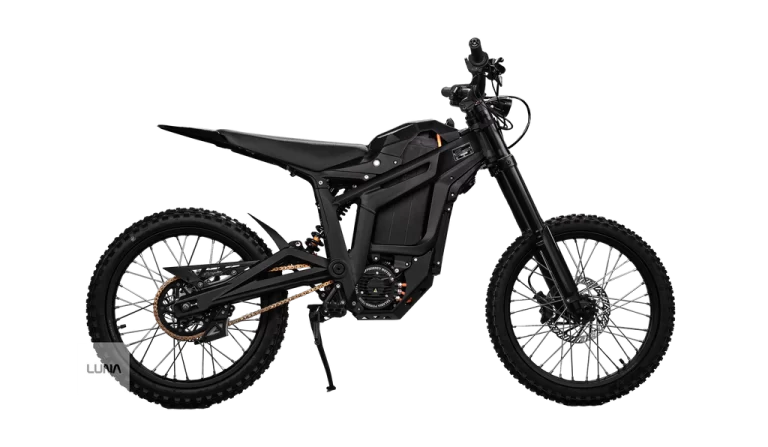
Many products marketed as e-motos, electric dirt bikes, mini motorcycles, or pocket bikes do not meet that definition. Depending on the vehicle’s design, power, speed, equipment, and other characteristics, it may instead fall under motorcycle or other motor-vehicle rules.
That is why I would not assume that every vehicle sold as an “e-moto” has exactly the same legal classification. The actual vehicle needs to be compared with Texas’ statutory definitions and equipment requirements.
If you’re trying to understand the difference between these categories, my E-Bike vs. Scooter vs. Moped guide explains why marketing labels do not always match the legal category.
Some E-Motos May Never Qualify for Street Use
Austin officials also made an important distinction between an electric motorcycle that could potentially satisfy Texas street-legal requirements and a smaller off-road or pocket-bike-style device that cannot realistically be registered for public-road use.
A qualifying motorcycle must satisfy the licensing, registration, insurance, equipment, and other requirements that apply under Texas law. A product being sold online or in a local shop as an “e-bike” or “e-moto” does not automatically mean it can legally be ridden on Austin streets.
For buyers, this is one of the most practical parts of the September briefing. Before purchasing a high-powered electric two-wheeler, check whether it can actually meet the legal requirements for the places where you intend to ride it.
Sidewalk and Trail Rules Depend on the Vehicle Classification
Texas law prohibits motor vehicles from being driven on sidewalks and hike-and-bike trails except in limited situations such as crossing a sidewalk to reach a driveway or authorized maintenance activity.
That restriction is important for e-motos that are legally classified as motor vehicles. It should not be confused with the separate legal framework for qualifying electric bicycles, which Texas generally treats as bicycles.
Local trail, park, campus, property, and facility rules can still matter, so riders should confirm the rules for the specific place they plan to use. My guide to e-bike sidewalk laws explains why sidewalk access should always be checked separately from road or bike-lane access.
How Austin Police Plan to Enforce the Rules
At the September 3 briefing, Austin Police described a range of enforcement options rather than a single automatic response for every violation.
- Education and warnings: Officers can use education or a warning when that approach is likely to stop the illegal behavior.
- Citations: Citations may be appropriate when conduct is dangerous, repeated, or when a warning is unlikely to correct the behavior. Some situations may require a citation under applicable law.
- Arrest: In sufficiently serious circumstances, especially where the conduct creates a significant safety risk or another offense applies, arrest may be an available enforcement option.
The goal of the city’s current work is to make that enforcement more consistent by giving officers clearer information about how different devices should be classified.
APD Is Expanding Officer Training
Austin Police has already distributed internal guidance on electric bicycles, e-motos, motorcycles, pocket bikes, and similar devices. At the September 3 meeting, APD said additional training material was being prepared to help officers identify vehicle types and select the appropriate enforcement response.
Public education is also part of the city’s response. Staff discussed updated outreach materials, videos, and online information intended to help residents understand which vehicles are legal on streets, sidewalks, trails, and other public spaces.
A Seller-Disclosure Rule Was Discussed, Not Approved
One idea raised during the Mobility Committee discussion was a possible local requirement for sellers to warn buyers when a device is not street legal.
Assistant Chief Michael Chancellor discussed the possibility of requiring a disclaimer for certain products, and Council Member Paige Ellis expressed interest in continuing that conversation. However, no seller-disclosure ordinance was adopted or formally approved at the September 3 meeting.
If Austin later develops a specific ordinance, the exact language, affected sellers, penalties, and implementation date would need to be reviewed separately.
Austin Is Still Looking for a Legal Recreation Area
The May resolution also asked staff to explore whether Austin could provide a designated place for off-road e-moto riding.
That work is continuing, but no specific location has been selected or approved. Parks and Recreation has examined possible options, and committee members also discussed whether other vacant city-owned property could be considered rather than limiting the search to parkland.
For now, riders should not interpret the discussion as authorization to use an unapproved city property for e-moto recreation.
Why This Matters for Legal E-Bike Riders
For traditional e-bike riders, the September briefing reinforces an important distinction: Austin’s concern is not simply that a vehicle has an electric motor.
The bigger regulatory questions involve high-powered machines that fall outside Texas’ e-bike definition and operate more like motorcycles or off-road motor vehicles. Clear classification helps prevent legal Class 1, Class 2, and Class 3 riders from being unnecessarily grouped together with devices that have very different speed, licensing, equipment, and access requirements.
You can compare how other states handle similar distinctions using the State-by-State E-Bike Laws Guide.
How This Story Was Verified
This report is based on Austin’s May 28 City Council resolution, the city’s August staff memorandum, the September 3 Mobility Committee presentation and meeting record, and current Texas transportation law. I clearly distinguish ideas discussed by committee members from policies that have actually been adopted.
My Take
I think Austin’s September update is a useful correction to the idea that every e-moto problem requires a brand-new city law.
If Texas law already classifies many of these devices as motorcycles or other motor vehicles, the first challenge is making sure officers, sellers, parents, and riders understand and consistently apply those rules. A 20 mph commuter e-bike and a high-powered electric mini motorcycle should not be treated as though they are the same vehicle.
I also think the seller-disclosure idea is worth watching because buyers may not realize that a product marketed as an “e-bike” is not legally usable on the street. But that is still only an idea, and Austin has not adopted such a requirement.
The recreation-area question is similarly unresolved. Creating a lawful place to ride certain off-road electric vehicles could reduce conflicts elsewhere, but Austin still needs an actual site, operating rules, and a clear implementation plan before riders can rely on that option.
Follow the Electric Bike News archive for additional e-bike law and safety updates.
External Sources
- City of Austin – May 28, 2026 executed resolution
- City of Austin – August 7, 2026 staff memorandum
- Austin Mobility Committee – September 3, 2026 staff presentation
- Austin Mobility Committee – September 3, 2026 meeting record
- Texas Transportation Code – electric bicycle definitions and requirements
- Texas Transportation Code – motor-vehicle operating rules

Kristina is not just an enthusiast but a true authority on electric bikes. Nestled in the coastal beauty of Virginia, Kristina has found the perfect backdrop for her passion for electric biking. As a dedicated wife and homeschooling mom, her life revolves around family, faith, and the thrill of adventure.
Originally hailing from Ohio, Kristina's journey with electric bikes began as a curiosity and quickly evolved into a deep expertise. Her blog is a testament to her love for electric biking, combining her fascination for eco-friendly transportation with her coastal lifestyle.
When she's not cruising the beach on her electric bike, you'll find Kristina indulging in her other loves: long walks along the shore, getting lost in a good book, and cherishing moments with her loved ones. With a heart as big as her love for animals, especially cats, Kristina brings a unique perspective to the electric bike world, grounded in her strong faith in God and her dedication to a sustainable lifestyle.
Through her blog, Kristina shares her extensive knowledge of electric bikes, offering valuable insights, tips, and recommendations to fellow enthusiasts. Whether you're a seasoned rider or a newcomer to the electric bike scene, Kristina's blog is your go-to source for all things electric biking, fueled by her passion, expertise, and the scenic beauty of coastal Virginia.