Arkansas E-Bike Laws: What Riders Need to Know in 2026
Last Updated on May 22, 2026 by Kristina
Last updated: May 2026
Planning to ride an e-bike in Arkansas? The good news is Arkansas generally follows the familiar three-class e-bike system used in many other states. Qualifying e-bikes are typically treated more like bicycles than motor vehicles, which means most riders do not need a driver’s license, registration, title, or insurance.
However, where many riders get confused is that state law and local trail rules are not always the same thing. Roads may allow all three e-bike classes while certain city trails, state park trails, or local bike systems may limit access.
If you are new to e-bikes, understanding e-bike classes matters because where you can legally ride often depends on whether you own a Class 1, Class 2, or Class 3 e-bike.
➡️ Still shopping? Our Electric Bike Buying Guide walks through what actually matters before buying an e-bike.
➡️ Traveling outside Arkansas? Compare rules across the country with our State-by-State E-Bike Laws Guide.
Who This Guide Is For (and Who It’s Not)
This guide is for:
- Arkansas commuters
- Recreational riders
- Trail riders
- Parents buying e-bikes for teenagers
- Riders visiting Arkansas
- New e-bike owners trying to understand local laws
This guide may not be for:
- Electric dirt bikes like Sur-Ron models
- Mopeds or motorcycles
- High-powered bikes modified beyond legal e-bike definitions
- Off-road vehicles without pedals
How We Evaluated This Guide
This guide was built using:
✔ Arkansas state law
✔ Arkansas State Park regulations
✔ Local city ordinances where available
✔ University transportation guidance
✔ Official government and transportation sources
Laws can change, and cities or trail systems may update rules independently.
Are E-Bikes Legal in Arkansas?
Yes.
Arkansas recognizes qualifying electric bicycles and generally treats them as bicycles instead of motor vehicles.
For most riders:
- No driver’s license required
- No registration required
- No insurance required
- No vehicle title required
However:
- Riders under age 16 cannot operate a Class 3 e-bike
- Cities can create local restrictions
- Park systems and trails can create additional rules
- Sidewalk riding rules can vary
Arkansas adopted a three-class e-bike structure similar to many other states.
Arkansas E-Bike Laws at a Glance
| Rule | Arkansas |
|---|---|
| Driver’s license required | No |
| Registration required | No |
| Insurance required | No |
| Three-class system used | Yes |
| Class 1 legal | Yes |
| Class 2 legal | Yes |
| Class 3 legal | Yes |
| Statewide helmet requirement | No |
| Minimum age for Class 3 | 16 |
| Local restrictions possible | Yes |
How Arkansas Defines E-Bikes
Arkansas uses a standard three-class system.
Class 1
- Pedal assist only
- Motor assistance stops at 20 mph
Best for:
- Trails
- Recreational riding
- New riders
Class 2
- Includes throttle capability
- Motor assistance up to 20 mph
Best for:
- Casual riding
- Riders who occasionally want throttle assistance
- Riders with mobility concerns
Class 3
- Pedal assist only
- Motor assistance up to 28 mph
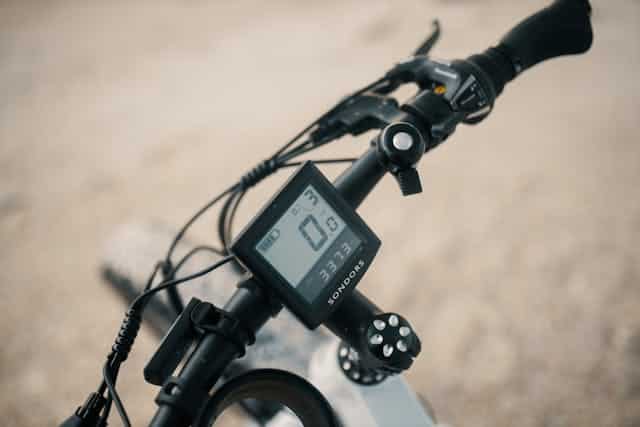
- Must include a speedometer
- Rider must be at least age 16
Best for:
- Commuting
- Longer rides
- Riders wanting higher assisted speeds
🎬 Watch: Not sure what Class 1, Class 2, or Class 3 actually means? This quick video breaks down the differences and helps make the Arkansas laws below easier to understand.
Arkansas E-Bike Class Comparison Chart
| Feature | Class 1 | Class 2 | Class 3 |
|---|---|---|---|
| Pedal assist | ✔ | Optional | ✔ |
| Throttle | ❌ | ✔ | Usually no |
| Max assisted speed | 20 mph | 20 mph | 28 mph |
| Minimum rider age | None statewide | None statewide | 16 |
| Common use | Trails | Recreation | Commuting |
Important Warning About Modified E-Bikes
Many riders install:
- Larger motors
- Controller upgrades
- Speed unlocks
- Throttle modifications
Be careful.
Once a bike exceeds Arkansas’s legal e-bike definition, it may no longer legally qualify as an electric bicycle.
Examples:
- Modified Class 2 reaching 35+ mph
- Sur-Ron-style electric motorcycles
- High-powered bikes without pedals
This could affect:
- Where you can legally ride
- Liability
- Enforcement
- Insurance
➡️ Related: How Fast Do Electric Bikes Go?
Where Can You Ride an E-Bike in Arkansas?
Generally:
- Public roads
- Bike lanes
- Shared-use paths where bicycles are allowed
- Many paved paths
However:
- Cities can create additional rules
- State parks can create additional rules
- Trail managers can create restrictions
This is where many riders accidentally break rules.
Arkansas State Parks Rules
Arkansas State Parks have additional guidance beyond general traffic law.
Roads inside state parks
- Class 1
- Class 2
- Class 3
Mountain bike trails and many multi-use trails
- Class 1 generally permitted
- Class 2 often restricted
- Class 3 often restricted
Always verify posted signs because trail systems can change.
Arkansas City E-Bike Rules: Local Laws and Riding Areas
Arkansas state law provides the basic e-bike rules, but cities, trail systems, and park managers can still create additional restrictions. This becomes especially important on trails, sidewalks, downtown areas, and parks.
Always watch for:
- Posted trail signs
- Sidewalk restrictions
- Local park rules
- Speed limits
Arkansas City E-Bike Comparison Chart
| City | Roads & Bike Lanes | Shared-Use Trails | Sidewalk Notes | Important Things Riders Should Know |
|---|---|---|---|---|
| Little Rock | ✔ | ✔ | Local restrictions possible | Arkansas River Trail crosses multiple jurisdictions |
| North Little Rock | ✔ | ✔ | Downtown restrictions may apply | River Trail rules may change between areas |
| Fayetteville | ✔ | ✔ Class 1–2 generally allowed | Downtown restrictions | 15 mph city trail speed limit |
| Bentonville | ✔ | ✔ Varies by trail manager | Local restrictions possible | Extensive bike and e-bike infrastructure |
| Hot Springs | ✔ | ✔ Class 1 | Local restrictions possible | Class 2 and Class 3 restricted on city trails |
| Conway | ✔ | ✔ | Local restrictions possible | Generally follows Arkansas state law |
| Fort Smith | ✔ | ✔ | Local restrictions possible | Ben Geren Park has additional restrictions |
| Jonesboro | ✔ | ✔ | Local restrictions possible | Follow posted trail guidance |
Little Rock
Little Rock generally follows Arkansas state law, but riders should pay attention around sidewalks and the Arkansas River Trail.
What riders should know:
- Roads generally follow state law
- Bike lanes generally follow bicycle rules
- Shared-use paths may have posted restrictions
Watch for:
- Downtown pedestrian-heavy areas
- Trail signs
- Different jurisdictions along the Arkansas River Trail
Rider tip:
Do not assume the entire Arkansas River Trail follows one rule set. Portions can cross multiple cities and park systems.
North Little Rock
North Little Rock generally follows state law but shares portions of the River Trail system.
What riders should know:
- E-bikes generally follow bicycle rules
- Roads and bike lanes generally follow state law
- Shared-use trail sections can have posted rules
Watch for:
- Downtown areas
- Pedestrian-heavy locations
- Trail-specific signs
Fayetteville
Fayetteville has one of Arkansas’s more detailed local trail approaches.
What riders should know:
- E-bikes generally allowed where bicycles are permitted
- Shared-use city trails have speed limits
- Riders must yield to pedestrians
Important local rule:
- City trail speed limit: 15 mph
Even if your bike assists to 20–28 mph, city trail speed limits still apply.
Watch for:
- Downtown sidewalk restrictions
- Trail signs
- Shared-use path speed limits
Bentonville
Bentonville is one of Arkansas’s most bicycle-focused communities.
What riders should know:
- Extensive cycling infrastructure
- Shared-use paths throughout the city
- Official resident e-bike rebate program
Watch for:
- Trail-specific rules
- Mountain trail restrictions
- Posted speed limits
Rider tip:
Not all mountain bike trails necessarily follow the same e-bike rules.
Hot Springs
Hot Springs uses more specific trail restrictions than many Arkansas cities.
What riders should know:
- Roads generally follow state law
- Class 1 e-bikes generally allowed on city trails
Restrictions:
- Class 2 may be restricted on trails
- Class 3 may be restricted on trails
Watch for:
- Trail signs
- Trail access notices
Conway
Conway generally follows Arkansas state e-bike law.
What riders should know:
- Roads generally follow bicycle rules
- Bike lanes generally follow state guidance
- Trail systems may use posted restrictions
Fort Smith and Sebastian County
Fort Smith generally follows state law.
However nearby Ben Geren Park has additional restrictions.
What riders should know:
- Class 1 e-bikes generally permitted on trails
Restrictions:
- Class 2 restricted on many bike trails
- Class 3 restricted on many bike trails
Watch for:
- Mountain bike trails
- Multi-use trail rules
Jonesboro
Jonesboro generally follows state law.
What riders should know:
- E-bikes generally follow bicycle rules
- Shared-use paths can have local restrictions
- Posted trail signs still apply
Can You Ride an E-Bike on Sidewalks in Arkansas?
Arkansas does not appear to have a statewide law that completely bans or allows e-bike use on sidewalks.
Instead, sidewalk rules can vary depending on:
- City ordinances
- Downtown business districts
- Shared-use paths
- School campuses
- Park systems
In many locations, bicycles and e-bikes may be allowed on sidewalks unless a city specifically restricts them. However, riders should always use caution around pedestrians.
Common situations where restrictions may apply:
- Downtown areas
- Heavy pedestrian zones
- School campuses
- Parks and shared-use trails
Rider tip: Even if sidewalk riding is legal, many areas expect riders to slow down and yield to pedestrians.
➡️ Sidewalk rules vary more than most riders realize. Explore our State-by-State Sidewalk Guide to compare laws across the country.
Arkansas Schools and Campus Rules
K-12 Schools
Arkansas does not appear to have a statewide e-bike law specifically covering K-12 campuses.
Individual schools commonly create their own rules.
Parents should check:
- Student handbooks
- Transportation policies
- Bicycle parking rules
- Helmet requirements if applicable
University of Arkansas
Students should expect:
- Bicycle parking locations
- Shared-use pathways
- Pedestrian priority areas
Heavy foot traffic areas:
- Student Union area
- Campus walkways
- Dickson Street areas
Arkansas State University
Students should expect:
- Bicycle parking requirements
- Restricted riding around buildings
- Pedestrian-heavy areas
University of Central Arkansas
Students should expect:
- Bicycle parking areas
- Campus pathway restrictions
- Shared-use areas
🎬 Watch: See what Arkansas trail riding looks like before planning your route.
Arkansas Trail Access Chart
| Location | Class 1 | Class 2 | Class 3 | Notes |
|---|---|---|---|---|
| Public roads | Yes | Yes | Yes | Follow normal bicycle traffic rules |
| Bike lanes | Yes | Yes | Yes | Local rules can still apply |
| Arkansas State Park roads | Yes | Yes | Yes | All three classes generally allowed |
| Arkansas State Park trails | Yes | No | No | Class 2 and Class 3 restricted on many trails |
| Fayetteville paved trails | Yes | Yes | Varies | 15 mph speed limit applies |
| Fayetteville natural-surface trails | Yes | No | No | Class 1 only on city-managed soft-surface trails |
| Hot Springs city trails | Yes | No | No | Class 2 and Class 3 restricted |
| Ben Geren Park trails | Yes | No | No | Class 2 and Class 3 generally restricted to roads |
| Sidewalks | Local rules apply | Local rules apply | Local rules apply | Check city rules and posted signs |
Arkansas State Parks allow all three classes on roads, but prohibit Class 2 and Class 3 e-bikes on mountain bike trails and paved/unpaved multi-use trails that allow bicycles. Fayetteville also limits natural-surface trails to Class 1 bikes and enforces a 15 mph trail speed limit.
➡️ Not sure where your e-bike is allowed? Try the E-Bike Trail Access Checker before your ride.
Arkansas E-Bike Access Checker
Tool Intro Text
Not sure whether your e-bike is allowed where you want to ride? Use the tool below for quick guidance based on your e-bike class and riding location.
Arkansas E-Bike Access Checker
Not sure whether your e-bike is allowed where you want to ride? Choose your e-bike class, city, and riding area below for quick general guidance.
Real World Examples
Scenario 1: Riding a Class 2 e-bike in downtown Little Rock
You own a Class 2 throttle e-bike and ride around downtown Little Rock.
You are likely fine on:
- Public roads
- Bike lanes
- Shared-use routes where bicycles are permitted
You should still watch for:
- Sidewalk restrictions
- Pedestrian-heavy areas
- Trail signage
Scenario 2: Riding a Class 3 commuter e-bike in Arkansas State Parks
You own a Class 3 commuter e-bike and want to ride state park trails.
You are generally okay on:
- Park roads
You may not be allowed on:
- Mountain bike trails
- Multi-use bicycle trails
Arkansas State Parks restrict Class 3 e-bikes from those trail systems.
Scenario 3: Riding a Class 2 bike on Fayetteville natural-surface trails
You own a Class 2 throttle e-bike and plan to ride Fayetteville dirt trails.
You could run into problems because:
- Fayetteville allows only Class 1 e-bikes on city-managed natural-surface trails
You would likely want:
- A Class 1 e-mountain bike instead
Common Mistakes Arkansas Riders Make
Assuming roads and trails follow the same rules
Road access does not automatically mean trail access.
Many Arkansas locations treat trails differently.
Ignoring trail speed limits
Fayetteville trails use a 15 mph limit.
Your e-bike may be capable of higher speeds, but trail limits still apply.
Assuming every “e-bike” is legally an e-bike
Many riders mistakenly think all electric two-wheel vehicles are e-bikes.
Examples that may not legally qualify:
- Sur-Ron style bikes
- High-power electric dirt bikes
- Modified bikes over legal limits
These may be treated as motor vehicles instead.
Nearby State Law Guides
Traveling outside Arkansas? Laws change quickly.Check other states:
North Carolina e-bike laws
Pennsylvania e-bike laws
South Carolina e-bike laws
Florida e-bike laws
👉 Compare all states in the state-by-state e-bike law guide
FAQs
No. Arkansas generally treats qualifying e-bikes as bicycles instead of motor vehicles.
No statewide registration or insurance requirement generally applies to qualifying e-bikes.
Yes, but Arkansas restricts Class 3 operation to riders age 16 and older.
Arkansas does not currently have a statewide helmet requirement for most e-bike riders, though helmets are strongly recommended.
Sometimes.
Rules depend heavily on: State parks, city trail systems, local trail managers. Class 1 usually has the broadest access.
sually yes, but riders should remember that the Arkansas River Trail crosses multiple jurisdictions. Different portions of the trail may have different posted rules, speed expectations, or park restrictions.
Always watch for: Posted signs, pedestrian-heavy areas and local trail rules
Generally yes, where bicycles are permitted, but Fayetteville has a 15 mph speed limit on city trails and riders must yield to pedestrians.
Even if your e-bike assists to higher speeds, trail speed limits still apply.
Fayetteville has restrictions in some downtown areas and for shared micromobility devices. Outside those areas, sidewalk riding rules can differ depending on the location.
Always: Yield to pedestrians, watch for signs and slow down in crowded areas
It depends on the trail.
Class 3 e-bikes may face more restrictions on shared-use paths and natural-surface trails than Class 1 bikes.
Before riding: Check trail signs, review local trail rules and verify whether the trail is city-managed
Some Bentonville trail systems allow e-bikes, but access can vary depending on the specific trail manager and trail type.
Class 1 e-bikes typically have the broadest access.
Do not assume every trail follows the same rule.
⚠️ What You Need to Ride Legally
Depending on your e-bike class, certain safety equipment – like lights, helmets, and reflectors – may be required, especially for higher-speed bikes or road use.
Final Thoughts
Arkansas is generally friendly toward e-bike riders, especially on roads and bike lanes. Where riders most often get surprised is on trails.
Road rules and trail rules are not always the same.
A Class 2 or Class 3 bike that is perfectly legal on roads may face restrictions on mountain bike trails, city paths, or state park systems.
When in doubt:
- Check local signs
- Verify trail rules
- Ride respectfully around pedestrians
- Slow down in shared-use areas
Doing those things can prevent most problems before they happen.
External Sources
- Arkansas Electric Bicycle Law: Arkansas Code Title 27 Chapter 51 Subchapter 17
- Arkansas State Parks Pedal Assist and Electric Bicycle Rule
- Fayetteville trail guidance and local rules
- PeopleForBikes State E-Bike Law Database

Kristina is not just an enthusiast but a true authority on electric bikes. Nestled in the coastal beauty of Virginia, Kristina has found the perfect backdrop for her passion for electric biking. As a dedicated wife and homeschooling mom, her life revolves around family, faith, and the thrill of adventure.
Originally hailing from Ohio, Kristina's journey with electric bikes began as a curiosity and quickly evolved into a deep expertise. Her blog is a testament to her love for electric biking, combining her fascination for eco-friendly transportation with her coastal lifestyle.
When she's not cruising the beach on her electric bike, you'll find Kristina indulging in her other loves: long walks along the shore, getting lost in a good book, and cherishing moments with her loved ones. With a heart as big as her love for animals, especially cats, Kristina brings a unique perspective to the electric bike world, grounded in her strong faith in God and her dedication to a sustainable lifestyle.
Through her blog, Kristina shares her extensive knowledge of electric bikes, offering valuable insights, tips, and recommendations to fellow enthusiasts. Whether you're a seasoned rider or a newcomer to the electric bike scene, Kristina's blog is your go-to source for all things electric biking, fueled by her passion, expertise, and the scenic beauty of coastal Virginia.