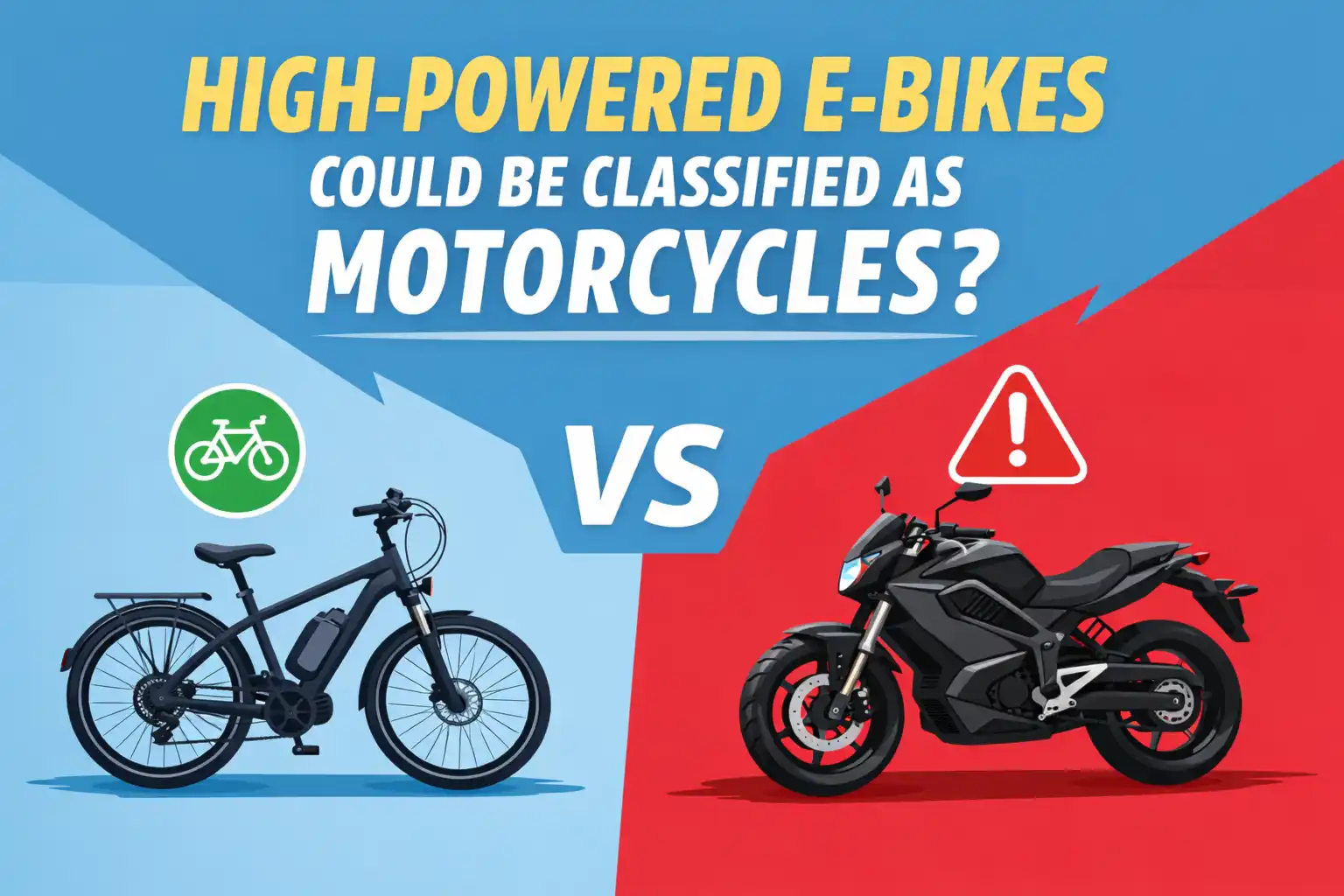
High-Powered E-Bikes Could Be Classified as Motorcycles Under New Law
Last Updated on February 17, 2026 by Kristina
Lawmakers in Washington state are advancing legislation that could reshape how certain electric bikes are legally classified – and for some riders, it may mean their e-bike is no longer considered a bicycle at all.
A proposed bill aims to clarify the distinction between standard e-bikes and higher-powered electric vehicles. Under the proposal, some models that exceed existing speed, power, or equipment thresholds could be classified as electric motorcycles instead of bicycles, which would place them under stricter regulations.
📌 Quick Summary
- Some high-powered e-bikes could be legally reclassified as motorcycles.
- That could require licensing, registration, or other requirements.
- Standard Class 1–3 commuter e-bikes would likely remain unaffected.
What the Proposed Bill Would Do
The legislation would establish a new category for higher-powered electric two-wheel vehicles that function more like motorized vehicles than traditional bicycles.
Key provisions under discussion include:
- Creating a distinct classification for high-power electric cycles
- Directing regulators to develop enforcement guidelines
- Studying licensing, registration, helmet, and training requirements
- Clarifying pedal requirements to distinguish bikes from motor vehicles
Supporters say current laws haven’t kept pace with modern electric vehicle technology and that clearer definitions would help law enforcement and improve safety.
Critics argue that poorly defined rules could accidentally include legitimate e-bikes and burden everyday riders with motorcycle-level regulations.
What Counts as a “High-Powered” E-Bike?
Most U.S. states follow a three-class system for legal e-bikes:
| Class | Top Assisted Speed | Motor Limit | Pedals Required |
|---|---|---|---|
| Class 1 | 20 mph | 750W | Yes |
| Class 2 | 20 mph | 750W | Yes |
| Class 3 | 28 mph | 750W | Yes |
Vehicles often targeted by new legislation include:
- Models exceeding 750 watts
- Bikes capable of speeds above 28 mph
- Throttle-only machines with no real pedals
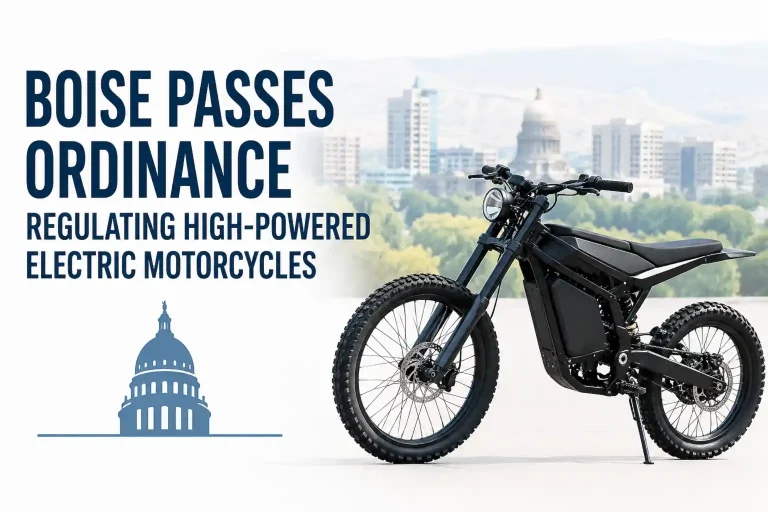
- Electric dirt-bike-style vehicles marketed as e-bikes
These machines blur the line between bicycles and motorcycles, which is the core issue lawmakers are trying to address.
Why Lawmakers Are Considering This
Legislators across several regions have cited similar concerns:
- Increase in crashes involving high-speed electric bikes
- Difficulty enforcing laws when vehicle classes are unclear
- Youth riders operating powerful off-road electric bikes on streets
- Pedestrian safety complaints
Importantly, most policy discussions are not targeting typical commuter e-bikes. They focus on a smaller segment of high-output machines that exceed standard limits.
What This Could Mean for Riders
Possible Changes
If laws like this expand nationwide, riders of certain models could face:
- Licensing requirements
- Registration or VIN tracking
- Mandatory helmets
- Minimum age limits
- Restricted trail or path access
What Probably Won’t Change
For most riders:
- Legal commuter e-bikes should remain allowed
- Pedal-assist bikes within limits should stay classified as bicycles
- Existing Class 1–3 models should remain unaffected
How to Tell if Your E-Bike Could Be Affected
Your bike is likely fine if:
- Motor is 750W or less
- Top assisted speed is 28 mph or lower
- It has working pedals
- It’s labeled Class 1, 2, or 3
Your bike could face restrictions if:
- It exceeds 1000W or more
- It reaches motorcycle-level speeds
- It resembles a dirt bike or moped
- It lacks functional pedals
📊 Bigger Industry Trend
This proposal is part of a larger global trend.
Across the U.S., Europe, and Australia, regulators are moving toward:
- stricter safety standards
- clearer classification rules
- enforcement against illegal high-speed imports
- standardized labeling systems
In short, the e-bike industry is entering what experts call its standardization phase – the point where regulations catch up with fast-moving technology.
FAQs
Will normal e-bikes become illegal?
No. Most proposals specifically target high-power vehicles outside standard definitions.
Does this affect online e-bike purchases?
Possibly. Some online models exceed legal limits but are still sold as “e-bikes.”
Can states really redefine e-bikes?
Yes. Federal law governs product classification, but states control road use and vehicle regulations.
My Take
Lawmakers’ concerns about safety and clarity aren’t unreasonable. As more powerful electric vehicles hit streets and trails, clear definitions help riders understand the rules and help authorities enforce them fairly.
But the real challenge is precision.
If laws aren’t written carefully, they risk lumping everyday riders together with high-powered machines that behave more like motorcycles. That could create unnecessary barriers for commuters, seniors, and casual riders who rely on legal e-bikes for transportation and mobility.
The smartest path forward isn’t broad reclassification – it’s clear distinctions. Target the small percentage of ultra-powerful vehicles causing problems, while protecting access for the millions of riders using standard e-bikes responsibly.
As lawmakers try to balance safety, innovation, and accessibility, one thing is clear: how governments define e-bikes over the next few years could shape the future of micromobility across the country.
What do you think?
Should ultra-powerful e-bikes be regulated like motorcycles, or should they stay classified as bicycles? Share your thoughts below.
For more news on electric bikes click here
You May Also Like

Kristina is not just an enthusiast but a true authority on electric bikes. Nestled in the coastal beauty of Virginia, Kristina has found the perfect backdrop for her passion for electric biking. As a dedicated wife and homeschooling mom, her life revolves around family, faith, and the thrill of adventure.
Originally hailing from Ohio, Kristina's journey with electric bikes began as a curiosity and quickly evolved into a deep expertise. Her blog is a testament to her love for electric biking, combining her fascination for eco-friendly transportation with her coastal lifestyle.
When she's not cruising the beach on her electric bike, you'll find Kristina indulging in her other loves: long walks along the shore, getting lost in a good book, and cherishing moments with her loved ones. With a heart as big as her love for animals, especially cats, Kristina brings a unique perspective to the electric bike world, grounded in her strong faith in God and her dedication to a sustainable lifestyle.
Through her blog, Kristina shares her extensive knowledge of electric bikes, offering valuable insights, tips, and recommendations to fellow enthusiasts. Whether you're a seasoned rider or a newcomer to the electric bike scene, Kristina's blog is your go-to source for all things electric biking, fueled by her passion, expertise, and the scenic beauty of coastal Virginia.