Flyer Loop Review: Compact Family Cargo E-Bike for Kids, Groceries, and Everyday Errands
Last Updated on July 8, 2026 by Kristina
The Flyer Loop is Radio Flyer’s compact family cargo e-bike built for parents, commuters, and everyday riders who want real hauling ability without moving up to an oversized longtail cargo bike.
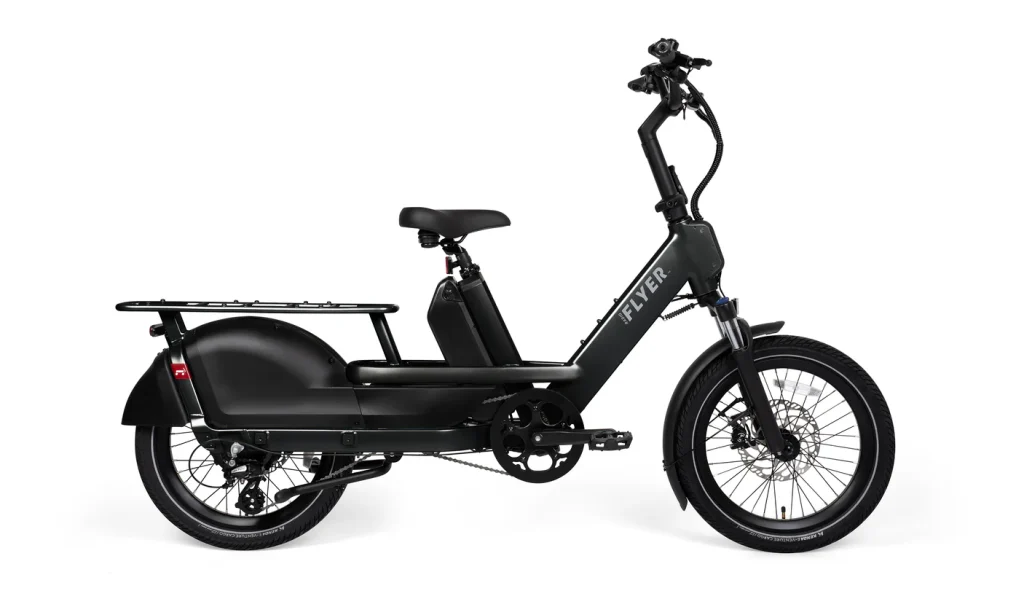
This is not just a regular e-bike with a rear rack added on. The Flyer Loop is designed around family transportation, kid carrying, grocery runs, school drop-offs, and short car-replacement trips. It has a 440-pound total payload capacity, a 220-pound rear rack rating, a 750W rear hub motor, Magura hydraulic disc brakes, integrated lights, turn signals, a folding front stem, and a compact step-through frame that fits riders from 4’11” to 6’3″.
At the time of writing, Radio Flyer lists the Flyer Loop at $1,999, although the original launch price and some retailer listings have shown it around $2,999 to $3,199. Because e-bike prices change often, I would always check the current price before buying.
What makes the Flyer Loop stand out is that it tries to solve one of the biggest problems with cargo e-bikes: size. Full-size cargo bikes can feel long, heavy, and intimidating, especially for newer riders or parents carrying kids. The Loop keeps the kid-hauling and cargo-carrying usefulness but puts it into a more compact frame with 20-inch wheels, a low step-through design, and a folding stem for easier storage.
Quick Verdict
⭐⭐⭐⭐⭐ 9.1/10
The Flyer Loop is one of the most practical compact cargo e-bikes for families who want something smaller and easier to manage than a full-size longtail, but still strong enough for kids, groceries, backpacks, errands, and daily transportation.
Its biggest strengths are the high payload rating, 220-pound rear rack capacity, strong 750W motor, excellent Magura MT5 hydraulic brakes, integrated safety lighting, turn signals, torque sensor, optional cadence mode, and family-focused accessory system. It is also UL certified and tested to DIN 79010, which is important for a cargo e-bike that may carry children.
The biggest downsides are the weight, average battery size for a cargo e-bike, slower 2A charger, Class 2 speed limit, accessory costs, and one-size frame. It fits a wide rider range on paper, but taller riders may want more cockpit adjustability based on reviewer feedback.
Best For: Parents, school drop-offs, grocery runs, neighborhood errands, short commutes, family rides, riders who want a compact cargo e-bike, and anyone who values strong brakes and safety certifications.
Not Ideal For: Riders who want a lightweight e-bike, long-distance high-speed commuting, Class 3 speeds, trail riding, or a cargo e-bike that includes every passenger accessory in the base price.
Flyer Loop Specifications
| Specification | Flyer Loop |
|---|---|
| Current Price | $1,999 at Radio Flyer at time of writing |
| Original MSRP / Other Listings | Originally listed around $2,999, with some retailers listing higher |
| E-Bike Type | Compact cargo e-bike / family cargo e-bike |
| E-Bike Class | Class 2 |
| Top Speed | Up to 20 mph with pedal assist and throttle |
| Motor | 750W Flight Speed rear hub motor |
| Motor Torque | Radio Flyer lists 85Nm; some reviewer spec sheets list 87Nm peak |
| Sensor | Flight Speed torque sensor |
| Optional Sensor Mode | Selectable cadence mode through settings |
| Pedal Assist Levels | Eco, Tour, Sport, Turbo |
| Throttle | Thumb throttle |
| Battery | 48V 14.7Ah lithium-ion battery |
| Battery Capacity | 687Wh |
| Battery Cells | Samsung 50E cells, according to reviewer spec sheets |
| Claimed Range | 30 to 50+ miles |
| Charger | 2A charger |
| Estimated Charge Time | About 7 to 8 hours from empty, according to reviewer testing |
| Display | Full-color LCD display |
| Display Features | Speed, distance, estimated range, assist level, lights, turn signals |
| App Compatibility | Flyer app |
| App Features | Mileage tracking, torque adjustment, battery monitoring, service center locator |
| Frame Style | Compact step-through cargo frame |
| Frame Material | 6061 aluminum |
| Frame Size | One size |
| Recommended Rider Height | 4’11” to 6’3″ |
| Maximum Rider Weight | 265 lbs |
| Total Payload Capacity | 440 lbs |
| Rear Rack Capacity | 220 lbs |
| Bike Weight | 77 lbs |
| Bike Length | 72 inches listed by Radio Flyer; some reviewer geometry listings measured about 74 inches |
| Wheelbase | 1315mm |
| Standover Height | About 18 inches |
| Colors | Red, Opal, Black, Blue |
| Fork | Zoom cargo-rated suspension fork |
| Fork Travel | 60mm |
| Fork Features | Coil spring, preload adjustment, lockout, 15mm thru-axle |
| Drivetrain | Shimano 8-speed |
| Shifter | Shimano SL-M315 8-speed trigger shifter |
| Rear Derailleur | Shimano RD-M310 8-speed derailleur |
| Cassette | Shimano CS-HG31-8, 11-32T |
| Chainring | 52T with dual-sided guard |
| Brakes | Magura MT5 hydraulic disc brakes |
| Brake Type | 4-piston hydraulic disc brakes with motor cut-off |
| Rotors | 203mm front and rear |
| Tires | Kenda E-Venture Cargo 20″ x 2.4″ |
| Tire Features | Cargo-rated, puncture-resistant, reflective sidewall |
| Fenders | Full-coverage front and rear fenders |
| Lights | Integrated headlight, taillight, brake light, and turn signals |
| Kickstand | Dual-leg center kickstand |
| Stability Feature | Steering stabilizer |
| Folding Feature | Foldable front stem |
| Built-In Storage | Weather-resistant in-frame storage compartment |
| Compatible Accessories | Cubby Kit, Cubby Kaboodle, XL Front Goodie Basket, Thule Yepp Nexxt 2 Maxi child seats, phone mount, bottle cage, mirror |
| Safety Certifications | UL 2849, UL 2271, UL 62368, DIN 79010 |
| Rider Age Requirement | 16+ |
| Passenger Age Guidance | Cubby Kit hoop: 5-10 years; Thule Yepp Maxi seat recommended for passengers 5 and younger |
| Warranty | Lifetime frame and fork; 2-year coverage on many major e-bike components |
| Financing | Affirm financing available through Radio Flyer |
Specs were verified against Radio Flyer’s product page, Radio Flyer’s launch information, retailer listings, and hands-on reviewer spec sheets.
Range Disclaimer: Radio Flyer’s advertised 30 to 50+ mile range is based on riding conditions that may be easier than real daily use. Rider weight, cargo weight, hills, wind, tire pressure, temperature, throttle use, assist level, and stop-and-go riding can all lower real-world range.
✅ Pros
- Compact cargo frame is easier to handle than many full-size longtail cargo e-bikes.
- 440-pound total payload capacity is excellent for a family e-bike.
- 220-pound rear rack rating gives it real kid-carrying and cargo-hauling ability.
- Fits a wide rider height range from 4’11” to 6’3″.
- Step-through frame is easier to mount when the bike is loaded.
- 750W rear hub motor gives strong help for hills and loaded riding.
- Torque sensor gives a smoother, more natural pedal-assist feel.
- Selectable cadence mode is helpful when you want easier pedaling with cargo.
- Magura MT5 4-piston hydraulic brakes are a major safety advantage.
- 203mm rotors front and rear are strong for a 20 mph cargo e-bike.
- Integrated headlight, taillight, brake light, and turn signals are useful for family riding.
- UL 2849, UL 2271, UL 62368, and DIN 79010 testing add peace of mind.
- Dual-leg kickstand helps when loading kids or cargo.
- Steering stabilizer helps keep the front wheel from flopping while parked.
- Folding stem helps with tighter storage.
- Built-in storage compartment is useful for charger, tools, or small items.
- Compatible with kid-carrying and cargo accessories.
- Radio Flyer has a long-standing family brand reputation.
❌ Cons
- At 77 pounds, it is still a heavy e-bike.
- 687Wh battery is useful, but average for a cargo e-bike.
- 2A charger is slower than I would like for a family cargo e-bike.
- Real-world range can drop when carrying kids, using throttle, or riding hills.
- Accessories can add to the final cost.
- One-size frame may not feel perfect for every rider.
- Taller riders may want more handlebar or cockpit adjustment.
- Limited to 20 mph as a Class 2 e-bike.
- Not designed for off-road or trail riding.
- Some reviewers found the app and controls less polished than the rest of the bike.
- New cargo-bike riders may need practice before carrying kids.
Features
Compact Family Cargo Frame
The Flyer Loop was designed to be more approachable than a traditional full-size cargo bike. Radio Flyer says the Loop has a frame roughly four inches shorter than previous models while still carrying kids and cargo. It uses a one-size step-through frame that fits riders from 4’11” to 6’3″.
This matters because cargo e-bikes can feel intimidating if they are too long, too tall, or too awkward to maneuver. The Loop is still a heavy cargo e-bike, but the smaller wheels, lower frame, and compact design should make it more manageable for families using it around neighborhoods, schools, parks, bike paths, and stores.
The step-through frame is also practical. If you are carrying a child, balancing groceries, or stopping frequently, being able to step through the bike instead of swinging your leg over a loaded rear rack is a big advantage.
440-Pound Payload Capacity
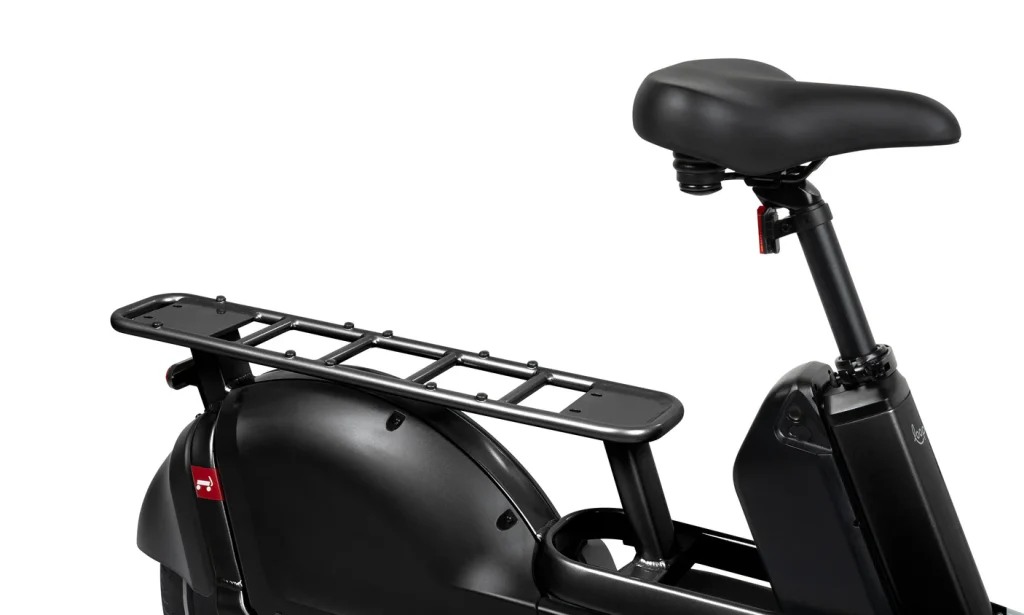
The Flyer Loop has a total payload capacity of 440 pounds and a rear rack rating of 220 pounds. Radio Flyer also lists a maximum rider weight of 265 pounds.
That makes this a real cargo e-bike, not just a commuter bike with a decorative rack. The total payload includes the rider, passengers, accessories, and cargo. The rear rack capacity matters most if you plan to carry children, backpacks, groceries, or other heavier items on the back.
For family use, always make sure you stay within the limits for the bike, rear rack, child seats, and specific accessories.
Family Accessory System
One of the biggest reasons to consider the Flyer Loop is the accessory system.
Radio Flyer offers the Cubby Kit, Cubby Kaboodle, XL Front Goodie Basket, Thule Yepp Nexxt 2 Maxi seat compatibility, phone mount, water bottle accessories, and a bar-end mirror. At the time I checked, the Cubby Kit was listed at $199.99, the Cubby Kaboodle at $99.99, and the XL Front Goodie Basket at $99.99 on Radio Flyer’s product page. Prices can change.
The Cubby Kit turns the rear rack into a kid-ready setup with padded seats, footboards, extended side rails, and compatibility with up to two Thule Yepp Maxi seats. Radio Flyer says the Cubby Kit can carry one or two children up to 65 pounds each, or work with one or two Thule Yepp Nexxt 2 Maxi child seats.
This is helpful because cargo e-bikes are only as useful as their accessories. A family buying this bike will probably want to budget for the setup they actually need, not just the base bike.
Magura MT5 Hydraulic Brakes
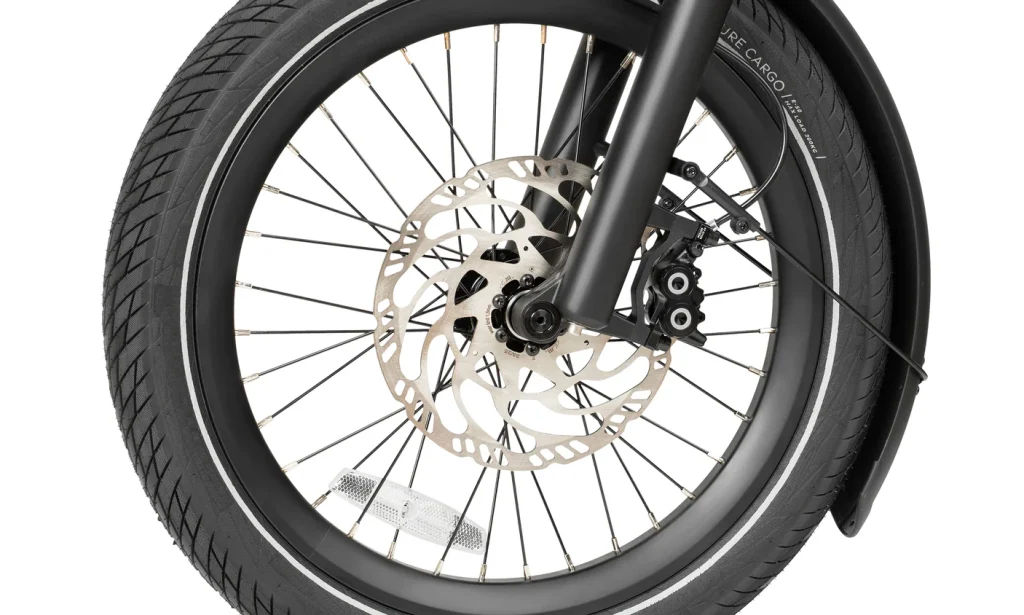
The Flyer Loop’s brakes are one of its strongest features.
It uses Magura MT5 4-piston hydraulic disc brakes with 203mm rotors. Radio Flyer lists the brakes as Magura MT5 hydraulic levers with 203mm rotors, and reviewers also highlighted the four-piston setup as a standout feature.
This is especially important on a family cargo e-bike because stopping power matters more when you are carrying kids or groceries. A regular e-bike brake setup may feel fine when riding solo, but a loaded cargo bike needs stronger, smoother, more controlled braking.
Electric Bike Report said the Loop’s brakes produced one of their best cargo e-bike brake test results and placed second across all e-bikes they had tested at that time.
Integrated Lights and Turn Signals
The Flyer Loop includes front and rear lights with turn signals, plus rear brake lights. Radio Flyer says the lighting system is designed to help riders see and be seen, while the brake lights alert others when slowing down.
This is a good feature for school drop-offs, neighborhood riding, bike lanes, and evening errands. I would still recommend using hand signals where required and following local e-bike laws, but built-in turn signals are a useful visibility booster.
Torque Sensor With Selectable Cadence Mode
The Flyer Loop uses a Flight Speed torque sensor, which responds to how hard you pedal. A torque sensor usually makes an e-bike feel smoother and more natural than a basic cadence sensor because the motor responds more like an extension of your own effort.
What makes the Loop more flexible is that reviewers found it can also switch into cadence mode through the display settings. Ebike Escape said this gives riders the option to use torque mode for a natural feel and cadence mode when climbing gets harder with cargo.
I like this feature because family cargo riding changes from day to day. Riding alone to the store is very different from carrying two kids, backpacks, and groceries uphill. Having both sensor styles gives the rider more control.
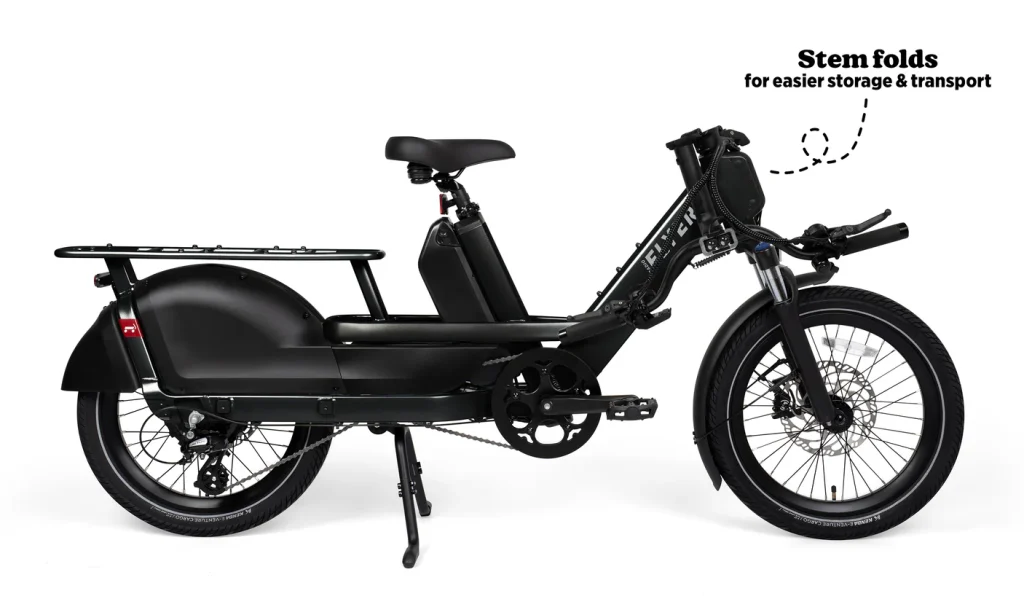
Foldable Front Stem
The Flyer Loop has a foldable front stem. Radio Flyer says this helps the bike fit into tighter spaces like garages, bike rooms, SUVs, and storage areas.
This does not make the Flyer Loop a folding e-bike. It is still a 77-pound cargo bike. But the folding stem may help if you need to reduce the height or make it easier to store in a tight corner.
BikeMag liked that the folding mechanism worked, but questioned how practical it would be if you still needed to remove the front wheel or deal with accessories. That is a fair point. I would see the folding stem as a storage helper, not as a full portability feature.
Built-In Storage Compartment
The Flyer Loop includes a built-in weather-resistant storage compartment. Radio Flyer says it can hold essentials like a charger or tools.
This is a small feature, but I like it. Cargo bikes tend to be used for real-life errands, and having a place for small items is practical.
Display and Tech
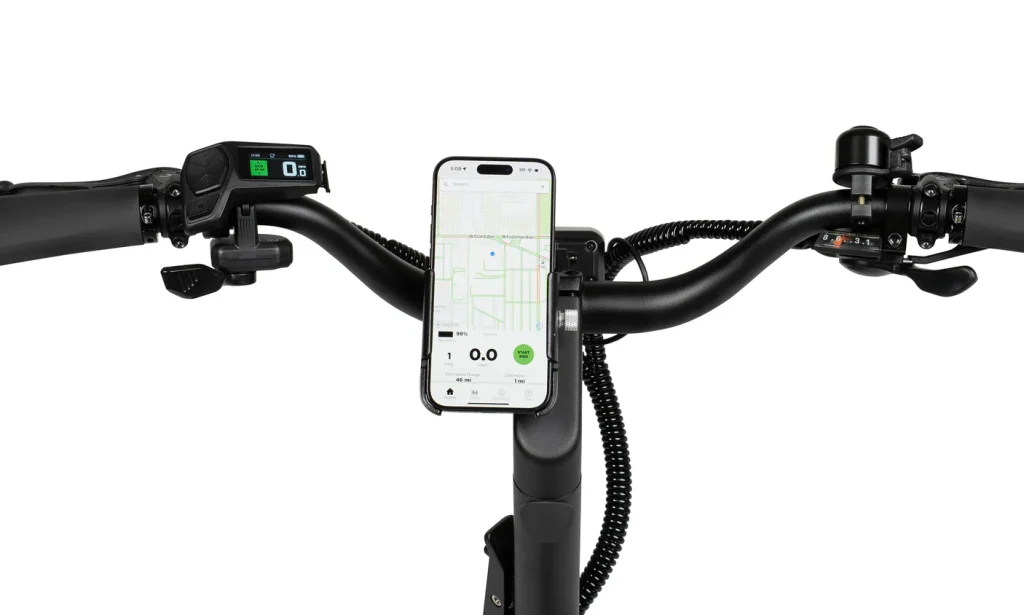
The Flyer Loop has a full-color LCD display with USB-C charging and Bluetooth connectivity. The display controls basic ride information and settings, including pedal assist, lights, turn signals, speed, distance, and estimated range.
Radio Flyer also says the Flyer app can track mileage, adjust torque, monitor the battery, and locate service centers.
BikeMag called the display and tech one of the highlights of the bike. The reviewer noted that the app can track rides, adjust torque, monitor battery status, and locate service centers.
Ebike Escape also liked the adjustability, saying the app allows the rider to tune Eco, Tour, Sport, and Turbo separately for torque and cadence modes.
The tech is not as advanced as some connected e-bikes with built-in GPS tracking, geofencing, or remote locking. But for family use, the Flyer Loop includes the most important features: a clear display, app compatibility, USB-C charging, integrated lights, turn signals, adjustable assist behavior, and service center locating.
For me, the most important part is that the bike does not seem to depend entirely on the app for basic riding. Apps are helpful, but a family cargo e-bike should still be simple to ride without opening your phone every time.
Ride Quality
The Flyer Loop is designed to feel more manageable than a full-size cargo bike. The shorter frame, 20-inch wheels, step-through design, upright riding position, and compact wheelbase help make it easier to handle in neighborhoods, parking lots, school zones, and city riding.
Ebike Escape said the Loop feels more compact than most cargo bikes and is nimble in traffic and tight turns. They also said the 20″ x 2.4″ tires make it better for pavement than grass or trails, while the 60mm cargo-rated suspension fork helps soften cracks and rough city streets.
BikeMag had a more mixed ride impression. Their reviewer said the bike felt easy to control once moving, but there was extra work required at startup and stopping because of the size and weight. He also said the bike rode best when loaded down and felt less smooth when empty.
That makes sense for a cargo e-bike. These bikes are designed to carry weight, and many longtail-style bikes feel more planted when there is some cargo on the back.
The Flyer Loop should feel easier than many larger cargo e-bikes, but it will still take practice if you have never carried kids or cargo before. I would recommend practicing in an empty parking lot before riding with children.
🎬 See the Flyer Loop in Action
Here’s a quick look at the Flyer Loop’s frame, riding position, display, and overall design.
Motor Performance
The Flyer Loop uses a 750W rear hub motor. Radio Flyer lists the motor at 85Nm of torque, while Ebike Escape lists 87Nm peak torque in its spec sheet.
For a compact cargo e-bike, that is a strong motor setup. It is not designed to be a high-speed Class 3 commuter. It is built to move people and cargo safely at up to 20 mph.
Ebike Escape tested the Flyer Loop loaded on a Bentonville hill climb averaging 9.2 percent. They reported that throttle-only climbing held around 7 mph most of the way, briefly dipped to 6 mph, and still reached the top without pedaling. They also found cadence mode helpful when the climb got harder with cargo.
That tells me the motor should be more than enough for most school runs, errands, and neighborhood hills. However, heavy throttle use on hills will drain the battery faster and put more load on the motor, so I would use pedal assist whenever possible.
The torque sensor should feel smooth and natural for normal riding. The cadence mode gives riders an easier option when the bike is heavily loaded or the terrain gets harder.
Battery and Range
The Flyer Loop uses a 48V 14.7Ah battery with 687Wh of capacity. Ebike Escape says the battery uses Samsung 50E cells.
Radio Flyer advertises a 30 to 50+ mile range.
That is a reasonable estimate for a compact cargo e-bike, but real-world range will depend heavily on how you ride. A lighter rider on flat ground using lower assist may get closer to the upper end. A rider carrying kids, groceries, and using throttle on hills may land closer to the lower end.
Ebike Escape called the 687Wh battery average for a cargo e-bike and said riders planning longer loaded days may wish for more battery capacity.
The charger is another thing to consider. Ebike Escape lists the charger as 2A and estimates 7 to 8 hours from empty.
That is fine for overnight charging, but it is slower than I would like on a family cargo e-bike. If you are using the Flyer Loop daily, I would make charging part of your routine so you are not starting the next morning with a half-empty battery.
Reported Testing
The Flyer Loop is still a newer model, but it has already been tested by several e-bike reviewers. The most helpful testing I found came from Electric Bike Report, Ebike Escape, and BikeMag.
Range Testing
Electric Bike Report reported that the Flyer Loop reached 45.4 miles in minimum assist and 29.4 miles in maximum assist. That lines up well with Radio Flyer’s 30 to 50+ mile advertised range, especially because maximum assist naturally drains the battery faster.
For most families, that should be enough for school runs, grocery trips, park rides, and short commutes. But if you plan to ride long distances with children or cargo, range is one of the main things to think about.
Hill Testing
Ebike Escape tested the Flyer Loop on a Bentonville hill climb that gains 127 feet over a quarter mile and averages 9.2 percent. Loaded with cargo and using throttle only, the bike held around 7 mph most of the way, briefly dipped to 6 mph, and still made it to the top without pedaling.
They also found that switching to cadence mode and using a lower gear made the hill feel much easier. That is one of the strongest real-world arguments for having both torque and cadence sensor modes on the same bike.
Brake Testing
Electric Bike Report said the Flyer Loop produced one of its best cargo e-bike brake test results and placed second across all e-bikes tested at the time of the review.
This is one of the biggest trust signals for the Flyer Loop. On a family cargo bike, braking matters as much as motor power. It is not just about going uphill. It is about stopping safely when the bike is loaded.
Ride Handling
Ebike Escape found the Flyer Loop compact and nimble in traffic and tight turns. They also said it is better suited to pavement than grass, loose dirt, or trails.
BikeMag found that the Loop felt best when loaded and less settled when empty. The reviewer also said people with no cargo-bike experience may have a learning curve.
That is a fair and helpful warning. The Flyer Loop may be approachable for a cargo bike, but it is still not going to feel like a lightweight regular bicycle.
What Riders and Reviewers Are Saying
Because the Flyer Loop is still a newer e-bike, there are not as many long-term owner reviews available yet as there are for older cargo bikes. I found a mix of early owner statements from Radio Flyer’s product page, hands-on reviewer testing, and cargo-bike community discussion.
Positive Rider Statements
Radio Flyer’s product page includes a rider statement from Kierrah in Georgia, who said her family had the Flyer Loop for over a week and “absolutely LOVE it.” She said it was their second Radio Flyer e-bike, that they had “zero complaints,” and that they use it to pick up her son from school because they live close by.
Another statement on Radio Flyer’s product page came from Carley in Michigan, who called the bike “such a game changer.” She said her kids are 4 and 2, that the bike is easy to handle even with kids on the back and groceries in the front, and that she feels her children are secure on it. She also said the pedal assist felt right and that the range had been strong so far.
Those two early owner-style statements are very positive, especially for family use. Both focus on the things that matter most for parents: kids feeling secure, school trips, grocery trips, and getting the family outside more.
Positive Reviewer Statements
Electric Bike Report said the Flyer Loop’s brakes were “among the most powerful” they had seen and that it produced one of their best cargo e-bike brake test results. That is one of the strongest positive statements I found because it is tied to actual testing.
Ebike Escape praised the brake system, saying the Magura brakes gave strong, controlled stopping power even with a loaded bike. Their testing also found that the throttle was easy to control at lower speeds, which is important when carrying children.
Ebike Escape also liked the sensor flexibility. Their takeaway was that you can use the torque sensor for a natural ride feel and switch to cadence mode when hills become more difficult with cargo.
BikeMag said the Flyer Loop’s frame looked and felt well-built, and that the add-on accessories were well-machined and easy to install. The reviewer also called the Magura MT5 brakes a highlight and said they had no issue controlling speed with heavy loads.
Critical Reviewer Statements
BikeMag had one of the more helpful critical reviews because the reviewer pointed out several real-world issues. He said the Flyer Loop is “not ready to haul straight out of the box” because families need accessories to unlock its full kid and cargo use.
That is an important point. The base bike is capable, but if you want to carry kids safely and comfortably, you will probably need to add the Cubby Kit, Cubby Kaboodle, child seat, basket, or other accessories.
BikeMag’s 6’2″ tester also said he had to move the seatpost beyond the markings to get proper knee extension and would have preferred an adjustable stem instead of only a folding stem.
That does not mean taller riders cannot use the bike, but it does mean riders near the top of the fit range may want to test the bike first if possible.
BikeMag also said riders with no cargo-bike experience may have a “steeper learning curve.” The reviewer felt the bike rode best when loaded and felt less smooth when riding empty.
Ebike Escape listed the average battery, Class 2 limit, accessory cost, basic app, and fixed-height stem among the drawbacks.
Cargo-Bike Community Reactions
In a Reddit cargo-bike discussion about the Flyer Loop announcement, reactions were mixed. One commenter questioned whether it was another generic copy-style cargo bike, while another said, “It is good to have options at different price points.” Another user compared it with models like the Tern Quick Haul Long, Trek Fetch, Cannondale Cargowagen, Xtracycle Hopper, and Aventon Abound.
That kind of reaction makes sense. Some cargo-bike riders prefer premium Bosch mid-drive systems and established cargo-bike brands like Tern. Other riders care more about price, throttle support, family accessories, and daily practicality.
The Flyer Loop sits somewhere in the middle. It is not a Bosch mid-drive cargo bike, but it offers strong brakes, a high rear rack capacity, family-focused accessories, good safety certifications, and a current price that makes it much more competitive than it appeared at launch.
Overall Sentiment
The early feedback on the Flyer Loop is mostly positive, especially for family use.
The biggest praise centers on:
- Strong Magura MT5 brakes
- Compact cargo-bike design
- Smooth torque-sensor assist
- Cadence mode for easier loaded riding
- 440-pound payload capacity
- 220-pound rear rack rating
- Integrated lights and turn signals
- Kid-focused accessory system
- Family-friendly handling
- Safety certifications
The most common concerns are:
- Heavy 77-pound weight
- Average battery size
- Slow 2A charger
- Accessories add to the real cost
- One-size frame may not be perfect for every rider
- Fixed-height stem
- Class 2 only
- Cargo-bike beginners need practice
My takeaway is that the Flyer Loop is getting the most praise where it matters for a family cargo e-bike: braking, safety, payload, kid-carrying design, and everyday usefulness. The criticisms are real, but they are mostly tradeoffs rather than dealbreakers.
Unboxing and Assembly
The Flyer Loop arrives partially assembled, like most direct-to-consumer cargo e-bikes. Radio Flyer provides assembly support resources, and BikeMag noted that tools were included with the bike, although the reviewer chose to use some of his own tools.
Typical assembly may include:
- Removing the bike from the box
- Checking for shipping damage
- Installing or adjusting the handlebar and folding stem
- Installing the pedals
- Charging the battery
- Checking tire pressure
- Testing the brakes
- Testing the lights and turn signals
- Adjusting the saddle height
- Installing accessories
- Checking bolts and fasteners
- Performing a full safety inspection
Because the Flyer Loop weighs 77 pounds, I would recommend having a second adult help with unboxing. This is especially true if you need to lift the bike out of the box or install heavier accessories.
If you plan to carry children, I would strongly recommend having a local bike shop or authorized service center inspect the bike before your first family ride. Brake setup, wheel attachment, drivetrain adjustment, stem security, accessory installation, and bolt torque are all important on a cargo e-bike.
Customer Service, Warranty, Returns, and Financing
Customer Service
Radio Flyer says its customer service team is based in Chicago and is committed to providing support for riders. The product page also points buyers toward service center locating and dealer/assembly options.
One advantage here is that Radio Flyer is a long-standing family brand, not an unknown e-bike company. That does not guarantee every support experience will be perfect, but it does give the Flyer Loop more brand trust than many newer direct-to-consumer e-bike brands.
Warranty
Radio Flyer lists a lifetime warranty on the frame and fork. It also lists two-year coverage on many major components, including the lithium-ion battery, stem, handlebar, brakes, lights, rims, derailleur, shifter, motor, throttle, controller, wiring harness, LCD display, kickstand, reflectors, and hardware.
As always, read the full warranty policy before buying. Warranty coverage usually applies only to defects under normal use and may not cover normal wear, misuse, improper assembly, crashes, unauthorized modifications, or water damage.
Returns
Radio Flyer says Flyer Series e-bikes can be returned within 30 days of delivery, but the return has conditions. The bike must have less than 10 miles on the odometer, be free of signs of use, remain in original packaging and condition, and include items such as the charger, keys, hardware, instruction manual, and packaging.
That is important because e-bikes are large and expensive to return. I would keep the box until you are sure you are keeping the bike.
Financing
Radio Flyer says financing is available through Affirm for Flyer e-bikes when ordering directly through the website. Financing approval, interest rates, payment options, and terms depend on Affirm and the buyer’s approval.
Who Is the Flyer Loop Good For?
Parents Carrying Kids
The Flyer Loop is clearly designed for families. With the right accessories, it can carry one or two children on the rear rack area, and the 220-pound rear rack capacity gives it real passenger and cargo usefulness.
This makes it a strong option for school drop-offs, park trips, library visits, neighborhood rides, and short local errands.
Grocery Runs and Errands
The Loop is also a good fit for riders who want to replace some short car trips. With the rear rack, cargo accessories, front basket option, and 440-pound payload capacity, it can carry groceries, backpacks, packages, and daily items.
Short and Medium Commutes
For riders with a moderate commute, the Flyer Loop can work well. It has fenders, lights, turn signals, a comfortable upright position, throttle, and enough cargo space for work bags or errands.
Because it is a Class 2 e-bike limited to 20 mph, I think it is best for riders who care more about utility and control than high-speed commuting.
Households Sharing One Bike
The one-size frame fits riders from 4’11” to 6’3″, according to Radio Flyer.
That makes it easier for couples or families to share one bike. However, riders near the upper end of the height range may want to test the fit if possible because BikeMag’s 6’2″ tester wanted more adjustment.
Safety-Focused Families
This is one of the biggest reasons to consider the Flyer Loop.
The bike is tested to UL 2849, UL 2271, UL 62368, and DIN 79010. It also has Magura hydraulic brakes, motor cut-off braking, turn signals, brake lights, full fenders, wheel protection, and a dual-leg kickstand.
For parents carrying children, those details matter.
Who Should Skip the Flyer Loop?
Riders Who Need a Lightweight E-Bike
At 77 pounds, the Flyer Loop is not lightweight. If you need to lift your bike onto a rack, carry it upstairs, or move it often by yourself, this may be too heavy.
Riders Wanting Class 3 Speed
The Flyer Loop is a Class 2 e-bike with pedal assist and throttle up to 20 mph.
If you want assistance up to 28 mph, you will need to compare it with Class 3 cargo e-bikes.
Long-Distance Loaded Riders
The 687Wh battery is useful, but it is not huge for a cargo e-bike. Riders doing long routes with kids, groceries, hills, and throttle use may want a larger battery or dual-battery option.
Riders Who Want Everything Included
The base Flyer Loop is capable, but family use will usually require accessories. If you need child seating, rear rails, panniers, a front basket, or weather protection, include those in your total budget.
Off-Road Riders
The Flyer Loop is not an electric mountain bike. The tires, geometry, and cargo setup are made for pavement, neighborhoods, bike paths, and urban transportation, not technical trails.
Recommended Accessories for the Flyer Loop
If I were setting up the Flyer Loop for family use, these are the accessories I would consider first.
Cubby Kit
Turns the rear rack into a kid-ready setup with seats, footboards, and extended rails.
Cubby Kaboodle
Adds a more enclosed cargo and passenger area for groceries, backpacks, and family errands.
Front Basket
Adds front cargo space and helps keep smaller items separate from rear passenger space.
Thule Yepp Nexxt 2 Maxi Seat
Useful for younger passengers who still need a child seat.
Quality Helmet for Every Rider and Passenger
A properly fitted helmet is one of the most important safety accessories.
Heavy-Duty Lock
Cargo e-bikes are expensive and useful, so a strong lock is important for school, grocery, and errand stops.
Rearview Mirror
A mirror can help when riding around traffic, neighborhoods, and bike lanes.
Panniers or Cargo Bags
Helpful for groceries, library books, work items, and daily errands.
Lights
ride safely in low visibility
Tire Repair Kit
Be prepared for unexpected flats on the road or trail.
Portable Bike Pump
Keep your tires properly inflated for the best ride quality and range.
Should You Buy the Flyer Loop?
I think the Flyer Loop is one of the more interesting compact family cargo e-bikes because it focuses on the things that matter most for parents and everyday riders.
It is not trying to be the fastest cargo e-bike. It is not trying to be the lightest e-bike. Instead, it focuses on being approachable, compact, safe, and useful for real family transportation.
For families, the biggest reasons to consider the Flyer Loop are:
- Compact cargo design
- Step-through frame
- 440-pound total payload capacity
- 220-pound rear rack rating
- Strong 750W rear hub motor
- Torque sensor plus selectable cadence mode
- Magura MT5 hydraulic brakes
- Integrated headlight, taillight, brake light, and turn signals
- Dual-leg kickstand
- Steering stabilizer
- UL 2849, UL 2271, UL 62368, and DIN 79010 testing
- Kid and cargo accessory options
- Radio Flyer brand support
The biggest things to think about before buying are:
- The bike is still heavy.
- The battery is average for a cargo e-bike.
- The charger is slow.
- Accessories may be needed for real family use.
- It is limited to 20 mph.
- The one-size frame may not be perfect for every rider.
- New cargo-bike riders will need practice.
If your main goal is school drop-offs, neighborhood rides, grocery runs, short commutes, and replacing some car trips, the Flyer Loop makes a lot of sense. I especially like it for parents who want a cargo e-bike that feels less intimidating than a larger longtail.
If you want more smart security features, compare it closely with the Aventon Abound LR. If you want more payload, higher speed, and longer battery options, compare it with the Lectric XPedition 2.
But for a compact family cargo e-bike with strong brakes, practical safety features, high rear rack capacity, and a kid-focused design, the Flyer Loop is a very solid choice.
Flyer Loop vs Similar Cargo E-Bikes
The Flyer Loop competes with compact and family cargo e-bikes like the Aventon Abound LR and Lectric XPedition 2.
| Bike | Best For | Key Highlights |
|---|---|---|
| Flyer Loop | Compact family cargo use | 440 lb payload, 220 lb rear rack, Magura MT5 brakes, Class 2 setup, compact frame, family accessory system |
| Aventon Abound LR | Smart features and connected security | 750W motor, 440 lb payload, ACU technology, GPS-style features, Ride Tune, keyless battery |
| Lectric XPedition 2 | Value, payload, and higher-speed utility | 450 lb payload, 300 lb rear rack, 330 lb rider rating, optional dual battery, Class 3 capability |
Alternative 1: Aventon Abound LR
The Aventon Abound LR is one of the strongest alternatives to the Flyer Loop if you want more smart-bike features.
Aventon lists the Abound LR with a 750W motor, 440-pound payload capacity, 88-pound bike weight, Class 2 setup, and rider height range from 4’11” to 6’3″. It also includes Aventon’s ACU technology, which adds features like security tools, connectivity, and app control.
I would consider the Aventon Abound LR if you want:
- More connected security features
- GPS-style tracking and app controls
- A larger smart-bike ecosystem
- Aventon’s dealer network
- A comfortable cargo bike for errands and family use
The Flyer Loop may still be better if you care more about the 220-pound rear rack rating, Magura brakes, Radio Flyer family accessories, and a more kid-focused setup.
Read my full review of the Aventon Abound LR
Alternative 2: Lectric XPedition 2
The Lectric XPedition 2 is a good alternative if you want more payload capacity, more speed flexibility, and strong value.
Lectric lists the XPedition 2 with a 450-pound total payload capacity, 330-pound rider capacity, 300-pound rear rack capacity, 35-pound front rack capacity, and rider height range from 4’11” to 6’5″.
I would consider the Lectric XPedition 2 if you want:
- A higher total payload rating
- A stronger rear rack capacity
- Class 3 capability
- Optional dual-battery range
- A budget-friendly cargo e-bike
- A cargo bike that leans more toward utility and commuting
The Flyer Loop may still be the better choice if you want a more compact family-first design, stronger premium brake spec, and Radio Flyer’s kid-focused accessory system.
Read my full review of the Lectric Xpedition 2
Read Me Next
- Compare this bike to others → Best Cargo E-Bikes
- Not sure about budget? → Budget E-Bike Guide
- Want to learn first? → E-Bike Buying Guide
- See more ebike reviews → E-Bike Reviews

Kristina is not just an enthusiast but a true authority on electric bikes. Nestled in the coastal beauty of Virginia, Kristina has found the perfect backdrop for her passion for electric biking. As a dedicated wife and homeschooling mom, her life revolves around family, faith, and the thrill of adventure.
Originally hailing from Ohio, Kristina's journey with electric bikes began as a curiosity and quickly evolved into a deep expertise. Her blog is a testament to her love for electric biking, combining her fascination for eco-friendly transportation with her coastal lifestyle.
When she's not cruising the beach on her electric bike, you'll find Kristina indulging in her other loves: long walks along the shore, getting lost in a good book, and cherishing moments with her loved ones. With a heart as big as her love for animals, especially cats, Kristina brings a unique perspective to the electric bike world, grounded in her strong faith in God and her dedication to a sustainable lifestyle.
Through her blog, Kristina shares her extensive knowledge of electric bikes, offering valuable insights, tips, and recommendations to fellow enthusiasts. Whether you're a seasoned rider or a newcomer to the electric bike scene, Kristina's blog is your go-to source for all things electric biking, fueled by her passion, expertise, and the scenic beauty of coastal Virginia.