Delaware Bill Could Crack Down on High-Powered Vehicles Sold as E-Bikes
Last Updated on May 25, 2026 by Kristina
Electric bikes continue growing in popularity, but Delaware lawmakers are now trying to address a problem many riders and buyers have already noticed.
A newly introduced bill in Delaware would require clearer disclosures for certain electric vehicles and prevent higher-powered electric vehicles from being marketed as standard e-bikes when they do not legally qualify. The goal is to reduce confusion for buyers and help riders better understand what they are actually purchasing.
For newer riders especially, that distinction could become more important as the market continues expanding.
📍 Check Your State’s E-Bike Laws
Delaware isn’t the only state discussing new e-bike rules. Age limits, helmet requirements, trail access, and Class 1, 2, and 3 regulations can vary depending on where you live.
What Would Delaware’s New Bill Do?
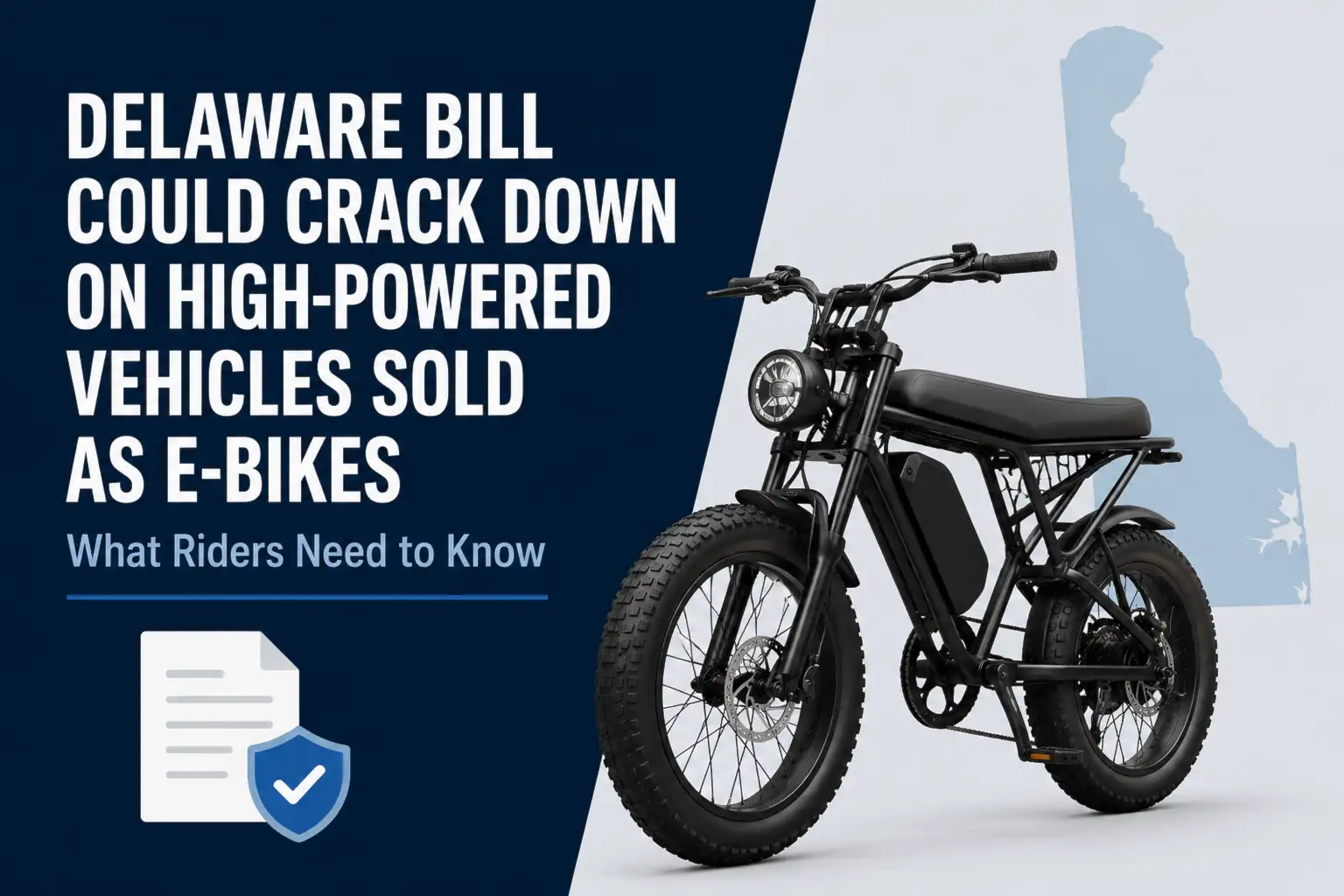
The proposal, known as the “Truth in E-Bike Marketing Act,” focuses on preventing confusion surrounding higher-powered electric vehicles that may resemble bicycles but operate more like mopeds or motorcycles.
According to the proposal:
• Dealers could not advertise higher-powered electric vehicles as “electric bicycles” if they do not meet legal e-bike definitions.
• Sellers would need to provide written disclosures showing:
- Vehicle classification
- Maximum power output
- Registration requirements
- Insurance requirements
- Licensing requirements
• Certain vehicles classified as mopeds would not be allowed on bike lanes, public pathways, and sidewalks.
• Crash reporting would better separate incidents involving traditional e-bikes and electric mopeds.
At the time of writing, the bill has been assigned to Delaware’s House Public Safety and Homeland Security Committee.
Why This Matters
If you’ve spent any time browsing online marketplaces recently, you’ve probably seen how much variation exists within products sold as “e-bikes.”
Today’s market includes:
- Traditional commuter e-bikes
- Fat tire throttle bikes
- Moped-style e-bikes
- Electric dirt bikes
- High-powered electric vehicles
While many of these products can look similar at first glance, they may fall under very different legal categories.
The issue is that buyers may assume all of them follow the same rules.
They don’t.
Registration requirements, insurance rules, licensing requirements, and where a vehicle can legally be ridden may vary substantially depending on classification.
Delaware Is Not Changing Standard E-Bike Classes
One important distinction is that this proposal does not appear to rewrite Delaware’s existing Class 1, Class 2, and Class 3 e-bike system.
Delaware already uses standard classifications:
- Class 1: Pedal assist up to 20 mph
- Class 2: Throttle-assisted up to 20 mph
- Class 3: Pedal assist up to 28 mph
Instead, the proposal focuses on reducing confusion by preventing vehicles outside those definitions from being marketed as ordinary e-bikes.
For most riders using standard commuter, recreational, or cargo e-bikes, the proposal would likely have little direct impact.
Why Some Riders Support It
Supporters argue that many buyers simply do not understand what they are purchasing.
Someone may think they are buying a vehicle intended for:
- Bike lanes
- Multi-use paths
- Neighborhood riding
- Commuting
But later discover:
- Registration may be required
- Insurance may be required
- Licensing may be required
- Certain riding locations may not be legal
Supporters believe clearer disclosures could reduce confusion and improve safety.
Why Some Riders Might Oppose It
Not everyone will see the proposal positively.
Some riders worry future regulations could eventually expand beyond misleading products and begin affecting ordinary Class 2 and Class 3 e-bikes.
Others argue the issue may not be the vehicles themselves but rider behavior and enforcement.
Some riders also point out that responsible owners of moped-style or higher-powered electric vehicles should not automatically be grouped together with reckless riding behavior.
What This Could Mean Beyond Delaware
Even if you do not live in Delaware, this may be worth watching.
Across the country, lawmakers continue discussing:
- E-bike classifications
- Age requirements
- Licensing rules
- Bike lane access
- Sidewalk restrictions
- Higher-powered vehicle definitions
Delaware appears to be joining a broader trend of states trying to better define where electric bicycles end and where higher-powered electric vehicles begin.
My Take
I think this is one of those situations where the details matter a lot.
I do not necessarily see clearer disclosures as anti-e-bike.
In fact, many newer riders would probably benefit from it.
In today’s market, some vehicles marketed as e-bikes can exceed speeds and performance levels that many people would traditionally associate with bicycles. For a first-time buyer, especially someone shopping online, those distinctions can become blurry very quickly.
Where I become cautious is when legislation moves beyond preventing confusion and starts unintentionally affecting ordinary riders using standard commuter and recreational e-bikes.
The average person riding a Class 1 commuter bike to work is not the same as someone riding a much higher-powered electric vehicle on sidewalks or multi-use paths.
Those are very different situations.
The challenge lawmakers face is creating rules that target confusion and unsafe behavior without creating unnecessary restrictions for millions of riders simply using e-bikes for transportation, exercise, and replacing short car trips.
Right now, this proposal feels less like “cracking down on e-bikes” and more like lawmakers trying to answer a question many states are increasingly facing:
“When does an e-bike stop being a bicycle and start becoming something else?”
For more news on electric bikes click here
🔎 Want to check your local rules?
Laws involving e-bikes, bike lane access, age restrictions, and higher-powered electric vehicles continue changing across the country.
→ Browse our complete State-by-State E-Bike Laws Guide

Kristina is not just an enthusiast but a true authority on electric bikes. Nestled in the coastal beauty of Virginia, Kristina has found the perfect backdrop for her passion for electric biking. As a dedicated wife and homeschooling mom, her life revolves around family, faith, and the thrill of adventure.
Originally hailing from Ohio, Kristina's journey with electric bikes began as a curiosity and quickly evolved into a deep expertise. Her blog is a testament to her love for electric biking, combining her fascination for eco-friendly transportation with her coastal lifestyle.
When she's not cruising the beach on her electric bike, you'll find Kristina indulging in her other loves: long walks along the shore, getting lost in a good book, and cherishing moments with her loved ones. With a heart as big as her love for animals, especially cats, Kristina brings a unique perspective to the electric bike world, grounded in her strong faith in God and her dedication to a sustainable lifestyle.
Through her blog, Kristina shares her extensive knowledge of electric bikes, offering valuable insights, tips, and recommendations to fellow enthusiasts. Whether you're a seasoned rider or a newcomer to the electric bike scene, Kristina's blog is your go-to source for all things electric biking, fueled by her passion, expertise, and the scenic beauty of coastal Virginia.