How Long Do Cheap E-Bikes Last? Real Lifespan Explained
Last Updated on May 18, 2026 by Kristina
Cheap e-bikes can be a smart way to start riding, but lifespan depends far more on build quality, parts support, usage, and maintenance than price alone.
If you’re still deciding what price range is actually safe cheap, start with this e-bike buying guide to avoid beginner mistakes. And if you want affordable models that balance price with reliability, see the best budget electric bikes picks.
🔥 Current Budget E-Bike Deals Worth Checking
Looking for the best value right now? These budget-friendly e-bike deals change often and can save you hundreds.
- Mokwheel – Free accessories or bonus battery promotions
👉 View current Mokwheel deals - Lectric – Discounts on popular folding and commuter models
👉 See Lectric deals and bundles - Aventon – Seasonal sales and free accessory offers
👉 Check current Aventon promotions - Ride1Up – Limited-time savings on commuter e-bikes
👉 View Ride1Up deals - Velotric – Discounts on bikes and accessories
👉 See Velotric deals
How Long Do Cheap E-Bikes Last?
Most cheap e-bikes last 2 to 5 years.
Light riders may get 5–7 years, while daily commuters often see 2–4 years. Lifespan depends mainly on battery health, parts availability, riding conditions, and maintenance – not just price.
What Actually Determines Lifespan
Cheap e-bikes usually don’t fail because the frame breaks.
They fail because battery replacements or electronics become unavailable.
That is the single biggest predictor of lifespan.
Which Lifespan Range Applies to You?
- Ride once a week → about 5+ years
- Ride a few times weekly → about 3–5 years
- Ride daily → about 2–4 years
- Heavy rider + hills → about 2–3 years
Mileage and load stress predict lifespan better than price.
How We Evaluate Cheap E-Bike Lifespan
This guide is based on real-world failure patterns and known wear components.
We prioritize:
- safety first
- repairability
- parts availability
- real riding conditions
- long-term ownership costs
Cheap vs Mid-Range vs Premium Lifespan Comparison
| Category | Price | Lifespan | Failure Risk | Parts Support |
|---|---|---|---|---|
| Cheap | Under $800 | 1–3 yrs | High | Limited |
| Budget | $800–$1500 | 2–5 yrs | Moderate | Usually |
| Mid-Range | $1500–$2500 | 4–7 yrs | Lower | Strong |
| Premium | $2500+ | 6–10+ yrs | Lowest | Excellent |
Key takeaway: Cheap bikes can last, but they depend heavily on maintenance and support.
The Biggest Factor: Battery Lifespan
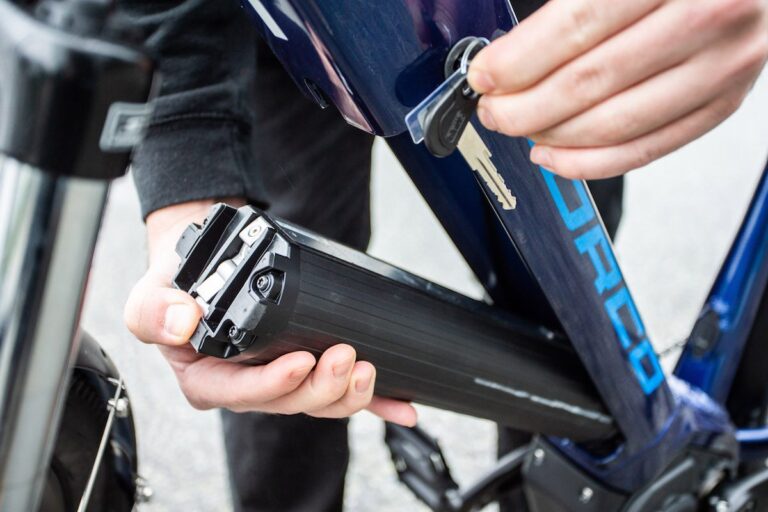
Most cheap e-bikes feel “worn out” when the battery degrades or cannot be replaced.
Typical battery life:
- around 500 charge cycles for many lithium packs
- roughly 2–5 years for average riders
Signs your battery is aging:
- range drops quickly
- power cuts under load
- shuts off early
- inconsistent charging
If you want deeper battery basics, see the range and battery guide.
What Usually Fails First on Cheap E-Bikes
Ranked by frequency:
- Battery or charger
- Electrical connections
- Brakes
- Drivetrain
- Wheels
- Controller or display
Motors often outlast most other components.
Hidden Costs People Forget
Cheap bikes are inexpensive upfront, but not always cheap long-term.
Typical replacement costs:
- battery – $250 to $600
- chain – $15 to $35
- brake pads – $15 to $40
- tires – $30 to $80 each
- drivetrain – $80 to $250
Reality:
If a cheap bike needs both a battery and drivetrain in one year, replacing the bike may cost less than repairing it.
Real-World Example
A $700 unsupported bike lasting 2 years = $350 per year
A $1,200 supported bike lasting 5 years = $240 per year
The second bike is actually cheaper long-term.
Signs a Cheap E-Bike Will Last Longer Before You Buy
Look for these indicators:
- replacement batteries sold publicly
- parts catalog available
- standard brake pad sizes
- sealed wiring connectors
- known motor supplier
- visible customer support
If 3 or more are missing, lifespan risk is high.
Cheap E-Bike Support Score Checklist
Check before buying:
- warranty clearly listed
- support email or phone listed
- replacement controller available
- battery listed on site
- spare parts available
The more boxes checked, the longer a bike usually lasts.
Lifespan by Cheap Tier
Ultra-cheap tier
1–2 years typical lifespan.
Budget but supported
2–4 years common.
Affordable name-brand budget
3–7+ years possible.
Mileage Matters More Than Years
- Under 500 miles/year → up to 7 years
- 1,000–2,000 miles/year → about 2–5 years
- 3,000+ miles/year → heavy wear expected
Daily riders should prioritize reliability over lowest price.
Pro Tips That Add Years to Budget E-Bikes
These habits make a major difference:
- store battery at 40–70% if unused long-term
- avoid full-throttle starts uphill
- lube chain every ~100 miles
- check bolts monthly
- keep tires inflated
- store indoors
Should You Buy Cheap or Spend More?
Buy cheap if
- you ride occasionally
- terrain is flat
- storage is indoors
- you can do basic maintenance
Spend more if
- you commute daily
- reliability matters
- you ride in bad weather
- the bike replaces car trips
Rule of thumb:
If your e-bike is transportation, reliability matters more than price.
When a Cheap E-Bike Is Not Worth Repairing
Replacement is usually better if:
- battery unavailable
- electronics discontinued
- frame damaged
- wheels repeatedly fail
Safety Reminder Before Riding
Always check local rules for where your e-bike is allowed, class limits, and helmet laws. Regulations vary by state and city.
Start here: state-by-state e-bike laws guide
FAQs
How many miles do cheap e-bikes last?
Most last about 2,000 to 10,000 miles depending on maintenance and battery quality.
Can a cheap e-bike last 10 years?
Yes with light use, indoor storage, and available replacement batteries.
What kills cheap e-bikes fastest?
Battery degradation, water damage, and weak wheels.
Is replacing a cheap e-bike battery worth it?
Usually yes if the frame and motor are still solid and the battery costs less than half the bike price.
Do cheap e-bike motors wear out quickly?
Not usually. Motors often last longer than batteries or electronics.
Is it safe to buy a very cheap e-bike online?
It can be, but only if parts, batteries, and support are clearly available.
➡ If you’re trying to find budget e-bikes that still hold up over time, see our Budget E-Bikes Guide, where we compare affordable models known for reliability and real-world durability.
My Honest Take
Cheap e-bikes are not automatically bad. The real difference is not price. It is support and parts availability.
A supported budget bike can outlast a slightly cheaper unsupported bike by years.
Choosing correctly at the beginning is the easiest way to avoid replacing your bike early.
External Sourceds
- PeopleForBikes – e-bike standards and safety info
- UL Solutions – battery certification standards (UL 2849, UL 2271)
- U.S. Consumer Product Safety Commission – recalls and safety alerts
- Bosch eBike Systems – battery care guidance

Kristina is not just an enthusiast but a true authority on electric bikes. Nestled in the coastal beauty of Virginia, Kristina has found the perfect backdrop for her passion for electric biking. As a dedicated wife and homeschooling mom, her life revolves around family, faith, and the thrill of adventure.
Originally hailing from Ohio, Kristina's journey with electric bikes began as a curiosity and quickly evolved into a deep expertise. Her blog is a testament to her love for electric biking, combining her fascination for eco-friendly transportation with her coastal lifestyle.
When she's not cruising the beach on her electric bike, you'll find Kristina indulging in her other loves: long walks along the shore, getting lost in a good book, and cherishing moments with her loved ones. With a heart as big as her love for animals, especially cats, Kristina brings a unique perspective to the electric bike world, grounded in her strong faith in God and her dedication to a sustainable lifestyle.
Through her blog, Kristina shares her extensive knowledge of electric bikes, offering valuable insights, tips, and recommendations to fellow enthusiasts. Whether you're a seasoned rider or a newcomer to the electric bike scene, Kristina's blog is your go-to source for all things electric biking, fueled by her passion, expertise, and the scenic beauty of coastal Virginia.