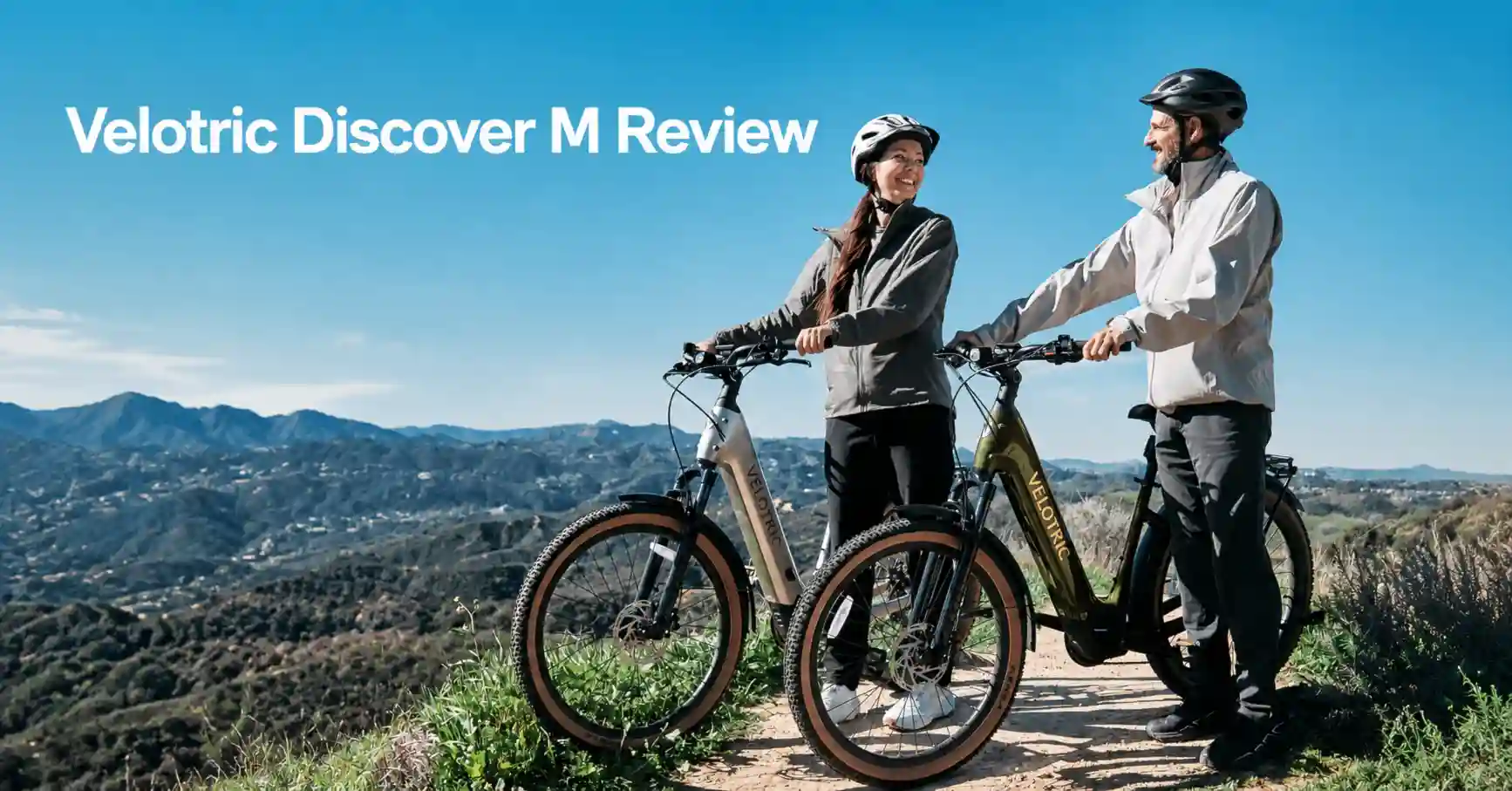
Velotric Discover M Review: Powerful Mid-Drive Comfort With One Important Safety Update
Last Updated on July 13, 2026 by Kristina
📚 Research-Based Review – Built from independent sources, specs, and user reports
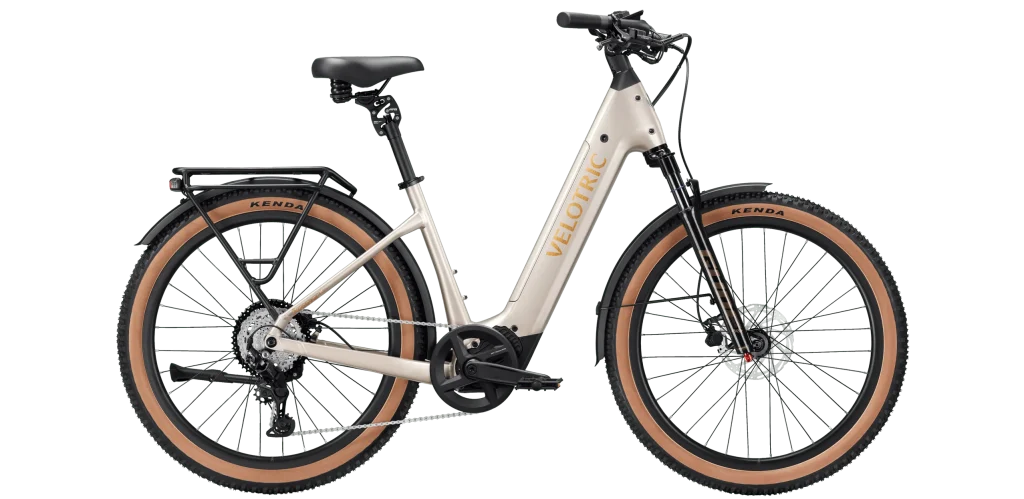
The Velotric Discover M is a comfort-focused mid-drive electric bike designed for commuting, recreational riding, hills, and longer trips.
Unlike the rear-hub motor used on many commuter e-bikes, the Discover M places its VeloCore motor at the crank. This allows the motor to use the bike’s gears when climbing and creates a more natural pedaling experience.
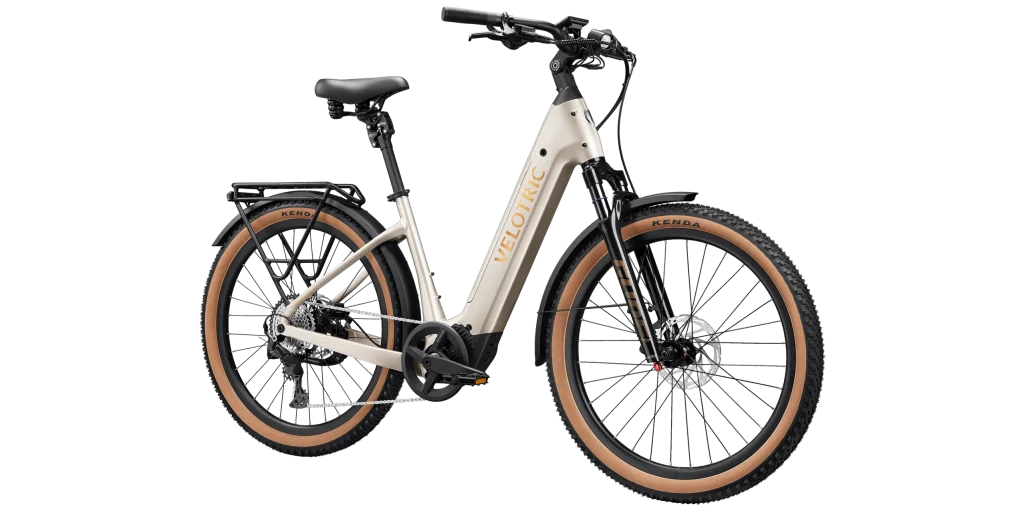
The Discover M combines a 500-watt nominal mid-drive motor, 801.6Wh battery, switchable torque and cadence sensors, a removable throttle, air suspension, a suspension seatpost, hydraulic disc brakes, a rear rack, full fenders, integrated turn signals, and built-in tracking technology.
At its current listed price of $2,499, the Discover M offers an impressive collection of comfort, performance, and technology features. However, there is also an important rear brake rotor bolt service campaign that current owners and prospective buyers need to understand before riding.
Velotric Discover M Quick Verdict
The Velotric Discover M is a powerful and unusually customizable mid-drive commuter with strong hill-climbing performance, a large battery, a broad rider fit, and plenty of included accessories.
It is particularly appealing for riders who want:
- Natural torque-sensing assistance
- A mid-drive motor with a throttle
- Strong performance on hills
- A large battery for longer rides
- A comfortable step-through frame
- A high total load capacity
- Built-in tracking and electronic security
- A rear rack, fenders, lights, and turn signals included
Independent testing supports many of the bike’s most important performance claims. The Discover M performed well in steep hill tests, traveled more than 80 miles in a low-assist range test, and maintained practical range even during aggressive high-power riding.
However, the Discover M is relatively heavy, requires proper shifting technique, and has limited long-term reliability history. More importantly, Velotric has an official service campaign involving the six bolts securing the rear brake rotor to the hub on a subset of Discover M bikes.
I would not ride or purchase a Discover M without confirming that the upgraded rear rotor bolts have been installed and the brake system has been properly inspected.
Electric Bike Explorer Rating
⭐⭐⭐½ 7.8/10 – Good, But With Clear Tradeoffs
The Velotric Discover M earns a 7.8 out of 10 under the Electric Bike Explorer rating system.
The bike scores well for:
- Strong mid-drive performance
- Excellent reported hill climbing
- Large 801.6Wh battery
- Comfortable riding position
- Broad rider-height range
- High total load capacity
- UL safety certification information
- Useful included accessories
- Independent real-world range results
- Torque and cadence sensor options
- Removable throttle
- Advanced tracking and ride customization
The score is lowered by:
- The official rear brake rotor bolt service campaign
- A detailed owner report involving rear rotor separation and loss of rear braking
- Limited long-term information about Velotric’s new VeloCore motor
- Early reports of speedometer, motor-noise, and drivetrain inconsistencies
- Approximately 66-pound independently measured equipped weight
- Higher drivetrain maintenance than a hub-drive commuter
- A potentially expensive used-bike return fee
- Unclear battery-warranty wording
Without the service campaign and early quality-control concerns, the Discover M’s performance, comfort, battery, features, and value could place it in the Very Good range.
For now, I consider it a good e-bike with excellent performance potential but clear tradeoffs that buyers should understand.
🔍 Why You Can Trust Electric Bike Explorer
Electric Bike Explorer is dedicated to providing honest, well-researched, and easy-to-understand information for e-bike riders. Whenever possible, I personally test the e-bikes, accessories, and products I review. When I can’t test something directly, I rely on careful research, manufacturer specifications, real-world rider feedback, official sources, and trusted industry information.
For law guides, I review state statutes, local ordinances, transportation agencies, park rules, and official government resources whenever possible. For e-bike news, I review the original reporting along with available town documents, meeting agendas, proposed ordinances, police statements, government notices, and other primary sources. I also make a clear distinction between a proposal, an approved rule, and a law that has already taken effect.
For troubleshooting and safety guides, I focus on practical explanations, common rider experiences, manufacturer guidance, and safe maintenance practices.
My goal is to help you make informed decisions, understand the rules where you ride, solve common e-bike problems, and get the most out of your electric bike safely.
Want to know how I score bikes and research my guides? Read my full review and ranking process
Want to See More Electric Bike Explorer in Google Search?
Add Electric Bike Explorer as a preferred source to see more of our e-bike law guides, safety updates, reviews, buying guides, and troubleshooting posts when they are relevant to your searches.
Important Velotric Discover M Rear Rotor Bolt Service Campaign
On April 24, 2026, Velotric published an official service campaign for a subset of Discover M bikes.
Velotric describes the affected hardware as “rear hub bolts,” but the company’s service procedure clarifies that the campaign involves the six bolts securing the rear disc brake rotor to the hub.
Velotric says some Discover M bikes were manufactured with shorter 8mm bolts that may not provide the expected clamping force under certain extreme riding conditions.
The replacement procedure uses six M5 x 11mm brake rotor bolts with thread-locking compound. The 8mm and 11mm measurements refer to bolt length, not bolt diameter.
The official procedure requires the mechanic to:
- Remove the six original rear rotor bolts
- Inspect the hub and rotor mounting area
- Install six M5 x 11mm replacement bolts
- Tighten the bolts in a crisscross pattern
- Tighten all six bolts to 8–10Nm
- Confirm that the rotor sits flush against the hub
- Check for gaps, movement, or rotor wobble
- Perform a functional rear brake test
Velotric says the upgrade generally takes approximately 5 to 10 minutes. Replacement kits are provided at no charge, and participating dealers are instructed to hold affected bikes until the upgrade is completed. Velotric also provides dealers with a service credit for completing the work.
Some affected owners reported receiving direct notices instructing them to stop riding until the upgrade was completed.
One owner shared the following portion of a Velotric notice:
“As part of our ongoing quality review, we identified that a subset of Discover M electric bikes, built with 8mm rear hub bolts, may not provide the expected clamping force under certain extreme riding conditions. As a precautionary measure, we are replacing the original 8mm bolts with upgraded 11mm bolts.
Immediate Action Required: To ensure your continued safety, please stop riding your Velotric Discover M immediately until this complimentary hardware upgrade is complete.”
Velotric refers to this as a proactive service or replacement campaign. I would still treat it as a serious safety matter because the bolts secure a critical part of the rear braking system.
What Current Owners Should Do
Before riding a Discover M:
- Contact Velotric or an authorized dealer with the bike’s serial number.
- Ask whether the bike is included in the service campaign.
- Request written confirmation that the upgraded bolts were installed.
- Confirm that all six replacement bolts were used.
- Have the rotor and hub inspected for damaged threads or mounting surfaces.
- Have the front rotor bolts checked during the same inspection.
- Test both brakes at low speed before returning to normal riding.
A simple visual check may not be enough. Bolts can appear to be installed while still being under-torqued, loose, or threaded into a damaged mounting point.
What Prospective Buyers Should Ask
Before accepting delivery, ask:
- Has this specific bike received the rear rotor bolt upgrade?
- Was the repair completed by an authorized dealer?
- Were all six bolts tightened to Velotric’s 8–10Nm specification?
- Was the rear hub inspected for damage?
- Was a brake test completed after the repair?
- Can the dealer provide written confirmation?
Buying through an authorized Velotric dealer may be preferable for this model because the dealer can complete the upgrade, assemble the bike, inspect the brakes, and provide local warranty support.
Velotric Discover M Overview
The Discover M is a step-through comfort commuter intended for:
- Daily commuting
- Neighborhood riding
- Recreational bike paths
- Longer paved rides
- Hilly roads
- Maintained gravel paths
- Light cargo carrying
It is available in Regular and Large frame sizes. Depending on the frame size and seatpost used, Velotric lists the bike for riders from approximately 4 feet 11 inches through 6 feet 7 inches.
The included suspension seatpost increases the minimum saddle height. Shorter riders may need to replace it with a standard rigid seatpost to use the lower end of Velotric’s published height range.
The VeloCore mid-drive motor applies power through the bike’s chain and rear gears. This gives the motor a mechanical advantage on hills, but it also means riders must shift properly and avoid changing gears while the motor is applying heavy power.
Velotric pairs the motor with a Shimano CUES nine-speed drivetrain, 11–46T cassette, and 46T chainring. The wide gear range gives riders lower gears for steep climbs and higher gears for faster pavement riding.
Velotric Discover M Specifications
The following specifications come from Velotric’s current product information. Independently measured results are labeled separately.
| Specification | Velotric Discover M |
|---|---|
| Current listed price | $2,499 |
| Bike category | Comfort commuter and recreational e-bike |
| Frame style | Step-through only |
| Frame material | Triple-butted aluminum alloy |
| Frame sizes | Regular and Large |
| Colors | Platinum Silver and Olivine Green |
| Rider height with suspension seatpost | Regular: 5’2″–5’11”; Large: 5’9″–6’7″ |
| Rider height without suspension seatpost | Regular: 4’11″–5’9″; Large: 5’6″–6’4″ |
| Separate rider-only weight limit | Not published |
| Maximum total bike load | 440 pounds, including rider and cargo |
| Rear rack capacity | 66 pounds |
| Velotric published bike weight | 60 pounds |
| Independently measured bike weight | Approximately 66 pounds |
| Motor | Velotric VeloCore mid-drive |
| Nominal motor power | 500 watts |
| Peak motor power | 960 watts |
| Rated motor torque | 100Nm |
| Advertised maximum torque | Up to 130Nm |
| Motor sensors | Switchable torque and cadence sensors |
| Throttle | Removable trigger-style thumb throttle |
| Pedal-assist modes | Eco, Trail, Sport, Boost, and Auto |
| Walk mode | Approximately 2.9 mph |
| Ride customization | Sensor, acceleration, assistance, speed, profile, and ride-tuning settings |
| Default maximum speed | 20 mph |
| Adjustable speed setting | 12–28 mph |
| Available configurations | Class 1, Class 2, or Class 3, depending on settings |
| Battery | 48V, 16.7Ah |
| Battery capacity | 801.6Wh |
| Battery cells | Samsung or LG 21700 cells |
| Battery certification | UL 2271 |
| Cell standard listed by Velotric | UL 2580 |
| Complete electrical-system certification | UL 2849 |
| Additional bike standard | ISO 4210 |
| Claimed pedal-assist range | Up to 95 miles |
| Claimed throttle range | Up to 70 miles |
| Charger | 48V, 3A |
| Estimated charging time | Just over 5.5 hours based on battery and charger specifications |
| Battery water-resistance rating | IPX7 |
| Complete-bike water-resistance rating | IPX6 |
| Display | 3.5-inch adjustable full-color display |
| Connectivity | Bluetooth and NFC |
| Phone charging | USB-C |
| Tracking | Apple Find My and Android Find Hub |
| Electronic security | NFC card unlocking |
| App support | Velotric app with over-the-air updates |
| Drivetrain | Shimano CUES nine-speed |
| Cassette | 11–46T |
| Chainring | 46T narrow-wide |
| Crank length | 170mm |
| Chain | KMC eGlide nine-speed |
| Brakes | Tektro hydraulic disc brakes with motor cutoff |
| Brake rotors | 180mm front and rear |
| Fork | 80mm air suspension with lockout |
| Seatpost | Suspension seatpost |
| Tires | Kenda 27.5 x 2.4-inch puncture-resistant tires |
| Front hub | Novatec 15 x 110mm thru-axle |
| Handlebar width | 680mm Regular; 700mm Large |
| Stem | 60mm adjustable aluminum stem |
| Headlight | 500-lumen integrated headlight |
| Rear lighting | Rear light, brake indicator, and turn signals |
| Rear rack | MIK HD-compatible alloy rack |
| Fenders | Full-coverage aluminum front and rear fenders |
| Kickstand | Rear-mounted aluminum kickstand |
| Pedals | Plastic platform pedals |
✅ Pros
- Smooth torque-sensing assistance
- Strong 100Nm rated mid-drive torque
- Up to 130Nm advertised maximum torque
- Excellent reported hill-climbing performance
- Large 801.6Wh battery
- More than 80 miles achieved in a low-assist test
- Practical range during aggressive independent testing
- Removable thumb throttle
- Switchable torque and cadence sensors
- Auto assistance mode
- Extensive ride customization
- Broad rider-height range
- 440-pound maximum total load
- 66-pound rear-rack capacity
- Upright riding position
- Adjustable air suspension fork
- Suspension seatpost included
- Shimano CUES nine-speed drivetrain
- Wide 11–46T cassette
- Hydraulic disc brakes
- Full aluminum fenders included
- MIK HD-compatible rear rack included
- Integrated brake light and turn signals
- Apple and Android-compatible tracking
- NFC card unlocking
- USB-C phone charging
- UL 2849 and UL 2271 certification information
- Two frame sizes
❌ Cons
- Official rear brake rotor bolt service campaign
- Buyers must verify that the upgraded hardware was installed
- Detailed owner report involving rear rotor separation and loss of rear braking
- Limited long-term VeloCore motor history
- Early reports of speedometer and motor inconsistencies
- Approximately 66-pound independently measured weight
- No high-step frame option
- Only two color choices
- May not maintain 28 mph as effortlessly as some hub-drive commuters
- Numerous settings may overwhelm beginners
- Mid-drive motor places more wear on the chain and cassette
- Proper shifting technique is important
- Plastic pedals feel basic at this price
- Used-bike return fee can approach $550
- Battery warranty wording is unclear
Rider Weight Clarification
Velotric does not currently publish a separate maximum rider-only weight for the Discover M.
The company lists a 440-pound maximum total bike load. This includes:
- The rider
- Clothing and riding equipment
- Panniers or bags
- Accessories
- Groceries or work equipment
- Anything carried on the rear rack
The rear rack’s 66-pound capacity is part of the overall 440-pound total rather than an additional allowance.
For example, a rider and all cargo combined must remain within the 440-pound limit even when the rack is carrying less than 66 pounds.
Bike Weight Clarification
Velotric publishes the Discover M’s weight as 60 pounds.
Electric Bike Report measured its review bike at approximately 66 pounds with the battery and standard equipment installed. Differences may be related to frame size, installed equipment, or measurement methods, but Velotric does not clearly explain the six-pound difference on the current product page.
I would use approximately 66 pounds when deciding whether:
- The bike will fit a vehicle rack
- The rack has enough per-bike capacity
- The bike can be lifted into an SUV
- The rider can manage stairs
- The bike can be safely transported without its battery
[Internal link: E-Bike Rack Weight Compatibility Calculator]
Main Velotric Discover M Features
VeloCore Mid-Drive Motor
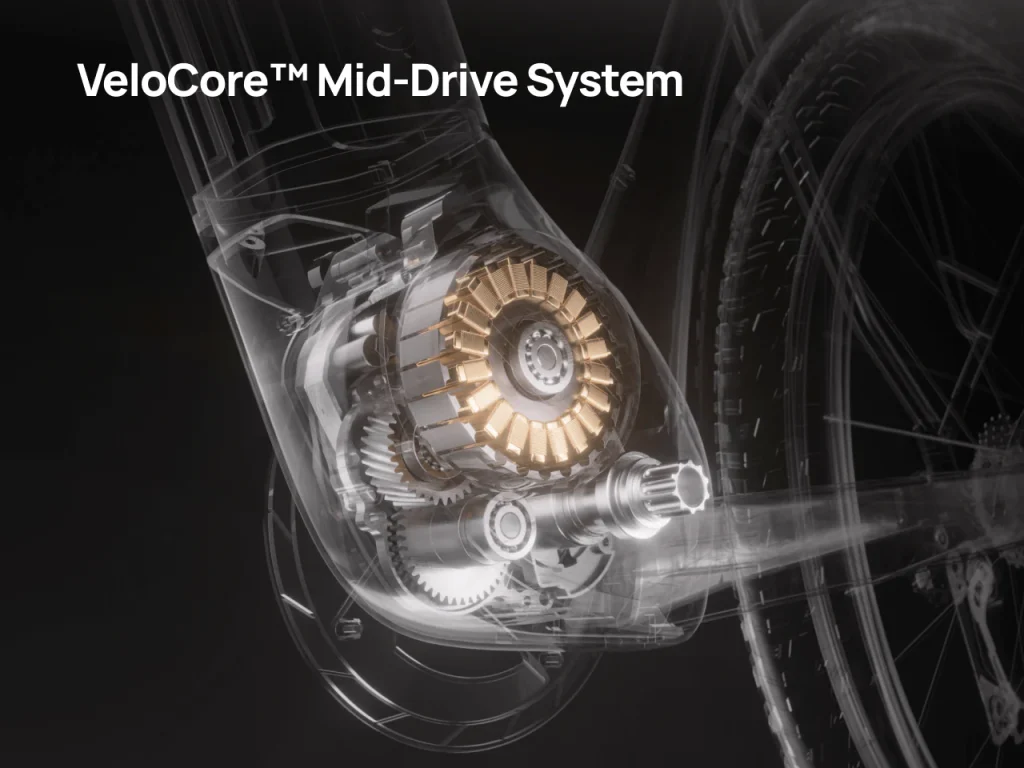
The Discover M uses Velotric’s VeloCore mid-drive motor.
Velotric lists:
- 500 watts of nominal power
- 960 watts of peak power
- 100Nm of rated torque
- Up to 130Nm of advertised maximum torque
The 100Nm number is the more useful figure when comparing the Discover M with competing e-bikes because manufacturers may calculate or describe peak torque differently.
Although 500 watts may sound less powerful than a 750-watt rear-hub motor, wattage does not tell the complete story.
A mid-drive motor sends power through the bicycle’s gears. Selecting a lower gear gives the motor greater mechanical advantage on a hill, similar to how a lower gear makes climbing easier for the rider.
SensorSwap Torque and Cadence Sensing
The Discover M allows riders to choose between torque-sensing and cadence-sensing assistance.
A torque sensor measures how hard the rider presses on the pedals. Pedaling harder produces more motor assistance, while pedaling gently produces less. This generally creates a smoother, more natural ride.
A cadence sensor focuses primarily on whether the pedals are turning. Once pedaling is detected, the motor provides a programmed level of assistance with less effort from the rider.
Torque sensing will likely be the better setting for riders who want the Discover M to feel like a traditional bicycle.
Cadence sensing may be better for someone who wants easier pedaling without needing to press as firmly on the pedals.
Having both options gives the Discover M more flexibility than most mid-drive commuter bikes.
Removable Thumb Throttle
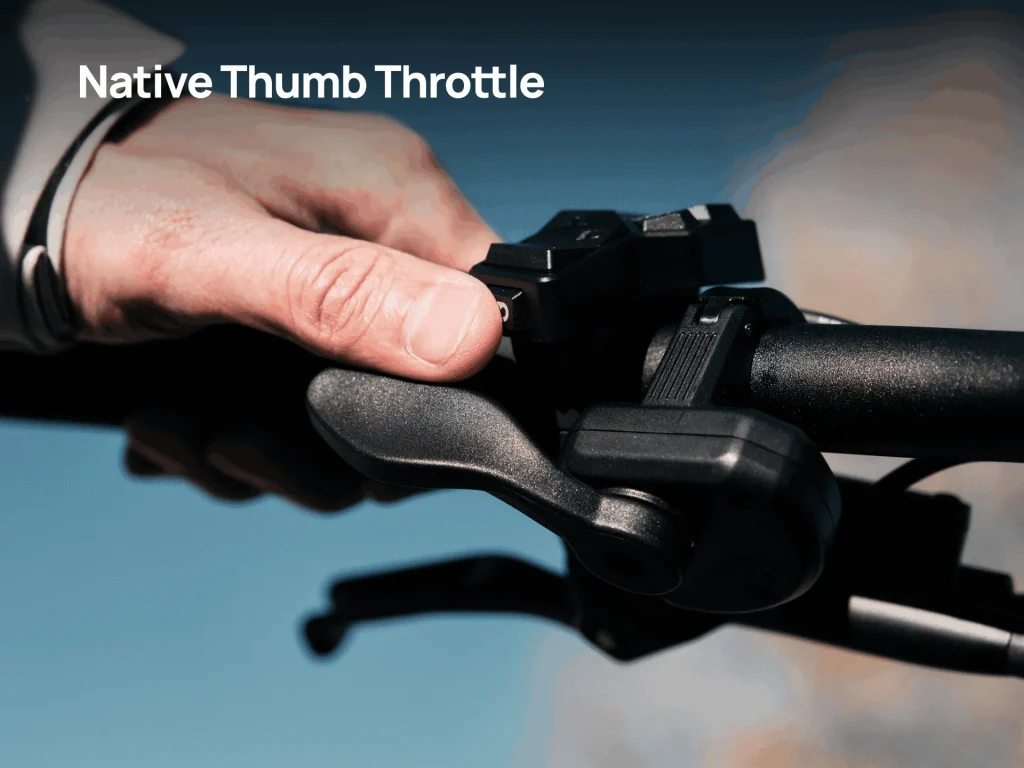
The Discover M includes a removable trigger-style thumb throttle.
Throttles are not included on every mid-drive e-bike, making this one of the Discover M’s more unusual features.
The throttle may help with:
- Starting on a hill
- Moving through an intersection
- Getting a loaded bike rolling
- Briefly resting the rider’s legs
- Maneuvering at low speeds
- Regaining momentum after slowing down
Removing or disabling the throttle may allow the bike to be configured as a Class 1 pedal-assist e-bike.
Local e-bike laws, trail rules, and park regulations still need to be checked because access rules can depend on the bike’s class, throttle, and maximum assisted speed.
[Internal link: E-Bike Laws by State]
Five Assistance Modes
The Discover M includes:
- Eco
- Trail
- Sport
- Boost
- Auto
Eco provides the lowest level of assistance and should produce the longest range.
Trail and Sport provide stronger assistance for regular riding and moderate hills.
Boost provides the highest assistance and is best reserved for steeper climbs, quicker acceleration, and situations where maximum support is needed.
Auto mode adjusts assistance in response to changing rider input and riding conditions.
Ride Tuning and App Customization
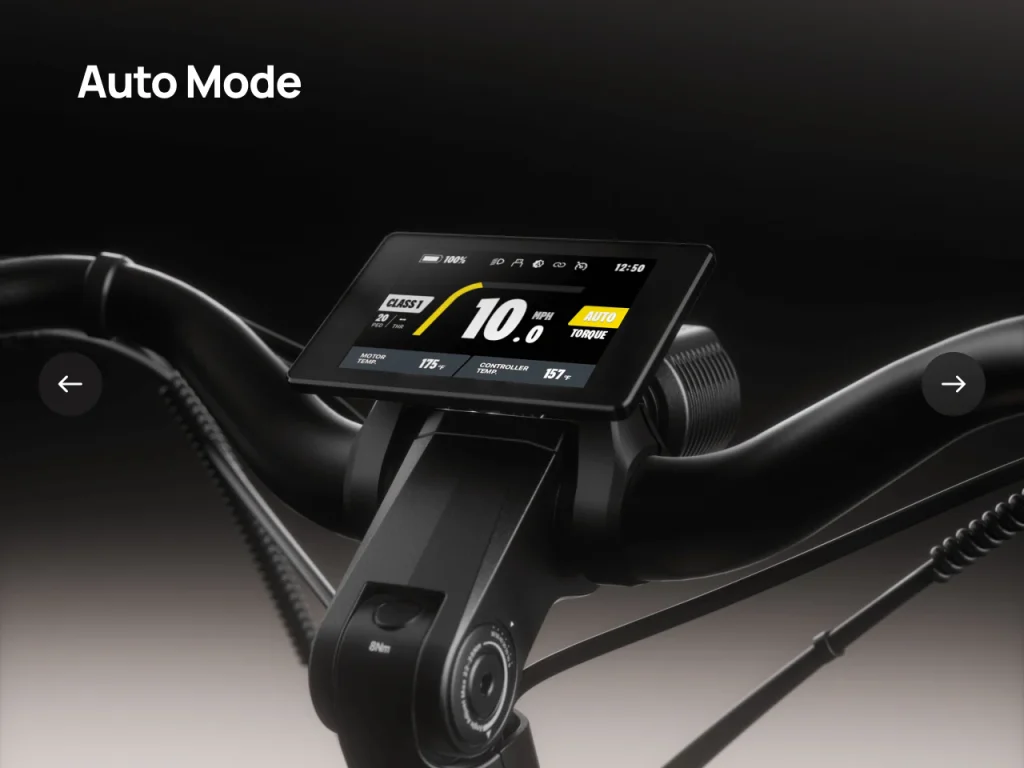
The Velotric app and display allow the rider to adjust:
- Torque or cadence sensing
- Assistance strength
- Acceleration response
- Maximum speed
- Throttle behavior
- Riding profiles
- Security settings
- Tracking features
This is useful for riders who enjoy customizing how an e-bike feels.
It may be more complicated than necessary for someone who wants a basic e-bike with only a few buttons and no app setup.
A beginner-friendly starting setup would be:
- Torque-sensor mode
- Eco or Trail assistance
- Smooth acceleration
- The default 20 mph speed setting
- A low or middle mechanical gear
After becoming comfortable with the bike, the rider can experiment with Auto mode, Boost, Class 3 speed, and stronger acceleration.
Large 801.6Wh Battery
The Discover M’s 801.6Wh battery is larger than the 500–700Wh batteries used on many commuter e-bikes.
The additional capacity may be especially useful for:
- Longer commutes
- Hilly routes
- Heavier riders
- Riders carrying cargo
- Cold-weather riding
- Higher assistance settings
- Frequent throttle use
Velotric lists Samsung or LG 21700 cells, UL 2271 battery certification, and UL 2849 certification for the complete electrical system.
Related content: How to Tell if an E-Bike Is UL Certified
Comfort-Focused Design
The Discover M combines several components intended to improve comfort:
- Low step-through frame
- Upright riding position
- Adjustable stem
- Ergonomic grips
- Wide comfort saddle
- Suspension seatpost
- Adjustable air suspension fork
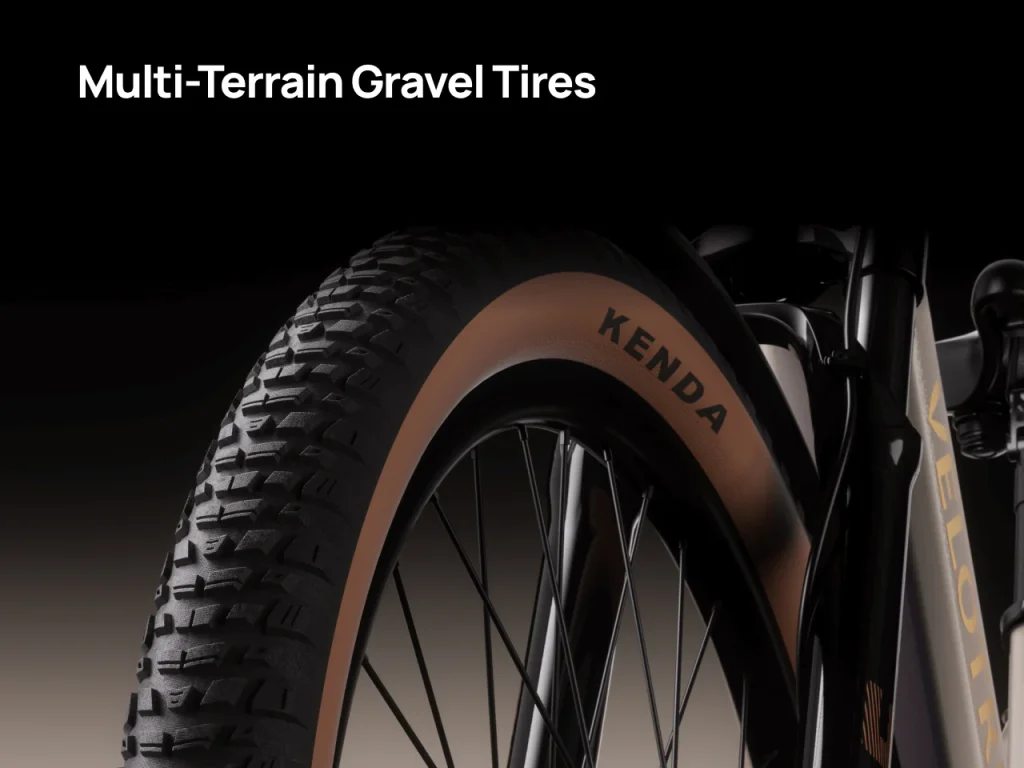
- 2.4-inch-wide tires
The 80mm air suspension fork can be adjusted more precisely than the basic coil forks used on many lower-priced commuter e-bikes.
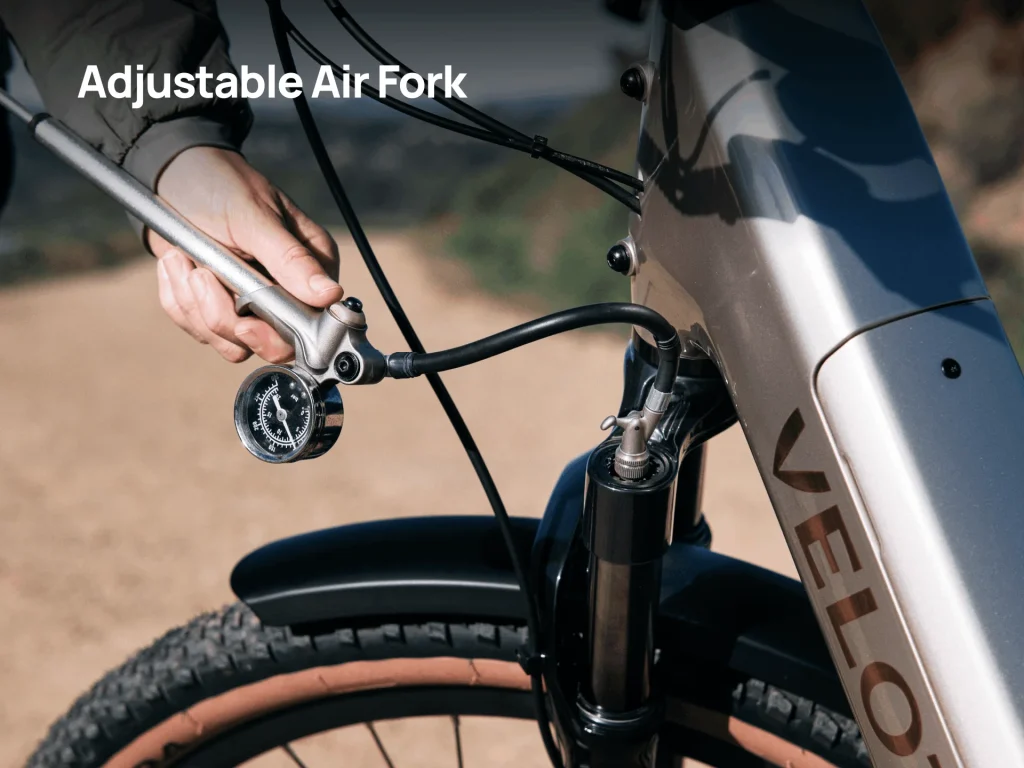
The suspension seatpost helps absorb bumps reaching the saddle, but it also raises the minimum seat height. Shorter riders should test the bike in person or confirm that a shorter rigid seatpost can be used.
Included Commuter Accessories
The Discover M includes most of the equipment a commuter would normally need:
- Full-coverage aluminum fenders
- MIK HD-compatible rear rack
- 500-lumen headlight
- Rear brake light
- Turn signals
- Bell
- Rear-mounted kickstand
- USB-C charging port
- Puncture-resistant tires
The rear rack has a listed capacity of 66 pounds.
A child seat, passenger seat, pet carrier, or other load-carrying accessory should not be installed based only on the rack’s weight rating. Compatibility should be confirmed with Velotric and the accessory manufacturer.
Tracking and Electronic Security
The Discover M supports both Apple Find My and Android Find Hub.
It also offers NFC key-card unlocking and app-based security settings.
These features do not physically prevent theft, so the bike should still be secured with a quality lock. They do provide an additional way to locate or identify the bike if it is moved.
[Internal link: Best E-Bike Locks]
Velotric Discover M Ride Quality
The Discover M should feel noticeably different from a typical rear-hub commuter.
Because the motor is positioned near the crank, the weight is more centered on the bike rather than concentrated inside the rear wheel.
The torque sensor responds to the rider’s pressure on the pedals. Instead of feeling as though the bike is pushing from behind, the assistance should feel more like the rider’s own pedaling has become stronger.
Electric Bike Report described the Discover M as balanced, responsive, customizable, and natural feeling, particularly when using torque-sensing assistance.
The combination of wider tires, air suspension, suspension seatpost, comfort saddle, and upright handlebars should work well for:
- Neighborhood roads
- City streets
- Bike paths
- Rough pavement
- Maintained gravel
- Hard-packed dirt roads
- Longer recreational rides
This is not a true electric mountain bike. It is not designed for jumps, repeated high-impact riding, highly technical trails, or aggressive downhill use.
Torque Mode Versus Cadence Mode
Torque mode should provide the more bicycle-like experience.
It rewards active pedaling and changes the motor output according to how much effort the rider applies.
Cadence mode requires less pedaling effort but may feel more controlled by the motor rather than the rider.
Riders who want natural assistance should begin in torque mode. Riders who have difficulty applying pressure to the pedals may prefer cadence mode or a combination of cadence assistance and throttle use.
Class 3 Speed
The Discover M can be configured for pedal assistance up to 28 mph.
Electric Bike Report found that the bike did not always reach a full 28 mph as naturally in every setting or riding condition. The Discover M is capable of Class 3 riding, but riders expecting effortless and constant 28 mph cruising may prefer a powerful rear-hub commuter.
Actual top speed will depend on:
- Rider weight
- Terrain
- Wind
- Battery charge
- Tire pressure
- Mechanical gear
- Sensor mode
- Assistance settings
- Rider effort
Velotric Discover M Motor and Hill Performance
Hill climbing is one of the Discover M’s strongest areas.
Electric Bike Report tested the bike on a steep hill course and recorded:
- 1 minute, 45 seconds in Boost mode
- 1 minute, 56 seconds using the throttle
The commuter and cruiser e-bikes in the publication’s comparison group averaged approximately:
- 2 minutes, 2 seconds with pedal assistance
- 2 minutes, 11 seconds using the throttle
The Discover M completed both tests at least 15 seconds faster than those comparison averages.
The publication also noted that the Discover M’s 100Nm rated torque was higher than the approximately 82Nm average among its comparison bikes.
These results suggest that the Discover M may be a strong option for:
- Hilly neighborhoods
- Repeated daily climbs
- Heavier riders
- Grocery and work cargo
- Riders who want mid-drive efficiency
- Riders who still want throttle assistance
Proper Shifting Is Important
The VeloCore motor sends its power through the chain, chainring, cassette, and derailleur.
This improves climbing performance, but it also places more load on the drivetrain than a hub motor that turns the wheel independently.
To reduce wear:
- Downshift before coming to a complete stop.
- Start in a low or middle gear.
- Reduce pressure on the pedals while changing gears.
- Shift before reaching the steepest part of a hill.
- Avoid shifting while applying full throttle.
- Do not begin a steep climb in the highest gear.
- Keep the chain clean and lubricated.
- Check chain wear periodically.
- Replace a worn chain before it damages the cassette.
If the chain breaks or comes off, the mid-drive motor will no longer be able to propel the rear wheel.
[Internal link: How to Shift Gears on a Mid-Drive E-Bike]
Velotric Discover M Battery and Real-World Range
Velotric advertises:
- Up to 95 miles with pedal assistance
- Up to 70 miles using the throttle
These are maximum manufacturer estimates rather than guaranteed everyday results.
Range Test
Electric Bike Report completed two standardized range tests:
| Test setting | Reported range |
|---|---|
| High-power Boost test | 32.3 miles |
| Low-power Eco test | 81.2 miles |
The 81.2-mile Eco result is impressive and shows that the large battery and mid-drive system can be highly efficient when assistance is kept low.
The 32.3-mile Boost result demonstrates how quickly range can decrease when maximum power is used.
ElectricBikeReview.com reported 34 miles during an intentionally aggressive test.
The tester:
- Weighed approximately 190 pounds
- Selected Boost mode
- Increased motor output to 100%
- Used the throttle heavily
- Pedaled hard when traffic allowed
- Gained approximately 532 feet of elevation
- Rode for roughly an hour and a half
The battery lasted 34 miles under those demanding conditions.
Taken together, these independent tests suggest:
- Approximately 32–34 miles is realistic during aggressive high-power riding.
- More than 80 miles may be possible with low assistance and active pedaling.
- Many everyday riders will fall somewhere between those extremes.
A reasonable planning range may be:
- 30–40 miles: Boost mode, higher speed, frequent throttle, heavy cargo, or steep hills
- 40–60 miles: Mixed assistance during normal commuting
- 60–80 miles: Lower assistance, moderate speeds, active pedaling, and favorable conditions
- Up to approximately 95 miles: Best-case conditions rather than a typical expectation
Actual range will change based on:
- Rider and cargo weight
- Terrain
- Wind
- Temperature
- Tire pressure
- Riding speed
- Acceleration settings
- Mechanical gear selection
- Pedal-assist level
- Throttle use
- Battery age and condition
Related Content: E-Bike Range Calculator
Charging Time
The Discover M includes a 48V, 3A charger.
Based on the 16.7Ah battery capacity and 3A charger, Electric Bike Report calculated a charging time of just over 5.5 hours. This is a calculated estimate rather than a specific charging-time guarantee from Velotric.
Charging may take longer when:
- The battery is very cold
- The battery is hot
- The charger slows near a full charge
- The battery-management system is balancing cells
- The battery has aged
Reported Independent Testing
The following results were reported by independent reviewers. Electric Bike Explorer did not conduct these tests.
| Test | Reported result | What it suggests |
|---|---|---|
| Electric Bike Report Eco range | 81.2 miles | Excellent low-assist efficiency |
| Electric Bike Report Boost range | 32.3 miles | High power substantially reduces range |
| ElectricBikeReview aggressive range | 34 miles | Practical range remained during demanding use |
| Boost hill climb | 1 minute, 45 seconds | Strong pedal-assisted climbing |
| Throttle hill climb | 1 minute, 56 seconds | Strong throttle climbing for a mid-drive |
| Brake stopping distance | 23 feet, 1 inch | Acceptable but slightly longer than the comparison average |
| Comparison brake average | 21 feet, 11 inches | Discover M stopped approximately 14 inches farther |
| Independently measured weight | Approximately 66 pounds | More useful for lifting and rack planning |
Brake Test
Electric Bike Report measured an average stopping distance of 23 feet, 1 inch.
Comparable commuter and cruiser e-bikes in its testing averaged approximately 21 feet, 11 inches. The Discover M stopped about 14 inches farther but was still considered within the publication’s expected and safe range.
The hydraulic brake system itself appears appropriate for a commuter of this speed and weight.
The official service campaign concerns the bolts securing the rear brake rotor, not a claim that the Tektro hydraulic brake system is inherently underpowered.
The rear rotor hardware should still be inspected before riding, even if the brake lever initially feels normal.
🎥 Watch the Velotric Discover M in Action
This video gives you a closer look at the Velotric Discover M’s mid-drive motor, comfort features, controls, and overall riding experience.
What Velotric Discover M Riders Are Saying
Owner comments are anecdotal. They cannot establish how frequently an issue occurs across all Discover M bikes.
However, they can provide useful information about:
- Comfort
- Hill performance
- Battery life
- Assembly
- Motor behavior
- Display operation
- Early quality-control concerns
Positive Rider Statement About Hills and Ride Quality
One owner shared the following detailed experience after using the Discover M on flat paths and steep roads:
“I love it! Honestly, I’m really glad I went with a mid-drive. There is a little bit of a learning curve, and I’m still tweaking things depending on where I’m riding, but I recently rode a friend’s hub-drive bike and I could definitely feel the difference. I go back and forth between flat C&O Canal type riding and the super hilly roads around my house, and the mid-drive handles both really well.
The biggest thing I realized is that I originally thought I wanted full suspension and fat tires, but for the type of riding I actually do, that probably would have been overkill. The weight difference is substantial. With the M, I can turn everything off and still ride it like a regular bike on flatter terrain for a little bit. I don’t think I could do that on some of the heavier bikes out there. The difference on hills is especially noticeable. The mid-drive just feels more natural to me.
It does make you ‘think’ a little more when riding, especially with shifting and settings, but once you start understanding it, everything starts to click. At first, I honestly wondered if I had made a mistake because I was struggling to switch between different terrain. Once I learned how to customize things in the app for different rides, it all fell into place. The way I’d explain it is that a mid-drive feels more like a regular geared bike.
You feel like your legs are doing the work, but the bike is responding and helping. A hub-drive feels more ‘set it and forget it,’ almost like the bike is doing more of the work for you, if that makes sense. If I were mainly using it as a city commuter bike, I’d probably consider a hub-drive. But for hills and mixed terrain I’d personally choose mid-drive again. The battery life has been pretty great too.
I thought being heavier and having to use the throttle on some steep hills would drain it faster but it’s been fantastic. I think if I had gotten a hub drive I would have been happy but after using a mid drive now I would probably always pick them.”
This statement supports several points found in independent testing. The rider liked the natural motor response, hill performance, and battery life but also acknowledged that the gears and electronic settings require some learning.
Mixed Statement From an Owner Who Purchased Two Discover M Bikes
Another owner bought two Discover M bikes and reported positive experiences along with noticeable differences between the two:
“Here is how our experience has gone down so far:
- They were well protected in their packaging and easy to assemble.
- They are stunning, beautiful machines.
- The power from the mid-drive motor is startling. Him and myself had giant grins all day and have probably gone 100 miles this week so far.
- Battery life is what they claim.
Now for the question:
One of the Discover M’s motors, the large green one, is almost entirely silent.
The other, a silver regular size variant, sounds… like what I would describe a regular e-bike mid-drive I’ve heard on our green line sounds like. I could call it grindy? The bike has a minute vibration.
Additionally for the silver variant, it came with shift points de-indexed. I did about 3 full turns to re-index.
Finally the speedometer is off. It appears to just… be randomly off. Sometimes it will say 17 when the green variant goes 17, sometimes the silver will show 9 when the green variant shows 15. Not consistently off, and this is at sustained speeds. It will never show 28mph even though the green variant shows 28mph and my variant, the silver, is on pace. It will show 20, or 23 or so.
All firmware is up to date. Support has been contacted, not sure if I’m over-reacting however, as both bikes perform alright.”
The owner praised:
- Packaging
- Assembly
- Appearance
- Motor power
- Battery life
The owner also reported:
- Different motor noise between two bikes
- Slight vibration
- Incorrect derailleur indexing
- Inconsistent speed readings
One owner’s experience cannot establish a model-wide problem. However, noticeable differences between two newly purchased bikes raise reasonable quality-control questions.
Detailed Rear Rotor Failure Report
One owner reported a serious rear brake rotor incident:
“I was commuting home in Manhattan traffic at around 20mph when I hit the brakes and heard a massive ‘clang’ from the rear. I immediately lost all rear braking power, the speedometer dropped to zero, and the motor cut out. I use this bike to commute with my child, so if the loose rotor had jammed the wheel, this could have been tragic.
When I inspected the bike at home, I found the rear disc rotor and the speed sensor plate completely detached and dangling. All 6 rotor bolts were gone. The actual aluminum hub flange also had snapped. One of the bolt eyelets completely fractured off the hub under the braking stress. A simple bolt replacement won’t fix this; the rear hub is structurally totaled.”
The owner reported that Velotric agreed to provide a replacement rear wheel and reimburse the cost of professional installation and inspection.
That was an individual customer-service outcome and should not be interpreted as a guarantee that every warranty claim will receive the same remedy.
The owner also made broader claims about the cause and scope of the problem. Those conclusions were the owner’s interpretation and were not independently established by the post alone.
However, the core concern involving the six rear rotor bolts is consistent with the hardware issue Velotric later described in its official service campaign.
What the Rider Feedback Tells Me
Positive owner comments frequently focus on:
- Natural mid-drive assistance
- Strong climbing
- Good battery life
- Comfortable geometry
- Attractive appearance
- Useful customization
- Manageable riding without assistance on flatter ground
Negative or mixed comments have included:
- Learning curve with gears and settings
- Drivetrain indexing
- Inconsistent speedometer readings
- Differences in motor noise
- Vibration
- Rear rotor hardware concerns
There is not enough long-term owner information to calculate a reliable failure rate.
The available feedback supports a cautious approach rather than assuming either that every Discover M will have a problem or that the campaign can be ignored.
Velotric Discover M Unboxing and Assembly
Velotric says the Discover M arrives nearly 85% assembled.
The company provides:
- A quick-start guide
- Owner’s manual
- Assembly video
- App-pairing instructions
- NFC setup instructions
- Display and system-operation information
The listed box contents include:
- Discover M e-bike
- Battery
- Charger
- Front light
- Display
- Front and rear fenders
- Rear rack
- Reflectors
- Bell
- Cable binder
- Kickstand
- Suspension seatpost
- NFC key card
- Left and right pedals
- Assembly toolkit
- Printed instructions
The exact final assembly steps may vary, but buyers should expect to complete or verify items such as:
- Handlebar positioning
- Front wheel installation
- Pedal installation
- Display and control positioning
- Saddle height
- Stem angle
- Tire pressure
- Fork air pressure
- Brake alignment
- Drivetrain shifting
- Battery charging
- App and NFC setup
Because the bike weighs approximately 60–66 pounds, having a second person available may make removing it from the box and positioning the front of the bike easier.
Pre-Ride Inspection I Recommend
Because of the service campaign and owner reports, I would not limit the first inspection to basic assembly.
Before riding, check or have a qualified mechanic check:
- Rear rotor bolt campaign status
- All six rear rotor bolts
- Rear hub mounting threads
- Rotor seating against the hub
- Rear rotor movement or wobble
- Front rotor bolts
- Front axle installation
- Brake-caliper alignment
- Brake-lever firmness
- Headset adjustment
- Wheel trueness
- Spoke tension
- Derailleur indexing
- Chain movement through all nine gears
- Crank and pedal tightness
- Handlebar and stem hardware
- Rack and fender hardware
- Tire pressure
- Battery security
- Speedometer operation
- Motor cutoff when each brake is applied
Complete the first brake test at low speed in a clear area before riding in traffic or carrying cargo.
Anyone who is not comfortable inspecting disc brake hardware, hub threads, headset adjustment, or bolt torque should choose professional assembly.
Velotric Customer Service
Velotric provides lifetime troubleshooting assistance, but replacement parts and labor remain subject to the warranty terms.
For direct purchases from Velotric’s website, buyers normally contact Velotric customer service. Buyers who purchase from an authorized dealer may be directed to work through that dealer for after-sale service.
For the rear rotor bolt campaign, Velotric officially says:
- Replacement kits are supplied at no cost.
- Participating dealers complete the upgrade.
- Affected bikes should be held until the work is complete.
- Dealers receive a service credit for performing the repair.
Separately, some owners have reported receiving replacement parts or help with professional repair costs.
Those are individual experiences rather than a promise that every warranty claim will receive the same solution.
I would feel more comfortable buying the Discover M from an authorized Velotric dealer than ordering it as a boxed direct-to-consumer bike.
A local dealer can:
- Confirm the rear rotor bolt upgrade
- Assemble the bike
- Inspect the hub and brakes
- Correct drivetrain indexing
- Diagnose motor or display problems
- Submit warranty documentation
- Install replacement parts
- Perform future mid-drive maintenance
Velotric Discover M Warranty
Velotric divides its warranty coverage by component rather than covering every part for the same period.
| Component | Current listed coverage |
|---|---|
| Aluminum frame structure | Five years |
| Motor and listed electrical components | Two years |
| Battery | Current policy says coverage is limited to up to 300 charging cycles, but its time-based wording is unclear |
| Battery capacity statement | Velotric says the battery is designed to retain up to 75% of original capacity during the covered period |
| Accessories | One year |
| Listed mechanical and essential components | One year |
| Normal wear items | Not covered |
| Subsequent owners | Original warranty does not transfer |
Velotric lists the following under its two-year electrical coverage:
- Motor
- Throttle
- Pedal-assist controls
- Controller
- Wiring harness
- Lights
- Sensors
- Tracking components
- Charger
The company lists many mechanical parts under one-year coverage, including:
- Suspension fork
- Stem
- Handlebar
- Headset
- Brakes, excluding brake pads
- Bottom bracket
- Crankset
- Pedals
- Kickstand
- Rims
- Wheel hubs
- Cassette
- Derailleur
- Shifter
Battery Warranty Wording
Velotric’s current policy says the battery is covered for up to 300 charging cycles, “whichever occurs first.”
However, the policy does not clearly identify what time-based limit the 300 cycles are being compared with.
The policy also says the battery is designed to retain up to 75% of its original capacity during the covered period. This is manufacturer wording rather than a clearly explained capacity-replacement guarantee.
Before purchasing, I would ask Velotric to confirm in writing:
- The battery’s time-based warranty period
- Whether 300 cycles is an absolute limit
- What capacity loss qualifies for replacement
- What diagnostic proof is required
- Whether labor and shipping are covered
Other Warranty Limitations
The warranty applies to the original purchaser and is not transferable.
Normal wear items are generally excluded, including:
- Tires
- Tubes
- Brake pads
- Chains
- Cables
- Grips
- Spokes
- Sprockets
Improper assembly, unauthorized modifications, neglect, corrosion, accidents, misuse, and damage involving third-party components may also be excluded.
Velotric may request:
- Photos
- Videos
- Serial numbers
- Purchase documentation
- Diagnostic information
- Professional inspection records
The advertised warranty should not be interpreted as two full years of coverage for every mechanical part.
Velotric Returns and 14-Day Trial
Velotric updated its online return policy on June 4, 2026.
The current policy applies to bikes purchased directly through Velotric’s website. Authorized dealers may have separate return policies.
Velotric currently allows a return request within 14 days of receiving the bike and says there is no mileage restriction during the trial period.
The listed fees are:
| Return condition | Current listed fee |
|---|---|
| Unused bike | $200 |
| Used bike | 22% of the bike’s item price |
| Accessory | $20 per accessory |
At a $2,499 purchase price, a 22% used-bike fee would equal approximately $549.78.
Velotric says a returned used bike must be clean and returned in substantially the same condition with the included contents. Warranty problems generally need to be addressed before the bike is processed as a standard return.
Because policies can change, I would still save a copy of the current return terms and confirm the expected fee before riding the bike.
A local test ride is especially valuable when a used-bike return could cost nearly $550.
Velotric Financing
Velotric offers financing through Affirm.
The company advertises plans starting at 0% APR, but the actual offer depends on:
- Credit eligibility
- Purchase amount
- Available repayment terms
- Down-payment requirements
- The rate offered at checkout
Affirm rates may range from 0% to 36% APR, and some applicants may be required to make a down payment.
Before financing, compare:
- Cash price
- Down payment
- Monthly payment
- APR
- Number of payments
- Total financed cost
- Return and refund handling
A lower monthly payment may still result in a significantly higher total cost.
Essential E-Bike Gear (Quick Picks)
Before you choose your e-bike, these are the accessories most riders end up needing for safety and everyday use:
Who Is the Velotric Discover M Good For?
Riders Who Live Around Hills
The mid-drive motor, 100Nm rated torque, wide cassette, and strong independent hill-test results make the Discover M particularly appealing for hilly routes.
Riders Who Want a Natural Pedaling Experience
The torque sensor and centered motor placement create a more bicycle-like ride than many cadence-sensing rear-hub commuters.
Heavier Riders
The 440-pound maximum total load is higher than the 275- to 350-pound limits found on many commuter e-bikes.
Velotric does not publish a separate rider-only maximum, so the rider, gear, and cargo must all remain within the total limit.
Shorter and Taller Riders
Depending on frame size and seatpost setup, Velotric lists the Discover M for riders from approximately 4 feet 11 inches through 6 feet 7 inches.
Shorter riders may need a standard rigid seatpost rather than the included suspension post.
Comfort-Focused Riders
The upright riding position, step-through frame, wide tires, air fork, suspension seatpost, adjustable stem, and comfort saddle make this a strong option for relaxed daily riding.
Riders Who Want a Mid-Drive With a Throttle
The Discover M’s combination of torque sensing, mid-drive power, and a removable throttle is still relatively uncommon.
Longer-Distance Commuters
The large battery, rear rack, fenders, lighting, turn signals, and independently reported range make it well suited to longer daily routes.
Riders Who Enjoy Technology
The Discover M provides more electronic customization than a basic commuter. Riders can adjust sensor behavior, assistance, acceleration, speed, profiles, and security features.
Who Should Consider a Different E-Bike?
The Discover M may not be the best choice for:
- Riders who must carry a bike upstairs
- Apartment residents without an elevator
- People using a low-capacity vehicle rack
- Buyers who want a high-step frame
- Riders who do not want to manage gears
- People who prefer very simple controls
- Riders looking for a true mountain bike
- Buyers uncomfortable with the rotor bolt campaign
- Riders without access to a qualified mechanic
- Anyone prioritizing a belt drive and minimal maintenance
- Buyers who want several years of long-term owner data
- Anyone unwilling to risk a substantial used-bike return fee
Should You Buy the Velotric Discover M?
The Velotric Discover M has many of the qualities I look for in a premium comfort commuter.
Its VeloCore mid-drive motor provides strong climbing performance while maintaining a more natural riding feel than many rear-hub e-bikes. The 801.6Wh battery is large for the category, and independent testing supports both strong hill performance and excellent low-assist range.
Velotric also includes nearly everything a commuter would otherwise need to purchase separately:
- Hydraulic disc brakes
- Air suspension fork
- Suspension seatpost
- Rear rack
- Full fenders
- Headlight
- Brake light
- Turn signals
- Tracking
- NFC security
- USB-C charging
- Puncture-resistant tires
The two frame sizes and optional lower seatpost setup provide an unusually broad published height range.
At $2,499, the Discover M delivers a combination of battery capacity, comfort, technology, and mid-drive performance that can cost considerably more from some traditional bicycle brands.
The independent testing is encouraging.
The bike:
- Completed steep hill tests faster than the comparison averages
- Reached 81.2 miles in an Eco range test
- Delivered approximately 32–34 miles during demanding high-power tests
- Produced an acceptable standardized stopping distance
- Offered strong throttle climbing for a mid-drive
However, the rear rotor bolt campaign changes the buying decision.
Brake rotor hardware is safety critical. A rider should not assume that the campaign is unimportant simply because the repair is relatively quick.
I would not ride a Discover M until:
- Its campaign status has been checked.
- The upgraded hardware has been confirmed.
- The rear hub and rotor have been inspected.
- Both brakes have been tested.
The bike is also new enough that long-term VeloCore reliability is still uncertain. Reports involving speed readings, motor noise, and drivetrain setup may represent isolated cases, but they reduce my confidence in giving the Discover M an unconditional recommendation.
I Would Consider Buying the Discover M When:
- The upgraded rear rotor hardware has been confirmed in writing.
- A qualified dealer or mechanic has inspected the bike.
- Strong hill performance is a major priority.
- The rider wants both torque sensing and a throttle.
- The large battery will be useful for longer rides.
- The rider understands how to shift a mid-drive.
- The approximately 66-pound equipped weight is manageable.
- A local Velotric dealer is available for service.
I Would Be More Cautious When:
- Ordering a boxed bike without professional support
- The seller cannot confirm the campaign repair
- The bike will be used to transport a child
- The rider cannot perform routine safety checks
- The bike must be lifted regularly
- The rider wants a low-maintenance belt drivetrain
- A possible $549.78 used-bike return fee would be unacceptable
My overall conclusion is that the Velotric Discover M is a good e-bike with excellent performance potential but clear current tradeoffs.
Its motor, battery, comfort, fit range, technology, and included accessories make it worth considering. The rotor bolt campaign, limited long-term history, weight, and early owner concerns prevent me from placing it in the Very Good category at this time.
That is why the Velotric Discover M earns:
⭐⭐⭐½ 7.8/10
For a rider who confirms the hardware upgrade, purchases through a supportive dealer, and wants a comfortable mid-drive commuter for hills and longer rides, the Discover M could still be a very good personal fit.
Alternative 1: Priority Current Plus
The Priority Current Plus is the stronger alternative for riders who want a powerful mid-drive commuter with a cleaner and lower-maintenance drivetrain.
| Feature | Velotric Discover M | Priority Current Plus |
|---|---|---|
| Current listed starting price | $2,499 | $3,299 Shimano; $3,499 Enviolo |
| Motor | 500W Velotric mid-drive | 500W mid-drive |
| Rated or advertised torque | 100Nm rated; up to 130Nm maximum | Up to 140Nm |
| Battery | 801.6Wh | 720Wh |
| Claimed range | Up to 95 miles | Approximately 20–75 miles |
| Throttle | Included and removable | Included |
| Maximum assistance speed | Up to 28 mph | Adjustable up to 28 mph |
| Drivetrain | Shimano CUES chain | Gates belt with internal gearing |
| Gear options | Nine-speed derailleur | Shimano five-speed hub or Enviolo CVT |
| Suspension fork | 80mm air fork | Rigid aluminum fork |
| Listed weight | 60 pounds | 55 pounds Shimano; 56.5 pounds Enviolo |
| Rider height | Approximately 4’11″–6’7″, depending on setup | Approximately 5’0″–6’3″ |
| Frame style | Low step-through | Mid-step |
| Fenders | Included | Included |
| Rear rack | Included | Sold separately |
| Best advantage | Battery, suspension, range, and customization | Belt drive, internal gearing, and lower maintenance |
The Priority Current Plus uses a Gates Carbon Drive belt instead of an exposed chain.
Buyers can choose between:
- A Shimano five-speed internally geared hub
- An Enviolo continuously variable hub
Priority currently lists a 720Wh battery, thumb throttle, up to 140Nm of torque, hydraulic disc brakes, integrated lighting, full fenders, and adjustable Class 3 assistance up to 28 mph.
The main advantages are:
- Low-maintenance belt drive
- Internal gearing
- Lighter listed weight
- Higher advertised maximum torque
- No external derailleur
The disadvantages are:
- Higher price
- Smaller battery
- Rigid front fork
- Rear rack sold separately
- Narrower overall rider-height range
Choose the Priority Current Plus if: You want a premium, powerful commuter with a belt drive and internal gears and are willing to pay more for lower drivetrain maintenance.
Alternative 2: Ride1Up Prodigy V2
The Ride1Up Prodigy V2 is the value-oriented alternative for riders who want an established Brose mid-drive system at a lower price.
| Feature | Velotric Discover M | Ride1Up Prodigy V2 |
|---|---|---|
| Current listed price at time checked | $2,499 | Approximately $1,795 |
| Motor | Velotric VeloCore mid-drive | Brose TF Sprinter mid-drive |
| Torque | 100Nm rated | 90Nm |
| Battery | 801.6Wh | 504Wh |
| Claimed range | Up to 95 miles | Approximately 30–50 miles |
| Throttle | Included | No throttle listed |
| Maximum assistance speed | Up to 28 mph | Up to 28 mph |
| Frame options | Step-through only | Step-through and step-over |
| Drivetrain options | Shimano CUES chain | Chain or belt/CVT, depending on version |
| Suspension fork | 80mm air fork | 100mm air fork |
| Listed weight | 60 pounds | Approximately 58 pounds chain; 61 pounds CVT |
| Maximum total load | 440 pounds | 300 pounds |
| Best advantage | Battery, throttle, load capacity, and technology | Lower price and established Brose motor |
The Prodigy V2 uses a German-engineered Brose TF Sprinter mid-drive motor with 90Nm of torque.
Ride1Up lists:
- 504Wh battery
- Approximately 30–50 miles of range
- Pedal assistance up to 28 mph
- 100mm air suspension fork
- Hydraulic disc brakes
- Integrated lighting
- Fenders
- Chain and belt-drive configurations
- 300-pound total capacity
Ride1Up listed the Prodigy V2 at approximately $1,795 when this review was checked, although price, configuration, and inventory can change.
Its biggest disadvantages compared with the Discover M are:
- Much smaller battery
- No listed throttle
- Lower total load capacity
- Less included tracking technology
- More limited dealer support
Related content: Ride1UP Prodigy V2 Review
Choose the Ride1Up Prodigy V2 if: You want a lower-cost mid-drive commuter, do not need a throttle or 440-pound capacity, and are comfortable with a smaller battery and direct-to-consumer support.
FAQs
The Velotric Discover M can be configured for different e-bike classes depending on its speed and throttle settings. It ships with a removable throttle and can provide pedal assistance up to 28 mph when configured for Class 3 riding. Riders should check local e-bike laws because throttle use and Class 3 access are not allowed on every road, bike path, or trail.
The Regular frame is listed for riders as short as 4 feet 11 inches when used without the included suspension seatpost. With the suspension seatpost installed, Velotric raises the minimum recommended height to approximately 5 feet 2 inches. Shorter riders should test the bike in person or ask the dealer about installing a shorter rigid seatpost.
The Discover M can be pedaled with the motor turned off, but its independently measured weight of approximately 66 pounds will make it feel heavier than a traditional bicycle. It should be manageable on flatter ground, but climbing hills without assistance may require considerable effort.
Velotric describes the issue as a rear-hub bolt service campaign rather than a formal recall. The campaign affects a subset of Discover M bikes equipped with shorter bolts securing the rear brake rotor to the hub. Owners should contact Velotric or an authorized dealer to confirm whether their bike needs the complimentary hardware upgrade.
Yes. The Discover M uses a removable thumb throttle. Removing or disabling the throttle may help riders configure the bike for Class 1 use, but changing the throttle does not automatically make the bike legal on every trail. Local rules may also consider the bike’s maximum assisted speed and original equipment.
The Shimano CUES nine-speed drivetrain should be straightforward for riders familiar with bicycle gears, but a mid-drive motor requires better shifting habits than a rear-hub motor. Riders should reduce pedal pressure while shifting, select a lower gear before stopping, and avoid changing gears while applying full throttle or heavy motor power.
Velotric advertises up to 95 miles with pedal assistance and up to 70 miles using the throttle. Independent testing produced approximately 81.2 miles in Eco mode and about 32–34 miles during aggressive high-power riding. Many riders should expect somewhere between those results depending on terrain, speed, weight, weather, and assistance level.
The Discover M has a 440-pound maximum total load capacity. This includes the rider, clothing, accessories, bags, and cargo. Velotric does not publish a separate rider-only weight limit, so buyers near the upper end should discuss their expected total load with an authorized dealer.
The included rear rack is rated for up to 66 pounds, but that rating alone does not confirm compatibility with a child seat or passenger accessory. Parents should confirm compatibility with Velotric and the child-seat manufacturer and make sure the bike remains within its 440-pound total load limit. I would also confirm that the rear rotor bolt service campaign has been completed before carrying a child.
The step-through frame, upright riding position, adjustable stem, suspension seatpost, and air suspension fork may make the Discover M comfortable for many older riders. However, its approximately 66-pound equipped weight, powerful acceleration, multiple electronic settings, and mid-drive shifting requirements may be challenging for some riders. A local test ride is the best way to evaluate balance, fit, and control.
The motor itself does not necessarily require frequent maintenance, but the chain, cassette, and chainring may wear more quickly because the mid-drive sends both rider and motor power through the drivetrain. Regular chain cleaning, lubrication, shifting adjustments, and chain-wear checks are especially important.
The Discover M should work well on maintained gravel paths, packed dirt roads, and mild recreational trails. Its 2.4-inch tires, air suspension fork, and upright geometry provide more comfort than a rigid city bike. It is not designed for technical mountain-bike trails, jumps, or aggressive downhill riding.
Disclosure: As an Amazon Associate, I earn from qualifying purchases. This comes at no extra cost to you and helps support the content on this site.
📚 Read Me Next
- Compare this bike to others → Best Commuter E-Bikes
- Not sure about budget? → Budget E-Bike Guide
- Want to learn first? → E-Bike Buying Guide
- See more ebike reviews → E-Bike Reviews

Kristina is not just an enthusiast but a true authority on electric bikes. Nestled in the coastal beauty of Virginia, Kristina has found the perfect backdrop for her passion for electric biking. As a dedicated wife and homeschooling mom, her life revolves around family, faith, and the thrill of adventure.
Originally hailing from Ohio, Kristina's journey with electric bikes began as a curiosity and quickly evolved into a deep expertise. Her blog is a testament to her love for electric biking, combining her fascination for eco-friendly transportation with her coastal lifestyle.
When she's not cruising the beach on her electric bike, you'll find Kristina indulging in her other loves: long walks along the shore, getting lost in a good book, and cherishing moments with her loved ones. With a heart as big as her love for animals, especially cats, Kristina brings a unique perspective to the electric bike world, grounded in her strong faith in God and her dedication to a sustainable lifestyle.
Through her blog, Kristina shares her extensive knowledge of electric bikes, offering valuable insights, tips, and recommendations to fellow enthusiasts. Whether you're a seasoned rider or a newcomer to the electric bike scene, Kristina's blog is your go-to source for all things electric biking, fueled by her passion, expertise, and the scenic beauty of coastal Virginia.