E-Bike Shuts Off Going Uphill? Here’s the Most Common Reasons
Last Updated on June 27, 2026 by Kristina
If your e-bike shuts off going uphill, you’re not alone. I’ve seen this question come up repeatedly from riders who suddenly lose all power while climbing a hill, only to have the bike turn back on a few seconds or minutes later.
The good news is that this doesn’t automatically mean your battery is bad or that your e-bike needs expensive repairs. In many cases, the problem is caused by a safety feature protecting the electrical system, a loose connection, or a battery that can’t deliver enough power under heavy load.
In this guide, I’ll walk you through the most common reasons an electric bike shuts off on hills, how to diagnose the problem, and what you can do to fix it before replacing expensive components.
If your bike is shutting off in situations other than climbing hills, you may also want to read my guides on Why Does My E-Bike Cut Out While Riding?, E-Bike Not Holding a Charge? Causes, Fixes & When to Replace the Battery, and use my E-Bike Controller Diagnostic Tool to help narrow down the cause.
Common Causes at a Glance
If your e-bike shuts off while riding uphill, the most common causes include:
- Battery voltage sag under heavy load
- A Battery Management System (BMS) temporarily protecting the battery
- Loose battery or wiring connections
- An overheating controller or motor
- An aging or damaged battery
- Excessive rider weight or steep terrain placing more demand on the system
- A faulty controller or electrical component
Fortunately, many of these issues can be diagnosed at home before spending money on replacement parts.
Why You Can Trust Electric Bike Explorer
I spend countless hours researching electric bikes, reviewing manufacturer documentation, following service bulletins, reading rider reports, and testing e-bikes myself whenever possible. My goal is to provide practical, easy-to-understand advice that helps riders solve real problems instead of immediately replacing expensive parts.
Why Does an E-Bike Shut Off Going Uphill?
Climbing a hill is one of the hardest things you can ask an electric bike to do.
Unlike riding on flat pavement, hills require the motor to draw much more current from the battery. As the demand increases, every part of the electrical system works harder.
That extra strain can expose problems that never appear during normal riding.
For example, you might ride ten miles on level ground without a single issue. Then the moment you start climbing a steep hill, the display suddenly goes black and the entire bike shuts off.
This often happens because one component reaches its operating limit before the others.
Depending on the bike, that could be:
- The battery
- The Battery Management System (BMS)
- The controller
- The motor
- A loose electrical connection
Many e-bikes are designed to temporarily shut down when they detect unsafe conditions. While it can be frustrating, these protection systems help prevent permanent damage to expensive electrical components.
📖 Read Next
How to Choose the Best eBike Battery for Your Commute (With Top Picks)
Understanding E-Bike Battery Capacity: Amp Hours (Ah) Explained
5 Signs It’s Time to Replace Your E-Bike Battery
The Ultimate Guide to Electric Bike Chargers: Types, Features, and Recommendations
Why Your E-Bike Battery Loses Charge Overnight — and How to Fix It
How Long Do E-Bike Batteries Last?
E-Bike Battery Charging Mistakes
E-Bike Battery Health Checker
1. Battery Voltage Sag (The Most Common Cause)
If I had to pick the single most common reason an e-bike loses power on hills, it would be battery voltage sag.
Voltage sag happens whenever the motor suddenly demands a large amount of power.
As the current draw increases, the battery’s voltage temporarily drops. If the voltage falls below the minimum level required by the controller or Battery Management System (BMS), the bike may immediately shut off to protect the electrical system.
After sitting for a minute or two, the battery voltage often recovers enough for the bike to power back on.
Signs of Battery Voltage Sag
You may notice:
- The bike only shuts off on steep hills.
- It works normally on flat roads.
- The battery still shows a moderate charge afterward.
- The bike powers back on after resting briefly.
- The problem becomes worse in cold weather.
- The issue happens more frequently when using full throttle.
These symptoms strongly suggest the battery is struggling under heavy electrical load.
What Causes Voltage Sag?
Several factors can increase voltage sag, including:
- An older battery with reduced capacity
- Batteries that have developed higher internal resistance over time
- Low battery charge
- Cold temperatures
- Heavy rider weight
- Pulling cargo or a trailer
- Very steep hills
- Aggressive throttle use
- Lower-quality battery cells with higher internal resistance
As lithium-ion batteries age, their internal resistance naturally increases. That means the battery may still appear fully charged but struggle to deliver enough current when climbing hills.
This is one reason an older battery may seem perfectly fine for casual rides but repeatedly shuts the bike down on steep inclines.
How to Reduce Voltage Sag
If voltage sag is causing your problem, you may be able to reduce it by:
- Charging the battery before longer rides.
- Using pedal assist instead of relying only on the throttle.
- Shifting into a lower gear before climbing.
- Reducing your speed on steep hills.
- Keeping the battery warm during cold weather.
- Avoiding long climbs with a nearly empty battery.
If the battery is several years old or has many charge cycles, replacement may ultimately be necessary.
⚠️ Before You Buy a New Battery
Many riders assume a failing battery is the cause of every hill-related shutdown. In reality, loose connections, Battery Management System (BMS) protection, controller overheating, and voltage sag can produce the same symptoms. I recommend working through the troubleshooting steps in this guide before spending money on a replacement battery.
2. The Battery Management System (BMS) Is Protecting the Battery
Many riders assume their battery has completely failed when the bike suddenly loses power.
In reality, the Battery Management System (BMS) may simply be doing its job.
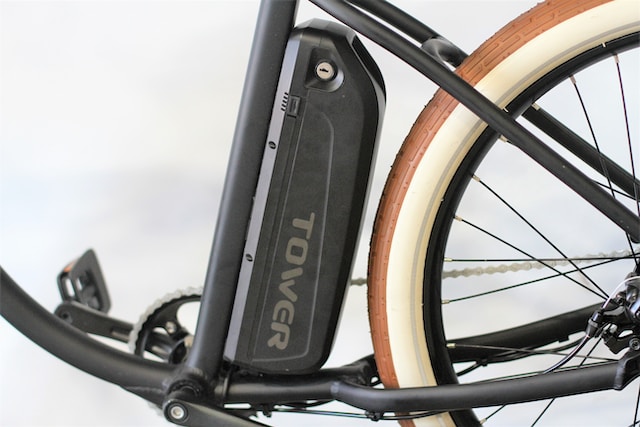
Every quality lithium-ion e-bike battery contains a Battery Management System (BMS). This small electronic circuit constantly monitors:
- Battery voltage
- Current draw
- Temperature
- Individual cell balance
- Short circuits
- Overcurrent conditions
If the BMS detects excessive current draw, low cell voltage, overheating, a short circuit, or another unsafe condition, it may temporarily disconnect the battery to protect it from damage.
When climbing a steep hill, the motor often places the highest demand on the battery that most riders will experience. Under those conditions, the BMS may determine that it’s safer to temporarily shut the battery down than risk damaging the cells.
After waiting a short time or cycling the power, the battery often reconnects automatically.
While occasional BMS intervention isn’t necessarily a sign of failure, repeated shutdowns during normal riding could indicate an aging battery, failing battery cells, excessive electrical load, or another issue that needs further diagnosis.
3. Loose Battery or Electrical Connections
One of the easiest problems to overlook is also one of the easiest to fix.
When you’re riding on flat ground, a loose battery or electrical connector may maintain enough contact for the bike to operate normally. But when you start climbing a hill, the added vibration, twisting forces, and higher electrical demand can cause the connection to momentarily break.
Even losing contact for a split second can cause the entire bike to shut off.
I’ve seen riders assume they needed a new battery, only to discover the battery wasn’t fully seated in the frame or a connector had worked itself loose.
Signs of a Loose Connection
You might notice:
- The bike shuts off when hitting bumps or potholes.
- It loses power when climbing but works again after restarting.
- The display flickers before shutting off.
- The battery feels loose in its mount.
- Power cuts in and out randomly.
- The issue began after transporting or assembling the bike.
What to Check
Before assuming the battery is bad, inspect the following:
- Make sure the battery is fully locked into the frame.
- Check that the battery key has been removed (some bikes can behave unpredictably if the battery isn’t fully latched).
- Inspect visible wiring for damage or pinched cables.
- Look for connectors that aren’t fully seated.
- Check around the controller area for loose wiring.
- Inspect battery terminals for dirt or corrosion.
Important: Never force connectors together or pull on wires. Always grasp the connector housing itself.
If you’re comfortable doing basic maintenance, disconnecting and reconnecting accessible plugs can sometimes restore a poor connection.
4. The Controller Is Overheating
The controller is essentially the brain of your e-bike.
It regulates how much power flows from the battery to the motor and constantly manages electrical output.
During a long or steep climb, the controller may generate a significant amount of heat. Many modern controllers either reduce power (known as thermal throttling) or temporarily shut down until they cool to protect themselves from damage.
This safety feature is completely normal and helps prevent permanent damage.
Signs the Controller May Be Overheating
Watch for symptoms such as:
- Shutdowns after several minutes of climbing.
- The bike works again after cooling down.
- The controller housing feels unusually hot.
- Performance gradually decreases before shutting off.
- Shutdowns happen more often on hot summer days.
Heat-related shutdowns are generally more common if you’re riding:
- At full throttle for extended periods.
- Up long, steep hills.
- With heavy cargo.
- In high outdoor temperatures.
How to Prevent Controller Overheating
You can reduce stress on the controller by:
- Using a lower gear before reaching the hill.
- Pedaling along with the motor instead of relying entirely on the throttle.
- Taking breaks during extremely long climbs.
- Avoiding repeated full-power hill starts.
- Keeping cooling vents (if present) free of dirt and debris.
5. The Motor Is Getting Too Hot
Although controllers are a more common culprit, some e-bike motors also include thermal protection.
Both hub motors and mid-drive motors generate heat under heavy loads. However, hub motors are generally more susceptible to overheating on long, slow climbs because they can’t take advantage of the bike’s gears. Mid-drive motors can also overheat under demanding conditions, but they’re typically more efficient on hills when the rider shifts into the appropriate gear.
If temperatures climb too high, the system may reduce power or shut down until the motor cools.
This is especially true if you’re climbing:
- Very steep grades
- Long mountain roads
- Off-road trails
- Loose gravel
- Sand
- Deep mud
The harder the motor has to work, the more heat it produces.
Signs of Motor Overheating
Possible symptoms include:
- Gradual power loss before shutdown.
- Reduced assistance on long climbs.
- The bike restarts after sitting for several minutes.
- The motor casing feels extremely warm.
Some premium e-bikes actively monitor motor temperature and automatically reduce power before a complete shutdown occurs.
Others simply cut power when a temperature threshold is reached.
If you’re unsure how your motor works, what’s considered normal, or whether it may be causing your power loss, check out my complete E-Bike Motor Guide. I cover hub motors vs. mid-drives, motor wattage, torque, common problems, maintenance, and how to get the best performance from your motor.
Can Riding Technique Help?
Absolutely.
Many riders don’t realize how much riding technique affects motor temperature.
For example:
❌ Using full throttle from the bottom to the top of every hill.
✔️ Shifting into a lower gear before the climb and pedaling along with the motor.
That simple change can dramatically reduce stress on both the motor and controller while extending battery range at the same time.
This is one reason mid-drive e-bikes often perform better on steep hills. Because they use the bike’s gears, they can keep the motor operating in a more efficient RPM range instead of forcing it to work at low speeds under extremely heavy loads.
6. An Aging or Failing Battery
Even if your battery still charges to 100%, it may no longer be capable of delivering the power needed for demanding rides.
Lithium-ion batteries gradually lose performance as they age.
Over time:
- Capacity decreases.
- Internal resistance increases.
- Voltage drops faster under load.
- Maximum power output declines.
That’s why an older battery may still provide plenty of range on flat roads but repeatedly shuts down while climbing hills.
Signs Your Battery May Be Wearing Out
Some common warning signs include:
- Reduced riding range.
- Frequent shutdowns on hills.
- The battery percentage drops quickly during climbs.
- Voltage recovers after resting.
- Charging takes less time than it used to.
- The battery is several years old or has hundreds of charge cycles.
If your battery is approaching the end of its service life, replacing it is often the most reliable long-term solution.
Before buying a replacement, however, it’s worth using my Battery Health Tool and reading my guide on E-Bike Not Holding a Charge? Causes, Fixes & When to Replace the Battery to help determine whether the battery is truly the problem or if another component is causing the shutdowns.
7. Riding Conditions Can Push an E-Bike Beyond Its Limits
Sometimes nothing is actually broken.
Instead, you’re simply asking more from the bike than it was designed to deliver.
Several factors can combine to place enormous strain on the electrical system:
- Rider weight
- Passenger weight
- Cargo
- Trailers
- Extremely steep hills
- Soft terrain such as sand or mud
- Strong headwinds
- Underinflated tires
For example, a rider carrying camping gear up a long 12% grade on a hot summer afternoon is putting far more demand on the motor than someone riding alone on gentle hills.
Many entry-level hub motor e-bikes simply aren’t designed for prolonged high-load climbing.
If you regularly ride in mountainous areas or tackle long, steep hills, choosing a bike with a higher-torque motor, a larger battery, or a mid-drive system may provide much better climbing performance.
How to Diagnose an E-Bike That Shuts Off Going Uphill
If your e-bike keeps shutting off on hills, I recommend working through these checks before replacing any expensive parts.
Step 1: Check Your Battery Charge
A battery that’s nearly empty is much more likely to experience voltage sag.
Try charging it fully and riding the same hill again.
If the problem disappears, the battery may simply have been too low to handle the heavy load.
Step 2: Inspect the Battery Mount
Remove the battery and reinstall it carefully.
Make sure it:
- Locks firmly into place.
- Doesn’t wobble.
- Makes full contact with the battery terminals.
If your battery has noticeable movement while riding, that’s worth investigating.
Step 3: Inspect All Visible Wiring
Look over the wiring around:
- The battery
- The controller
- The motor
- The display
Watch for:
- Loose connectors
- Bent pins
- Frayed wires
- Pinched cables
- Corrosion
If your bike has recently been assembled, transported, or involved in a crash, this step becomes even more important.
Step 4: Think About When It Happens
Ask yourself:
- Does it only happen on one very steep hill?
- Does it happen with a full battery?
- Does it happen only in hot weather?
- Does it happen only when using the throttle?
- Does it happen after riding for 20 to 30 minutes?
The answers often point toward the real cause.
Step 5: Watch the Display
Some displays briefly show an error code before shutting down.
If you see one, write it down before restarting the bike.
That code can often help identify whether the problem involves the battery, controller, motor, or another electrical component.
Step 6: Rule Out Brake Sensor Problems
Brake sensors usually cause the motor to stop assisting rather than shutting off the entire bike. However, damaged brake sensor wiring or an electrical short could contribute to intermittent electrical problems on some e-bike models.
If your brake lever was recently bumped, adjusted, or replaced, it’s worth inspecting the brake sensor wiring as part of your troubleshooting process.
🎥 Watch: If you’d like to see some of the most common causes of e-bike power cutouts and how to troubleshoot them, this helpful video walks through several issues that can also cause an e-bike to shut off while climbing hills.
Helpful Tools & Accessories for Troubleshooting Your E-Bike
Before replacing expensive parts, I recommend having a few basic tools on hand. They’re inexpensive, useful for routine maintenance, and can make diagnosing common e-bike problems much easier.
- Digital Multimeter – Helps check basic voltage at the battery or charger, but it does not prove the battery is healthy under load. Only use one if you know how to avoid shorting the terminals.
- Portable Bike Pump – Keeps your tires properly inflated, reducing strain on the motor when climbing hills.
- Digital Tire Pressure Gauge – Lets you verify your tire pressure for better efficiency and hill-climbing performance.
- Hex Key (Allen Wrench) Set – Useful for tightening loose components, battery mounts, and accessories.
- Bike Repair Multi-Tool – A compact tool for making quick adjustments at home or on the trail.
- Electrical Contact Cleaner – Helps clean battery terminals and electrical connectors if dirt or corrosion is causing poor contact.
- Dielectric Grease – Can help protect some connector seals from moisture, but use it sparingly and only where appropriate. Do not pack random electrical plugs or battery terminals with grease.
- Head Lamp or Small Flashlight – Helps you inspect battery contacts, wiring plugs, and connector pins more clearly.
- Zip Ties – Good for securing loose wires after you confirm everything is working correctly.
- Bike Repair Stand – Can hold your e-bike steady while you inspect the pedal sensor, wiring, and crank area.
➡️ View all recommended e-bike accessories
Still Stuck After Trying These Steps?
Some electrical issues aren’t obvious and can take time to track down – especially with controllers, wiring harnesses, or battery systems.
👉 Get help from a verified e-bike expert and pinpoint the issue faster
Can You Prevent Your E-Bike From Shutting Off on Hills?
In many cases, yes.
These simple habits reduce stress on the battery, controller, and motor:
- Charge your battery before demanding rides.
- Shift into a lower gear before climbing.
- Help the motor by pedaling.
- Avoid full throttle for long climbs.
- Keep your tires properly inflated.
- Don’t overload your bike beyond its payload rating.
- Allow the bike to cool after repeated steep climbs.
- Keep battery contacts and electrical connections clean.
- Store and charge the battery within the manufacturer’s recommended temperature range.
These habits not only reduce shutdowns but can also help extend the life of your battery and other electrical components.
FAQs
The most common reason is that climbing hills places the highest demand on the battery and electrical system. If the battery voltage drops too low, the Battery Management System (BMS) detects excessive current draw, or the controller overheats, the bike may temporarily shut down to protect itself.
Not necessarily.
An aging battery is one possible cause, but loose connections, controller overheating, motor protection, excessive load, or battery voltage sag can produce similar symptoms. It’s best to diagnose the problem before replacing the battery.
This usually indicates a temporary protection system has activated.
As the battery, controller, or motor cools down – or as battery voltage recovers after a heavy load – the system may allow the bike to power back on.
Yes.
Cold temperatures temporarily reduce lithium-ion battery performance. The battery may experience greater voltage sag under heavy loads, making shutdowns more likely until the battery warms during use.
Occasional shutdowns caused by an unusually steep climb may simply indicate the bike reached its operating limits.
However, if your e-bike repeatedly loses power during normal riding, I recommend stopping to diagnose the problem rather than continuing to ride. Repeated shutdowns could indicate a battery, controller, wiring, or electrical issue that may worsen over time.
My Take
In my experience, riders often assume the worst when their e-bike suddenly shuts off on a hill. They immediately think the battery has failed or that the motor has burned out.
Fortunately, that’s usually not the case.
Most hill-related shutdowns happen because the bike is protecting itself. Battery voltage sag, Battery Management System (BMS) protection, controller overheating, and loose electrical connections are all far more common than complete component failures.
That’s why I always recommend starting with the simple checks first. Make sure the battery is fully charged and securely locked in place, inspect the wiring, and pay attention to when the shutdown occurs. Taking a few minutes to troubleshoot can often save you from replacing expensive parts that are still working perfectly.
If the problem continues after working through this guide, it’s worth taking a closer look at the battery, controller, or motor, or having the bike inspected by a qualified e-bike technician.
The good news is that many riders are able to identify and fix the issue themselves. By understanding why your e-bike shuts off going uphill and following a systematic troubleshooting process, you’ll have a much better chance of getting back on the road quickly and safely.
Disclosure: As an Amazon Associate, I earn from qualifying purchases. This comes at no extra cost to you and helps support the content on this site.
Not sure where to go next?
Some riders are brand new. Others are fixing a problem or thinking about a new bike. Choose what fits you.
Learn & Get Comfortable
Understand how e-bikes work and what to expect when riding.
Improve Your Current Ride
If your bike isn’t performing how you want, learn what affects speed, range, and power.
Compare Better Bikes
Looking for something that fits your riding style? Start here.
- Best Electric Bikes for Beginners
- Recommended Commuter Ebikes
- Most Comfortable City E-Bikes
- Best Fat Tire Ebikes
- Top Folding Ebikes
- Best Step Through Ebikes
- Top Cargo Electric Bikes
- Best Lightweight Ebikes
- Best Long Range Ebikes
- Top Moped Style E-Bikes
- E-bike Reviews
🛒 Ready to Buy?
Top picks and current availability from trusted brands.
👉 Still deciding?
Take our E-Bike Recommendation Quiz to get matched with the right riding style in under two minute
External Resources
For additional information on lithium-ion battery safety, battery care, and e-bike maintenance, these resources are worth reading:
- PeopleForBikes E-Bike Resources: https://peopleforbikes.org/topics/e-bikes/
- Bosch eBike Systems Support: https://www.bosch-ebike.com/
- U.S. Consumer Product Safety Commission – Lithium-Ion Battery Safety: https://www.cpsc.gov/Safety-Education/Safety-Education-Centers/Lithium-Ion-Batteries

Kristina is not just an enthusiast but a true authority on electric bikes. Nestled in the coastal beauty of Virginia, Kristina has found the perfect backdrop for her passion for electric biking. As a dedicated wife and homeschooling mom, her life revolves around family, faith, and the thrill of adventure.
Originally hailing from Ohio, Kristina's journey with electric bikes began as a curiosity and quickly evolved into a deep expertise. Her blog is a testament to her love for electric biking, combining her fascination for eco-friendly transportation with her coastal lifestyle.
When she's not cruising the beach on her electric bike, you'll find Kristina indulging in her other loves: long walks along the shore, getting lost in a good book, and cherishing moments with her loved ones. With a heart as big as her love for animals, especially cats, Kristina brings a unique perspective to the electric bike world, grounded in her strong faith in God and her dedication to a sustainable lifestyle.
Through her blog, Kristina shares her extensive knowledge of electric bikes, offering valuable insights, tips, and recommendations to fellow enthusiasts. Whether you're a seasoned rider or a newcomer to the electric bike scene, Kristina's blog is your go-to source for all things electric biking, fueled by her passion, expertise, and the scenic beauty of coastal Virginia.